
There’s something oddly cathartic about a perfectly styled plant shelf.
You know the kind, those effortlessly curated corners where greenery meets good taste, and every item seems to belong. But when it comes time to style your own shelf?
It’s easy to second-guess everything from the pot color to whether you’ve gone full-on jungle mode.
The truth is, even the most polished plant shelves usually start with a bit of chaos. I’ve rearranged mine more times than I can count and not just because I knocked a trailing vine off the edge (again).
Styling takes a little know-how, a lot of experimenting, and a willingness to move things around until it just feels right.
So, if you're staring at a bunch of plants and a shelf and wondering how on earth to make it look intentional and not random, I've got you. These tips will walk you through not just how to make it look good, but how to make it feel balanced and personal, too.
11 Easy Tips for Styling a Balanced Plant Shelf
1. Choose the Right Spot for Your Shelf

Before you even think about styling, let’s talk location. Where you place your plant shelf can make or break your entire setup. This is not just for aesthetics but for plant health as well.
Start by assessing your space.
Do you have an empty wall that gets great natural light? A neglected nook near a window? Plant shelves work best in places where light, access, and visibility all align. If you’re working with low-light plants, you have a bit more freedom.
But for sun-lovers, a bright spot near a window is non-negotiable.
You’ll also want to consider practicality. Can you easily water your plants without climbing a ladder? Will trailing vines block the TV? Keep all that in mind.
2. Think in Layers, Not Lines

Lining up plants like little soldiers across a shelf might feel safe, but it tends to fall flat fast. A layered look where some items sit forward, others tuck behind, creates a sense of depth that makes everything feel more dynamic.
Start by placing taller plants toward the back of the shelf.
These create a backdrop that draws the eye upward and anchors the composition. Medium-height plants can go in front of those, followed by trailing or low-profile plants that spill forward or sit low on the shelf.
This layered approach also helps you make the most of vertical space.
You’re not just decorating in a single horizontal plane - you’re creating a mini ecosystem with levels, shadows, and texture. It’s like building a little world, one plant at a time.
3. Vary Heights and Shapes

Styling gets boring quickly when everything is the same height or shape.
A shelf full of identical succulents in matching pots? Cute, but flat. The goal is to mix things up while keeping some sense of balance.
Try combining tall, upright plants like snake plants or rubber trees with rounder, bushier ones like ferns or pileas. Add in a few spiky or architectural varieties for contrast. Then use books, stacked trays, or small risers to give shorter plants a little boost where needed.
The beauty of varied height is that it keeps your eye moving. Instead of zoning in on one plant, you get a full visual journey across the shelf. It’s like creating a skyline, but with greenery.
4. Mix in Non-Plant Decor

This is where the magic really happens. Mixing in non-plant items like books, ceramics, candles, or small artwork gives your shelf personality and prevents it from looking like a garden center.
Start with items that mean something to you.
A framed postcard from a trip, a vintage vase you thrifted, or a stack of books you actually read (or at least like the covers). These personal touches make the shelf feel curated, not copied from Pinterest.
Aim for balance here, too.
If one end of the shelf has a chunky plant in a bold pot, try placing a more delicate or sculptural item on the other end to offset it. After all, you’re not just styling plants. You’re telling a story with the objects you love.
5. Use Odd Numbers Without Overthinking It
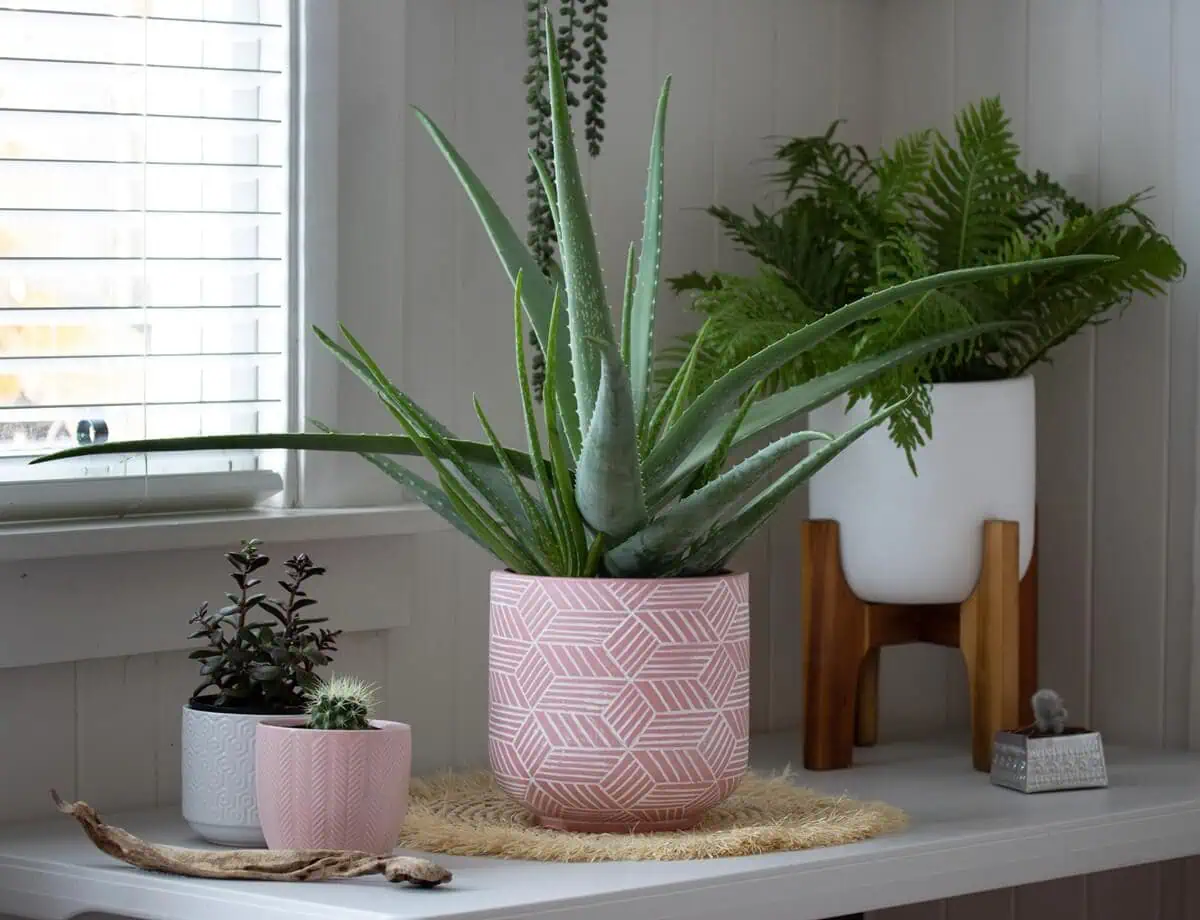
There’s a reason stylists swear by the “rule of threes.” Odd-number groupings tend to feel more organic and visually pleasing than even ones. A trio of items looks more relaxed and intentional than a symmetrical pair.
Try clustering plants and objects in groups of 3 or 5. For example, place a plant, a candle, and a small bowl together on one side of the shelf. The varied sizes and shapes will naturally draw the eye.
That said, rules are meant to be broken. Sometimes, two larger items side by side look amazing if there’s enough contrast or space around them. Use the odd-number rule as a guide, not a law.
6. Play With Textures and Materials

Texture might be the most underrated part of shelf styling. Sure, the green is what catches your eye. But it’s the mix of materials and finishes that keeps things interesting.
Pair waxy, glossy leaves (like a rubber plant) with feathery ferns or fuzzy calatheas. Mix terra cotta pots with smooth ceramics, woven baskets, and even metallic finishes like brass or copper.
The goal is to create contrast without chaos. You want enough variety that nothing feels flat, but not so much that it looks like a yard sale. If it starts feeling too busy, try removing one or two elements and reassess.
7. Stick to a Loose Color Story

A cohesive color palette can take a shelf from cluttered to calm. But you don’t need to repaint every pot or buy all-new decor. Start by choosing 2 - 3 base tones (think neutrals like white, black, brown) and one or two accent colors.
For example, your base might be white pots and natural wood tones, with accents of deep green and gold. When you repeat those colors across the shelf, everything just clicks - even if the items themselves are totally different.
If you already have a mishmash of stuff, try grouping similar colors. That way, you still get variety without total visual chaos.
8. Add a Trailing Plant

Image credit: My Tasteful Space
Add something that trails. Trailing plants like pothos, string of pearls, string of turtles, or Philodendron micans soften hard lines and bring a sense of movement that upright plants just can’t.
Let one spill over the edge of the shelf, or drape it down the side of a bookshelf. It breaks up the boxy feel and gives your plant display that wild, natural touch.
Just make sure you’re placing trailing plants somewhere they can grow freely and that you’re not constantly untangling them from whatever’s below. Learned that the hard way when one started curling around a floor lamp.
9. Make Sure the Plants Will Thrive

This might sound obvious, but I’ve definitely made the mistake of styling a perfect shelf… only to watch half the plants slowly wilt because the light wasn’t right.
Again, check out the first tip.
Before you get too deep into styling, check the lighting conditions. Bright, indirect light is usually ideal for most houseplants, but some (like ZZ plants or sansevieria) are happy in low light. Others (like fiddle leaf figs) are much pickier.
If your shelf doesn’t get much natural light, don’t stress. Consider mixing in faux plants or rotating real ones in and out of a sunnier spot.
No shame in a little plant trickery to keep your shelf looking lush.
10. Leave Breathing Room

When you’re styling, it’s easy to keep adding “just one more thing.” But crowded shelves don’t give each piece room to shine. Negative space is your friend.
Think of it like punctuation in a sentence. The spaces between items let your eye rest and make the shelf feel intentional, not overstuffed. Don’t be afraid to leave small gaps, especially near the edges.
If something feels off, try removing one or two things. More often than not, less really is more when it comes to a balanced look.
11. Change Things Up Seasonally

Credit: ems Plant Oasis via Instagram
One of my favorite ways to keep a plant shelf fresh is to treat it like a rotating display. You don’t need a full makeover every season, but a few small swaps go a long way.
In the fall, I might add a tiny pumpkin and a couple of darker-toned pots. In winter, a pinecone or two, maybe a small garland. Come spring, I’ll bring in a vase of fresh flowers or pastel accents.
Even moving one plant to a different spot can totally shift the feel of the shelf. Think of it as a living, breathing part of your home, not a static display.
Conclusion
Styling a plant shelf isn’t about getting it “right.” It’s about creating a space that makes you happy every time you walk by. Some shelves will look polished and minimal. Others will be quirky and colorful.
Both are beautiful if they reflect you.
So, play around. Rearrange. Add, subtract, then add again.
And most importantly, enjoy the process. A well-styled shelf should feel like a little breath of fresh air in your home.
If you’ve got a plant shelf you love (or one that’s giving you trouble), I’d love to hear about it. Sometimes the best styling tips come from trial and error and from each other.
Featured image: Pleasant Potato via Reddit