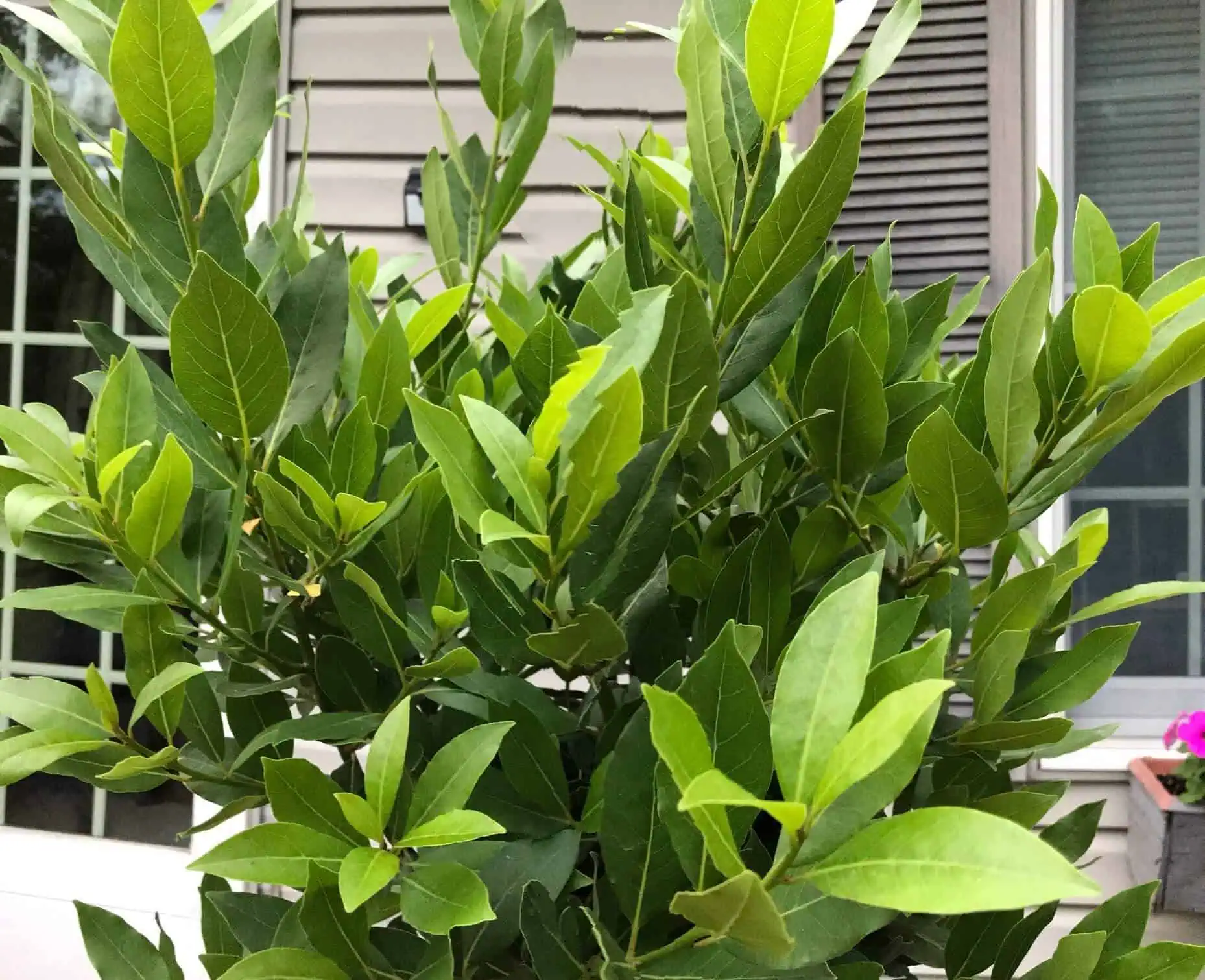
In today’s article, we will explore how to grow bay leaf trees, a common herb and spice used in many dishes across the culinary world.
It is an aromatic evergreen tree or large shrub with green, smooth leaves in the flowering plant family Lauraceae.
The bay leaf tree is native to the Mediterranean region, and its common names include bay tree in the United Kingdom), bay laurel, sweet bay, true laurel, Grecian laurel, or simply laurel. It can grow to about 7–18 m (23–59 ft) tall.
Bay laurel (Laurus nobilis) is the most common source of bay leaf.
Other types include: Indian bay leaf (Cinnamomum tamala), Indonesian bay leaf (Syzygium polyanthum), California bay laurel (Umbellularia californica), West Indian bay (Pimenta racemosa), and Mexican bay leaf (Litsea glaucescens).
The taste and aroma of bay leaf are from its different essential oils, including eucalyptol, terpenes, and methyleugenol.
It’s hence widely used in Indian, Filipino, European, and Caribbean cuisines in soups, stews, meat, seafood, and vegetable dishes.
Although you should remove it from the dish before serving, you can use the leaf as a garnish.
Ground bay leaves, on the other hand, are often used in soups, stocks, and Bloody Mary and are safe to ingest. While pressed bay leaf oil and dried berries are used as robust spices, burnt wood is used for smoke flavoring.
Another advantage of growing bay leaf trees is that you can use the leaves as an insect repellent in your pantry and around the house.
So, let’s look at how to Grow Bay Leaf Trees from planting to care, harvesting, and storage.
How to Grow Bay Leaf Trees for Beginners
Find the Right Spot
Since bay laurel originates from the Mediterranean, it thrives in a warm, sunny location with well-draining soil.
That’s why most growing guides place its comfortable range at USDA hardiness zones 8 through 10. Below that threshold, frost becomes a real threat to the leaves and eventually the roots.
If you live somewhere with cold winters, don't cross bay laurel off your list just yet.
The plant does beautifully in containers, which means you can grow it as a patio tree in summer and bring it indoors, or into a garage or unheated porch, once temperatures start to drop.
In fact, this is how gardeners from the northern sides of its comfort zone have kept the same bay tree alive for years. They haul it in and out with the seasons, and it works.
Wherever you plant your bay leaf trees, aim for a spot with at least six hours of sun a day.
A little afternoon shade won't hurt, especially if you are in hotter climates, although it isn't a shade-loving plant. Give it light, and it'll reward you with denser, more flavorful leaves.
Pot or Ground? Let Your Winters Decide
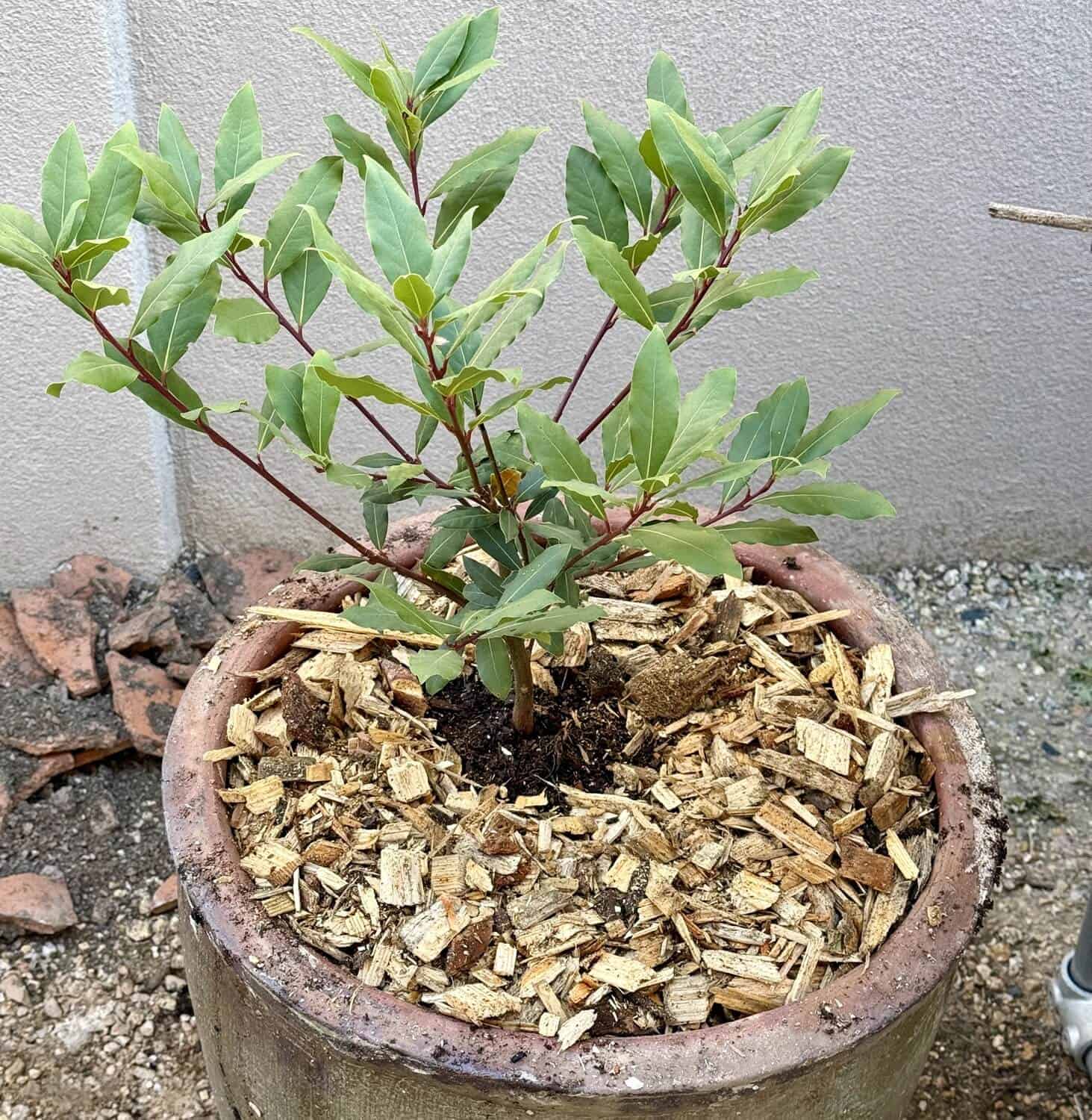
This is probably the most crucial decision you'll make with a bay tree, and it is worth thinking through before planting.
If your garden is in zone 8 or a slightly warmer area, you can plant bay laurel straight into the ground and mostly let it be. It'll grow larger there, sometimes reaching eight to thirty feet wide over time, and it'll handle drought and neglect better once it's established.
And if your winters dip much colder than that, growing bay leaf trees in containers is a better long-term choice.
A bay tree kept in a large pot that’s about sixteen inches across or bigger remains in a manageable size for decades and can be pruned into a tidy, rounded shape that looks right at home on a patio or by a front door.
On the other hand, growers in the UK, where bay laurel is a classic addition to formal gardens, tend to consider temperatures rather than zone numbers.
The Royal Horticultural Society lists the bay leaf tree as hardy down to about 23 degrees Fahrenheit and notes that plants in the ground handle cold better than the same tree in a pot, because the surrounding soil buffers temperature swings better than thin pot walls can.
So if you're growing a bay leaf tree in a container in a marginal climate and a cold snap rolls in, wrap the container and move it against a sheltered wall, or bring it inside for a few nights rather than leaving it exposed.
Soil and Water Requirements
When it comes to soil, whether you are growing bay leaf trees on the ground or in containers, ensure the soil is loose and free-draining.
Additionally, use a high-quality, all-purpose potting mix with perlite or horticultural grit to improve aeration.
Although bay leaf trees are adaptable to a wide pH range (from 4.5 to 8.3), they prefer a slightly acidic to neutral environment (6.0 to 7.0).
Due to their shallow roots, these trees are highly sensitive to waterlogging. So, ensure that planting containers have enough drainage holes for the container-grown ones.
As for water requirements, always keep the soil moist but never soggy by allowing the top 1 to 2 inches of soil to dry out between watering. The watering frequency depends on the prevailing weather conditions and the growth stage.
Therefore, water deeply every 1 to 2 weeks during the active summer growing season, and reduce this to once every 3 to 4 weeks during the cooler winter months when the tree’s growth is slow.
What are the watering indicators for a bay leaf tree?
The leaves are one of the indicators of plant hydration. A bay leaf tree with vibrant, upward-facing, firm leaves indicates a perfect watering schedule. Whereas droopy, downward-facing bay leaves signal the need to water the tree.
Nonetheless, yellowing leaves indicate overwatering, while crispy, browning leaves point to underwatering.
Planting
There are different ways to start a bay leaf tree, i.e., from seeds, cuttings, or an established plant.
Using seeds is somewhat difficult and time-consuming, as bay leaf seeds have a very slow germination rate. But using cuttings is the most reliable and successful method.
Alternatively, purchase a small, young sapling (Established Plant) from a local dealer. It is the fastest way to get a harvestable tree, especially if you are keeping it in a container.
Fertilizer Requirements
Enhance the tree's growth by applying an organic fertilizer once or twice a year.
Slow-release fertilizers such as fish emulsion and worm castings are a good option for slow release of nutrients throughout the growing season. Apply in early spring, and optionally, again in early summer.
Do not over-fertilize and avoid too much nitrogen, as it can affect the leaf’s aroma.
Pruning and Harvesting
Bay leaf tree responds so well to pruning. It's one of the few kitchen herbs you can shape into something genuinely tidy and enhance denser new growth, which means more leaves for you down the line.
Prune yours in spring or early summer lightly to remove any leaf tips damaged by winter weather, after the risk of frost has passed.
Avoid heavy cutting late in the year, since new growth needs time to harden off before cold weather arrives.
When harvesting, cut the leaves as needed and avoid cutting more than a third of the plant's leaves at a time.
Repotting a Potted Bay Leaf Tree Every Two to Three Years
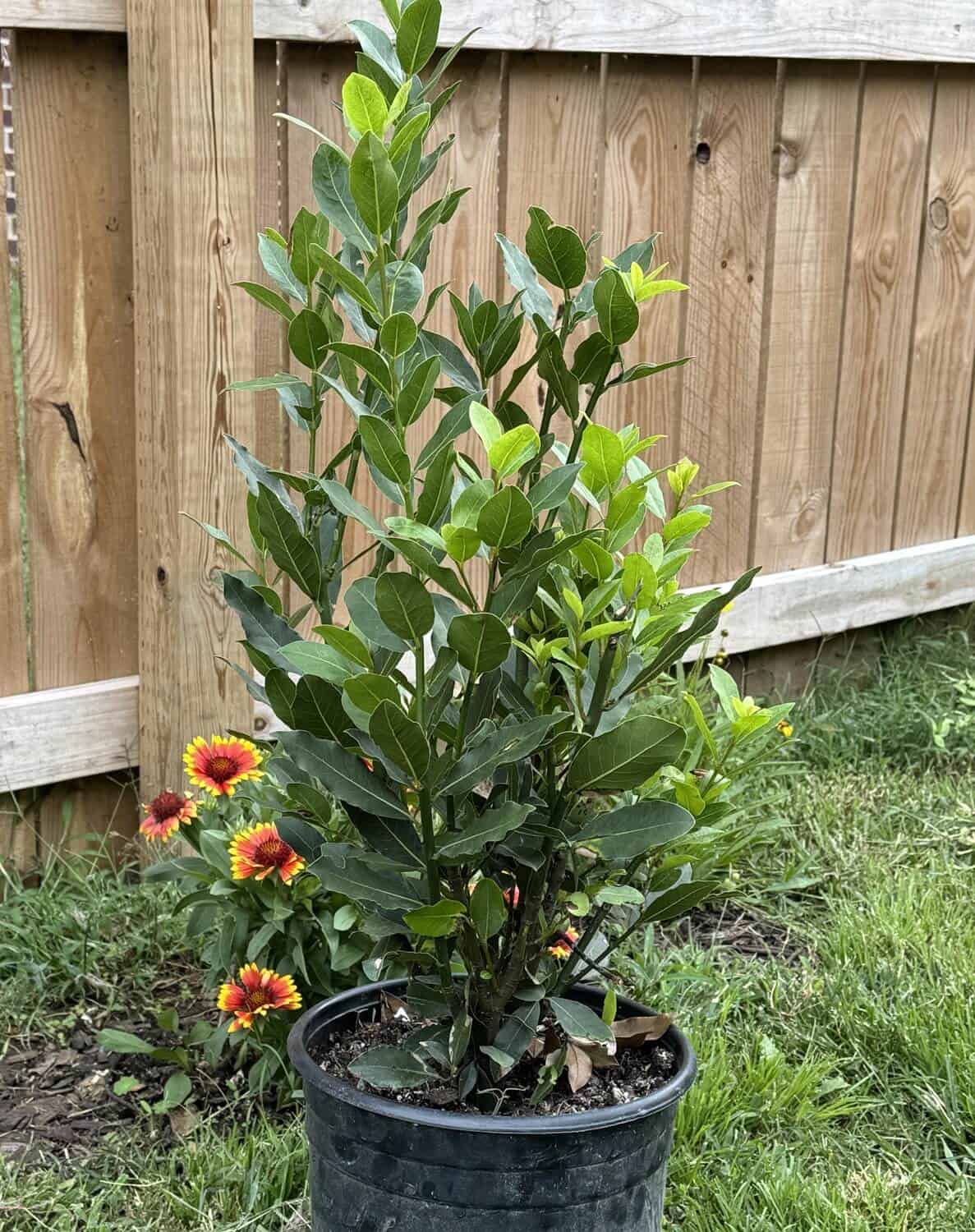
As your plant grows, it needs a bigger area for its expanding roots. Repotting in a larger container is the better call.
Start by pruning away 1/3 of the root-bound root ball and top foliage to balance the tree and stimulate healthy new growth.
Then, carefully move the root ball into a slightly larger pot and gently fill in the soil.
After this, water it well and follow the normal watering schedules moving forward.
According to Meadowlark Journal, spacing out repotting keeps the roots from becoming pot-bound and still gives the tree a chance to settle into its pot.
Common Problems with Growing Bay Leaf Trees
Bay laurel is a relatively tough plant with few challenges, but they are manageable. Scale insects and mealybugs show up occasionally, usually as small, waxy bumps along stems or the undersides of leaves.
An insecticidal soap or a simple wipe-down with a damp cloth handles minor infestations before they spread.
Yellowing leaves (young leaves), as you’ve seen in the watering section, are more often a sign of overwatering or poor drainage than a pest problem.
But if your watering schedule is correct and the problem persists, it might be nutrient deficiency, especially in a container-grown bay leaf tree. Before taking any corrective measure, be sure of what’s causing the problem first.
Note: Bay is relatively resistant to rabbits.
Read more about: White Bugs on Plants? Here’s How to Get Rid of Them
Harvest and Dry the Leaves
After a couple of years of growth, you can start harvesting the older, mature leaves, as they are more flavorful than young, tender ones.
Snip a few leaves at a time and let the plant keep more foliage than you take.
Dry them to deepen the flavor by laying them flat in a cool, dark place for a week or two until they are brittle. Then store them in an airtight container out of direct light, and they'll hold their flavor for a year or more.
Conclusion
That has been a brief but conclusive guide on How to Grow Bay Leaf Trees for Beginners. As you have seen, it’s easy and doable provided you follow the basic requirements for growing bay laurel.
Key notes about growing bay leaf trees;
- Use loose, well-draining soil with a neutral to slightly acidic pH (6.0–7.5). Avoid heavy, wet clay.
- Give your tree 6 hours of bright light daily.
- Water deeply when the top inch of soil feels dry. Let pots drain fully and never let roots sit in soggy water.
- Move potted trees into fresh soil and slightly larger pots every 2 to 3 years.
- Protect plants from cold, harsh winds that damage leaves.
- Apply a light, balanced slow-release fertilizer, organic compost, or a liquid feed during the growing season.
Feeling motivated? Give it a try and share the experience in the comments.