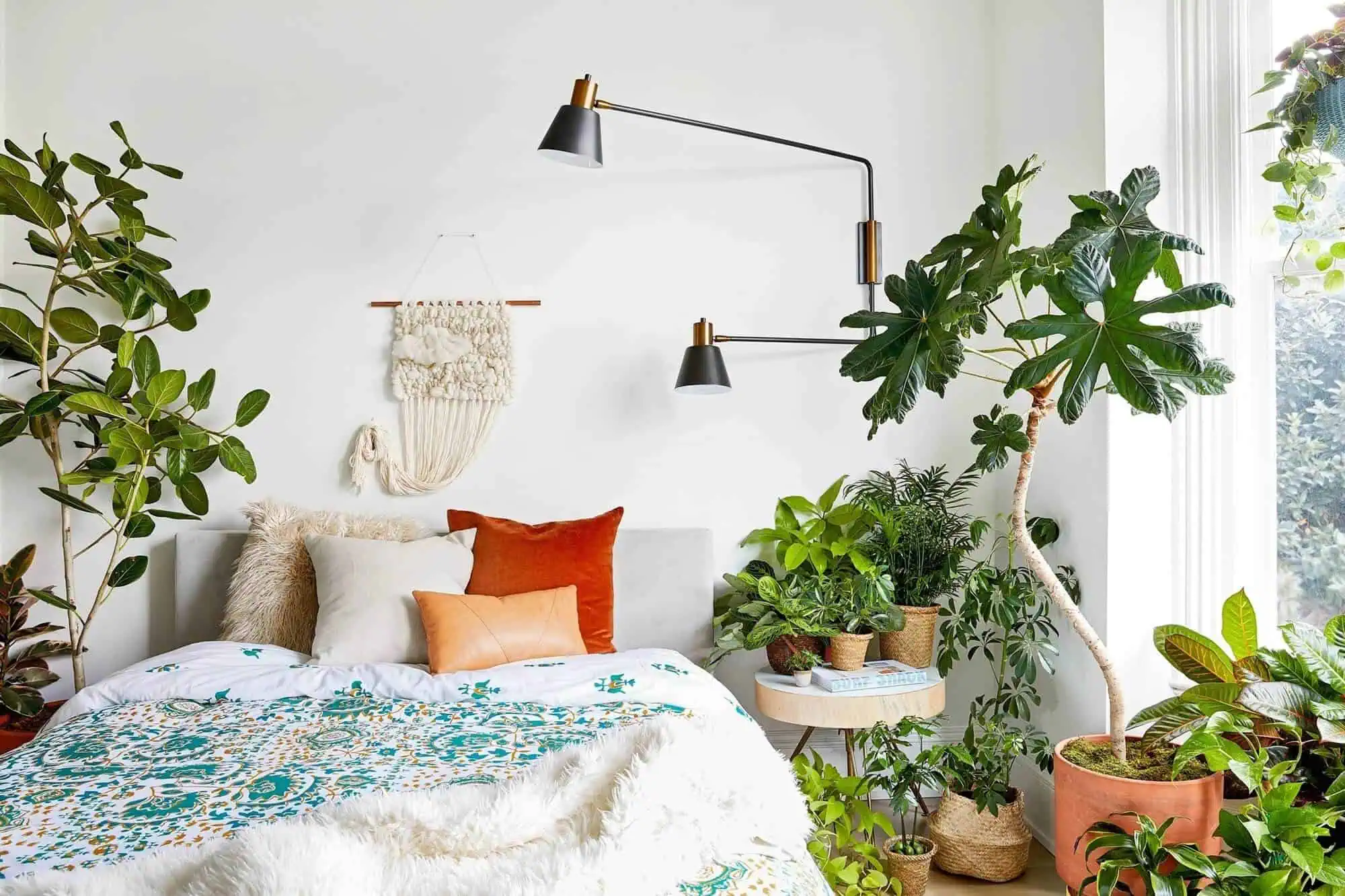
When people talk about plants in relation to sleep, there’s one question that comes to mind.
Can a plant really make you sleep better?
The short answer is yes, but indirectly. Lavender, for example, has been studied specifically for its relationship with sleep, while research into indoor therapeutic gardening suggests that working with aromatic plants may improve mood and sleep quality.
However, a potted plant beside your bed isn't a sleeping pill, and filling your bedroom with plants won't magically fix insomnia. What these plants can do is contribute fragrance, greenery, humidity, visual calm, and a more pleasant bedtime environment.
For some people, that's enough to make winding down feel easier.
And in today’s post, we'll take a look at some of those plants, but first things first, a bit of a disclaimer:
Sleep and Your Health
It's important to keep the claims in perspective. The plants in this article may help create a more pleasant, relaxing bedroom, and a few, particularly lavender, have been studied in connection with sleep.
That doesn't mean a houseplant can diagnose, prevent, or treat a sleeping disorder.
If you're regularly struggling to fall asleep, waking repeatedly during the night, waking too early, or feeling excessively tired during the day, don't rely on bedroom plants as a solution.
Persistent sleep problems can have many causes, including medical conditions and sleep disorders that need proper assessment and treatment.
Think of these plants as part of a comfortable sleeping environment rather than a medical treatment. If you're concerned about your sleep or have symptoms that persist, seek advice from a qualified healthcare professional.
With those points in mind, let's look at the plants that can bring a little more greenery, fragrance, and character into the bedroom, beginning with growing considerations
Considerations for Growing Plants in the Bedroom
Before turning your bedroom into a miniature jungle, there are a few practical things worth considering.
Plants can make a bedroom feel calmer and more inviting, but they still need the right growing conditions, and those conditions shouldn't come at the expense of a healthy sleeping environment.
Light
A plant that needs several hours of bright sunlight won't be happy in a dark bedroom, no matter how attractive it looks on the bedside table.
Likewise, don't overwater plants simply because the room feels dry. Constantly wet potting mix can encourage fungus gnats, mold, and unpleasant odors, so good drainage and sensible watering matter.
Ventilation and air circulation
There's a general belief that bedroom plants dramatically purify the air or produce enough oxygen at night to improve sleep.
While laboratory research has shown that plants can indeed remove certain pollutants under controlled conditions, you’d need a lot of them to achieve meaningful removal of volatile organic compounds in an ordinary home
In other words, plants shouldn't be your ventilation system. Keep the room reasonably well ventilated and follow the basic principles of a good sleep routine.
Fragrance and toxicity
Strongly scented plants can be pleasant to one person and irritating to another, particularly in a small bedroom. And if you have cats or dogs, check each plant's toxicity before bringing it indoors.
Several popular houseplants can cause problems if pets chew or eat them.
Want to Sleep Better? Have These Plants in Your Bedroom
1. Lavender
Credit: The Spruce
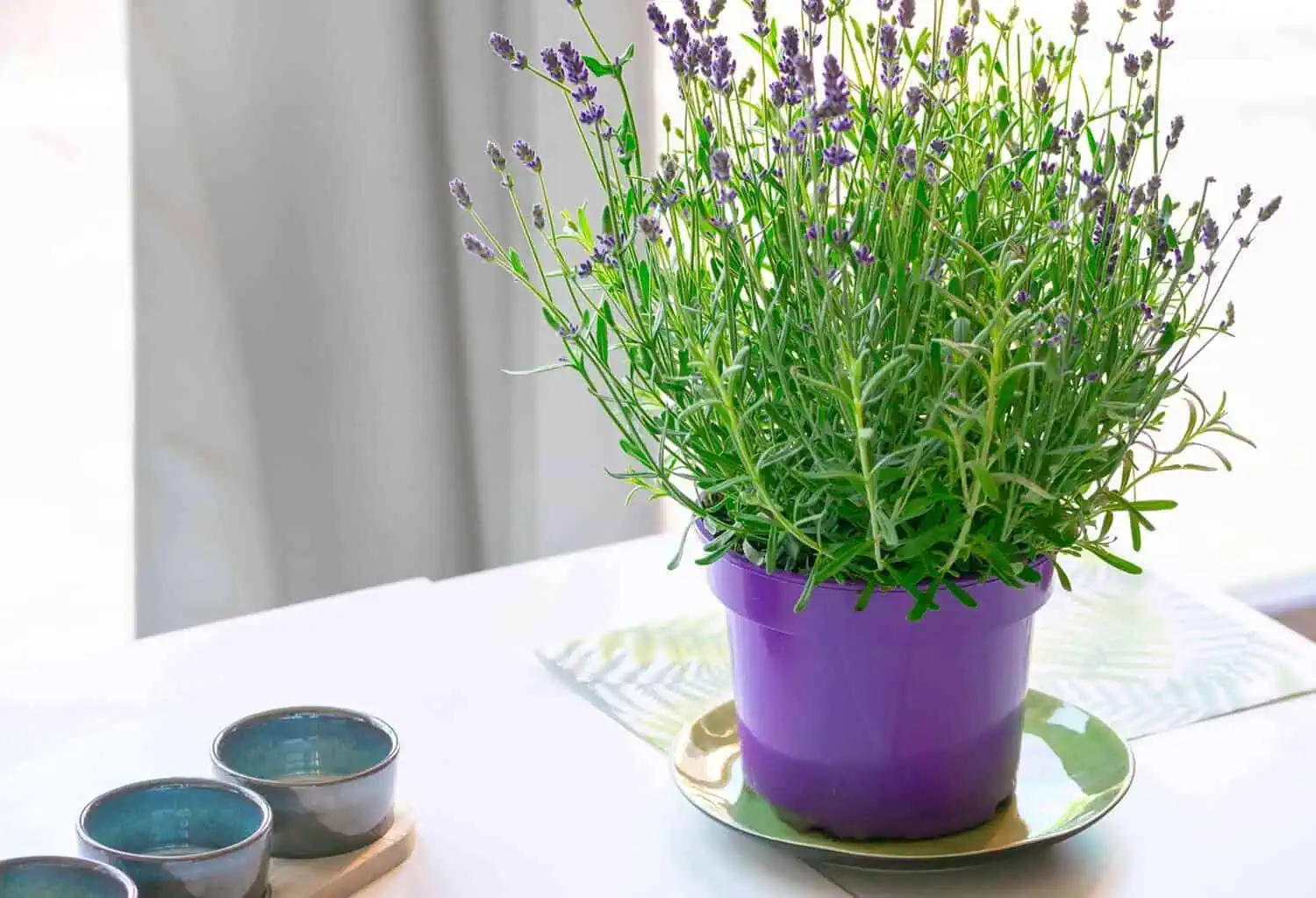
Lavender (Lavandula angustifolia) is probably the most obvious choice, and for once, the popular reputation has some scientific support behind it.
It's a compact, woody perennial with narrow aromatic foliage and purple flower spikes, and it grows happily in containers when given plenty of sunlight.
The interesting part is the fragrance.
Research into lavender aromatherapy has repeatedly found associations with improved sleep quality, although the studies generally investigate lavender oil or aromatherapy rather than simply having a living plant beside the bed.
That makes lavender particularly appealing as part of a bedtime ritual. Place it somewhere sunny during the day rather than in a dark corner beside the bed. One caution for pet owners: ASPCA lists lavender as toxic to dogs and cats if ingested.
2. Jasmine
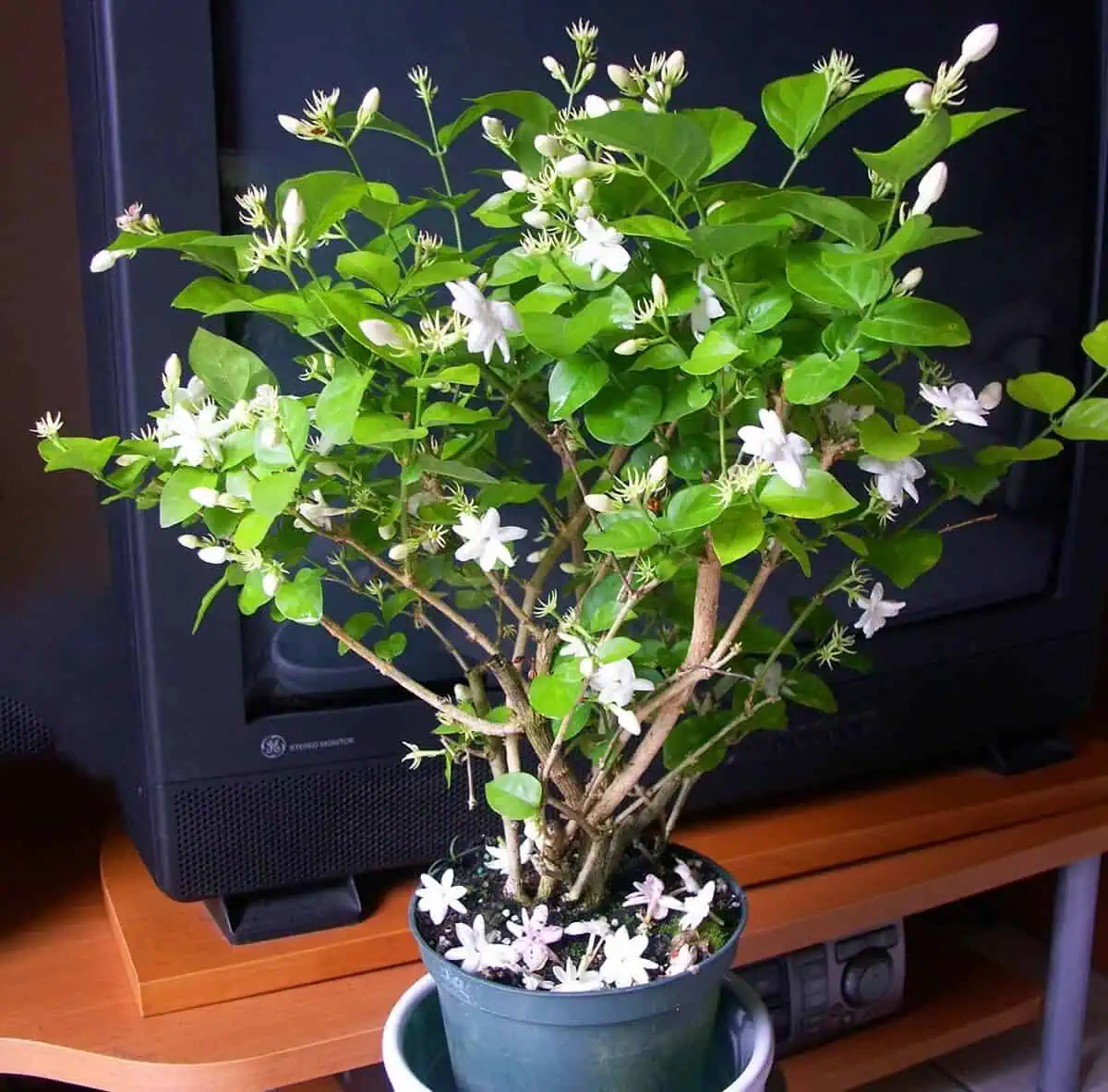
Jasmine brings something lavender doesn't: a much more pronounced floral perfume. Several jasmine species are fragrant climbers, but Jasminum polyanthum, or Chinese jasmine, is ideal indoors because it's a tender plant commonly grown as a houseplant.
It produces clusters of intensely fragrant white flowers from pink buds.
Pleasant scents can become part of a relaxing pre-sleep routine, although evidence for jasmine itself as a treatment for insomnia is much less established than the evidence surrounding lavender.
Chinese jasmine needs a warm, bright position and a support to climb, so it's better suited to a bright bedroom near a window than a gloomy room.
Unlike several plants on this list, jasmine is listed by ASPCA as non-toxic to dogs and cats.
3. Gardenia
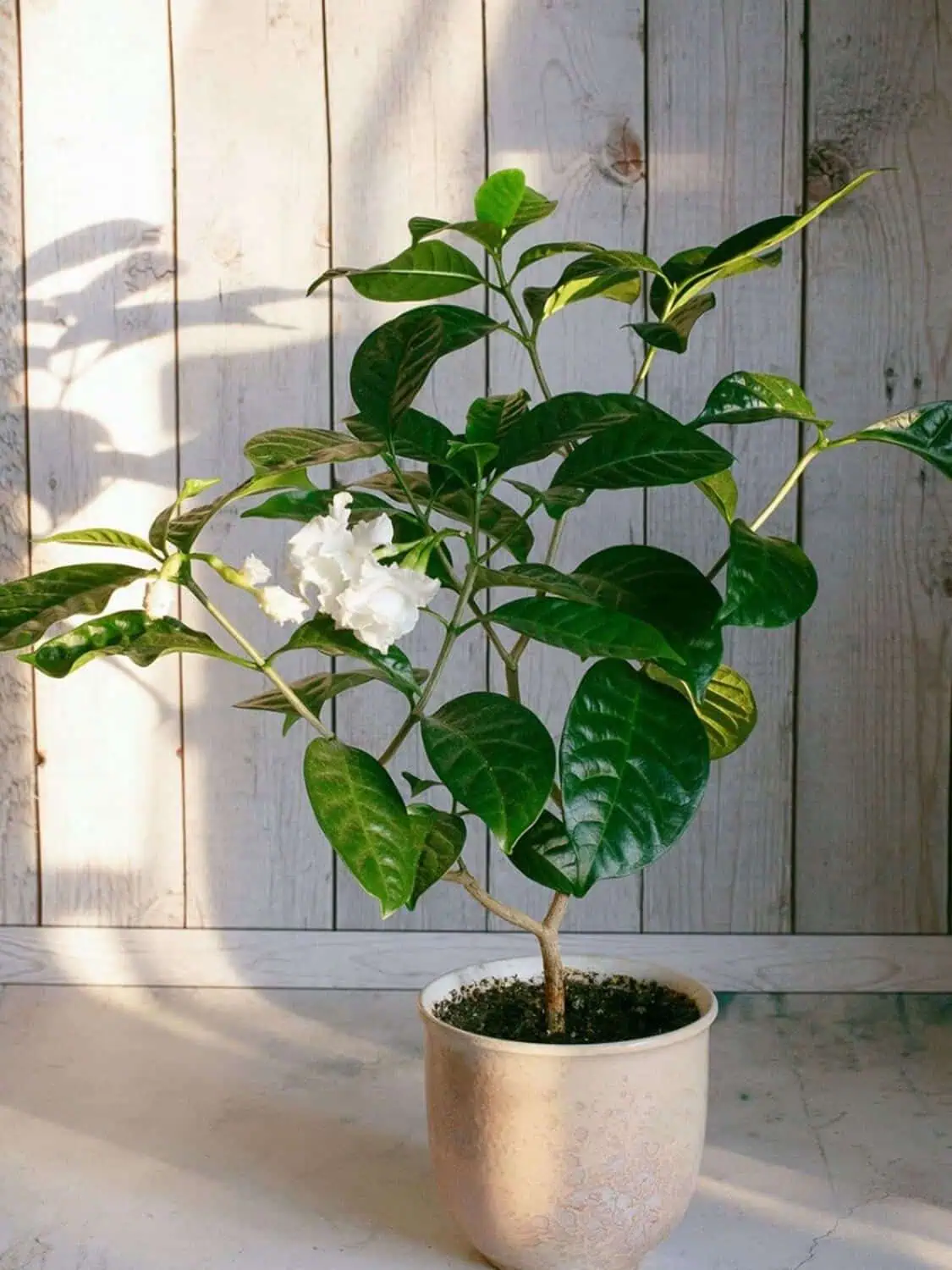
Gardenia (Gardenia jasminoides) is for people who want their bedroom to smell as beautiful as it looks. It's an evergreen shrub with glossy dark-green leaves and large creamy-white flowers carrying a rich, unmistakable fragrance.
The only drawback is that Gardenias are considerably fussier than spider plants or snake plants. They need warmth, bright indirect light, humidity, and acidic growing media, and they don't appreciate erratic watering.
So why put one in a bedroom?
The flowers are exceptionally fragrant, and placing a gardenia where its scent can be enjoyed makes sense if fragrance helps you relax. Just don't buy one expecting it to thrive in a dark room.
Gardenia is also toxic to dogs and cats if eaten, according to ASPCA.
4. Snake Plant
Credit: Bloomscape
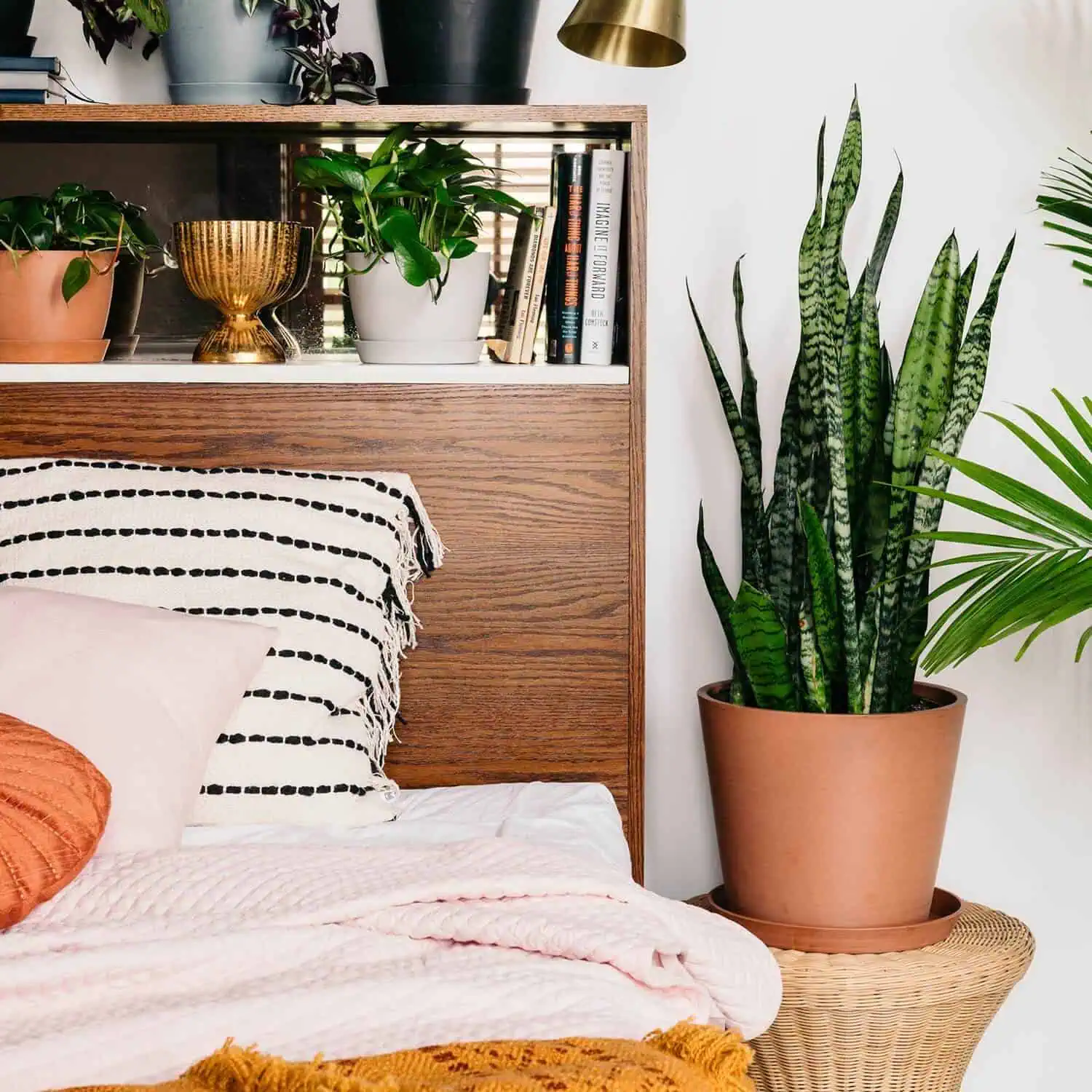
The snake plant (Dracaena trifasciata, formerly Sansevieria trifasciata) is almost the opposite of gardenia. It has upright, architectural leaves, tolerates a remarkable range of indoor conditions, and doesn't demand constant attention.
It's particularly useful in a bedroom because it can cope with lower light than many flowering plants. The leaves store water, making the plant drought-tolerant.
You've probably heard that snake plants release oxygen at night. The plant does have a different pattern of gas exchange from many ordinary houseplants, but that doesn't mean a few pots will meaningfully oxygenate your bedroom or transform your sleep.
Its real advantage is simpler: it's difficult to kill, stays attractive for years, and doesn't demand that you turn your bedroom into a greenhouse.
Keep it away from pets that like chewing plants. ASPCA lists snake plants as toxic to dogs and cats, with ingestion potentially causing nausea, vomiting, and diarrhea.
5. Aloe Vera
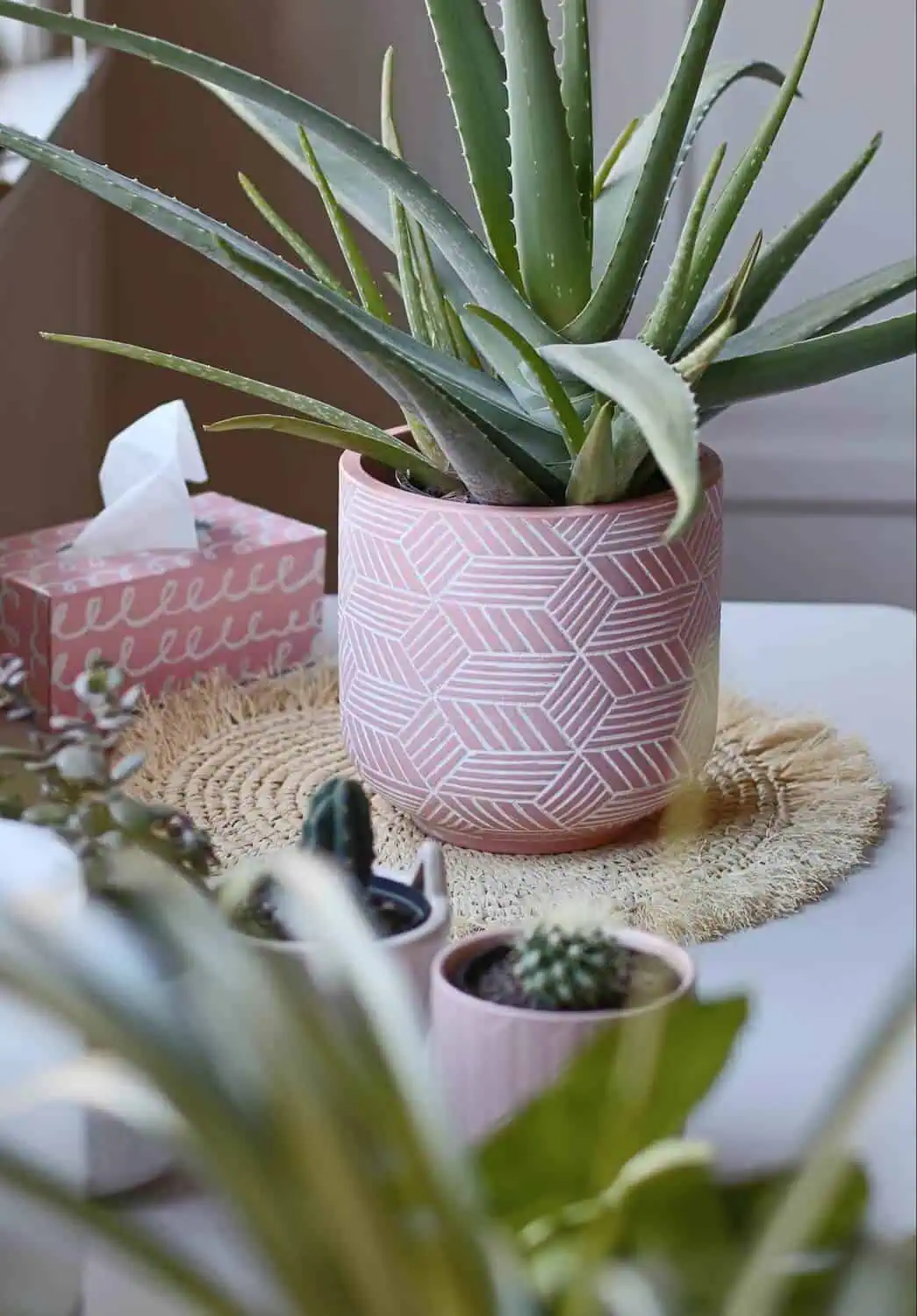
Aloe vera (Aloe vera) brings a slightly different character to the bedroom. It's a succulent with thick, fleshy leaves arranged in a rosette, so it has a sculptural appearance rather than the leafy, jungle look of a fern or palm.
The advantage is its tolerance of dry conditions. Aloe stores water in its leaves and generally prefers bright light and a potting mix that drains quickly. That makes it a good choice for a sunny bedroom where other plants might suffer from occasional missed watering.
It's also a plant with a long history of practical use, particularly for the gel inside mature leaves.
6. Spider Plant
Credit: The Spruce
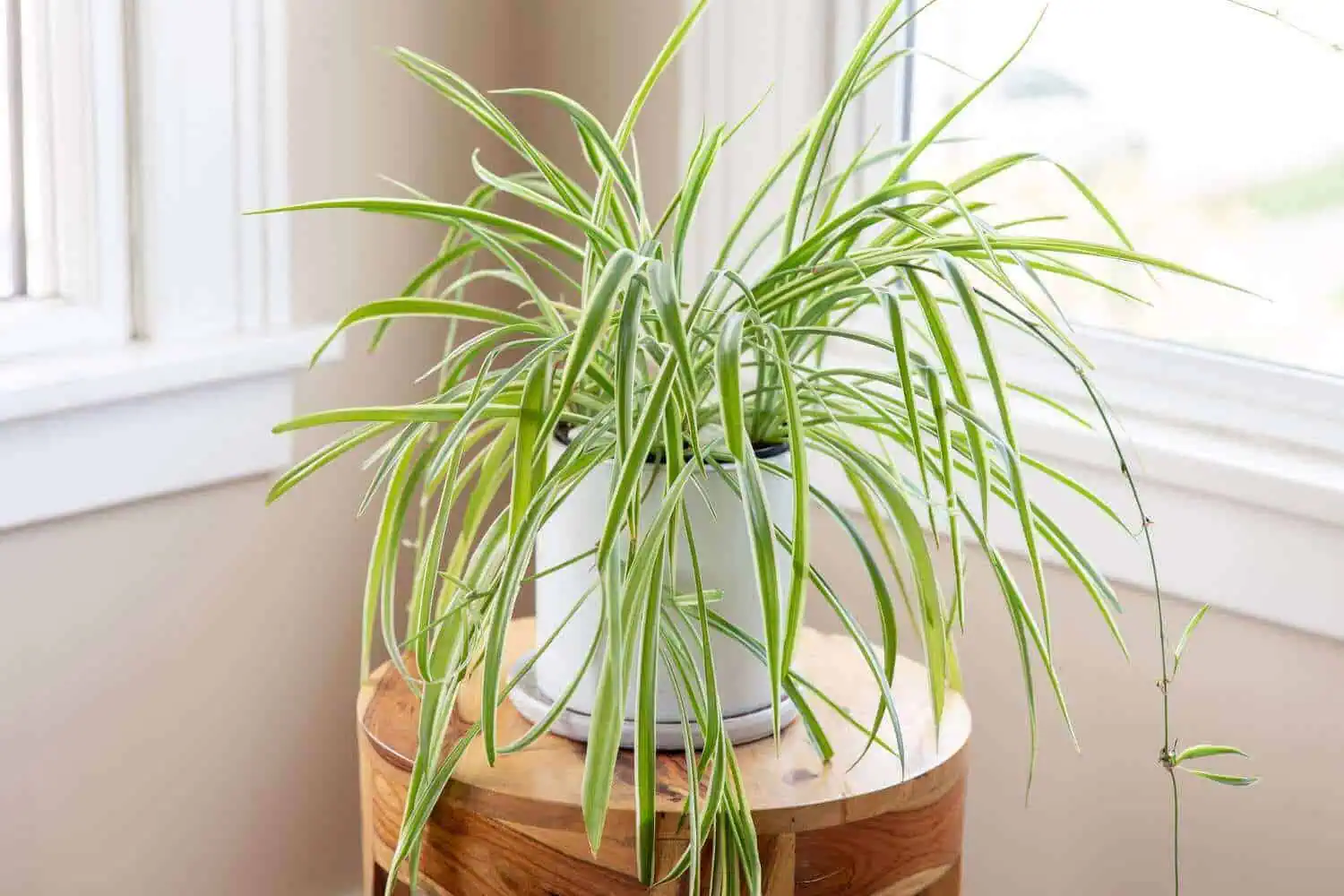
Spider plants (Chlorophytum comosum) are great at multiplying. Mature plants send out long stems carrying little plantlets, so a single healthy specimen can eventually give you a collection of baby plants to root elsewhere.
The foliage arches gracefully from the pot, making the plant particularly attractive on a bedside table, shelf, or hanging plant ideas. More importantly, spider plants tolerate both bright and lower indoor light and are generally forgiving if watering isn't perfectly consistent.
In general, spider plants are easy to care for, attractive, and non-toxic to dogs and cats.
7. Peace Lily
Credit: Hortology
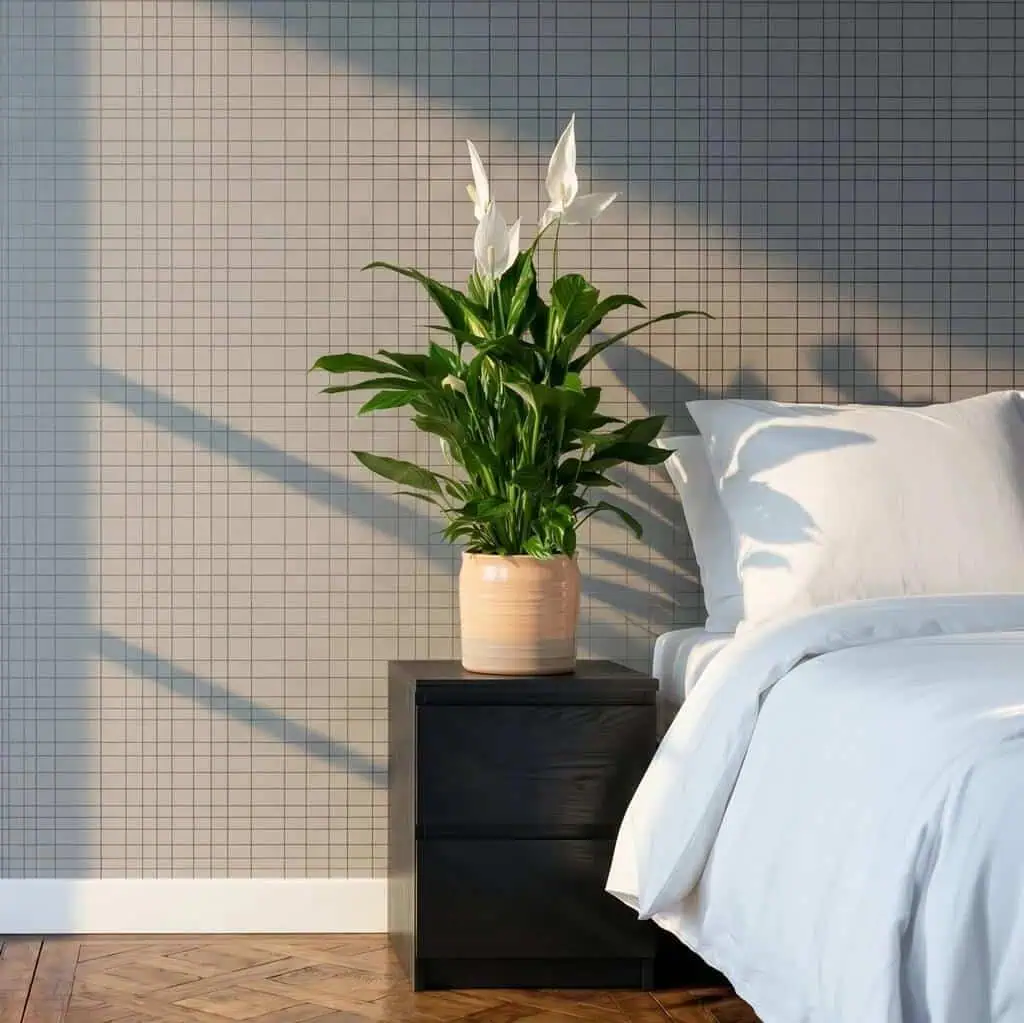
Few houseplants create a calmer visual effect than a peace lily (Spathiphyllum). Its dark, glossy leaves rise in dense clumps, punctuated by white spathes that look remarkably like flowers.
Peace lilies naturally grow in tropical forests, so they prefer warmth, indirect light, and reasonably humid conditions. They're particularly useful in rooms where the air isn't bone dry, although excessive moisture and poor ventilation aren't desirable in a bedroom either.
One major caveat is that peace lilies contain insoluble calcium oxalates and are toxic to dogs and cats if chewed.
8. Boston Fern
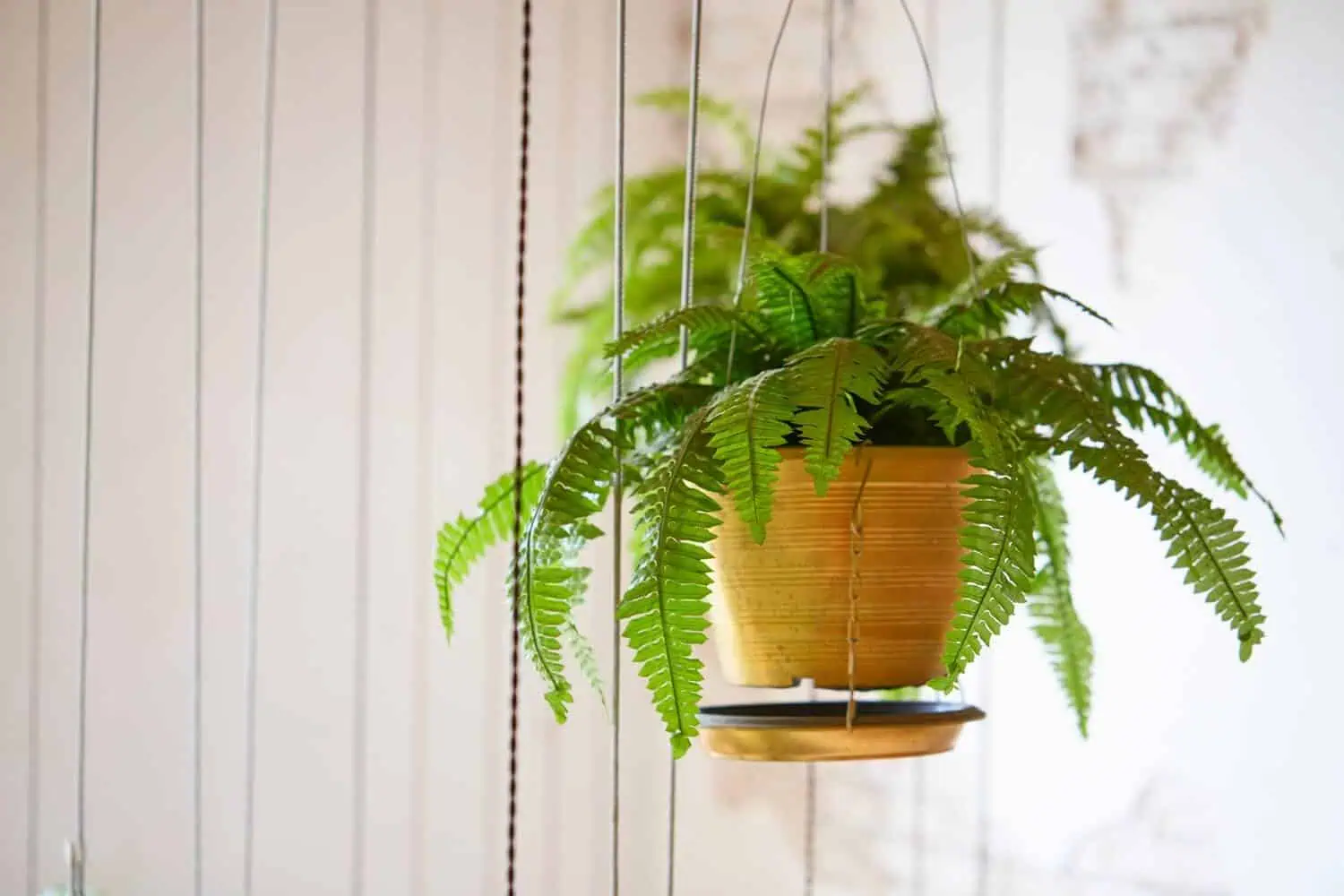
The Boston fern (Nephrolepis exaltata 'Bostoniensis') brings an entirely different texture to the bedroom. Instead of broad leaves or upright blades, it produces masses of fine, arching fronds that spill dramatically over the sides of a pot.
Ferns naturally lose water through their foliage, which is why they tend to prefer humid conditions.
It also has a practical advantage: According to studies, the Boston fern is non-toxic to dogs and cats.
9. Parlour Palm
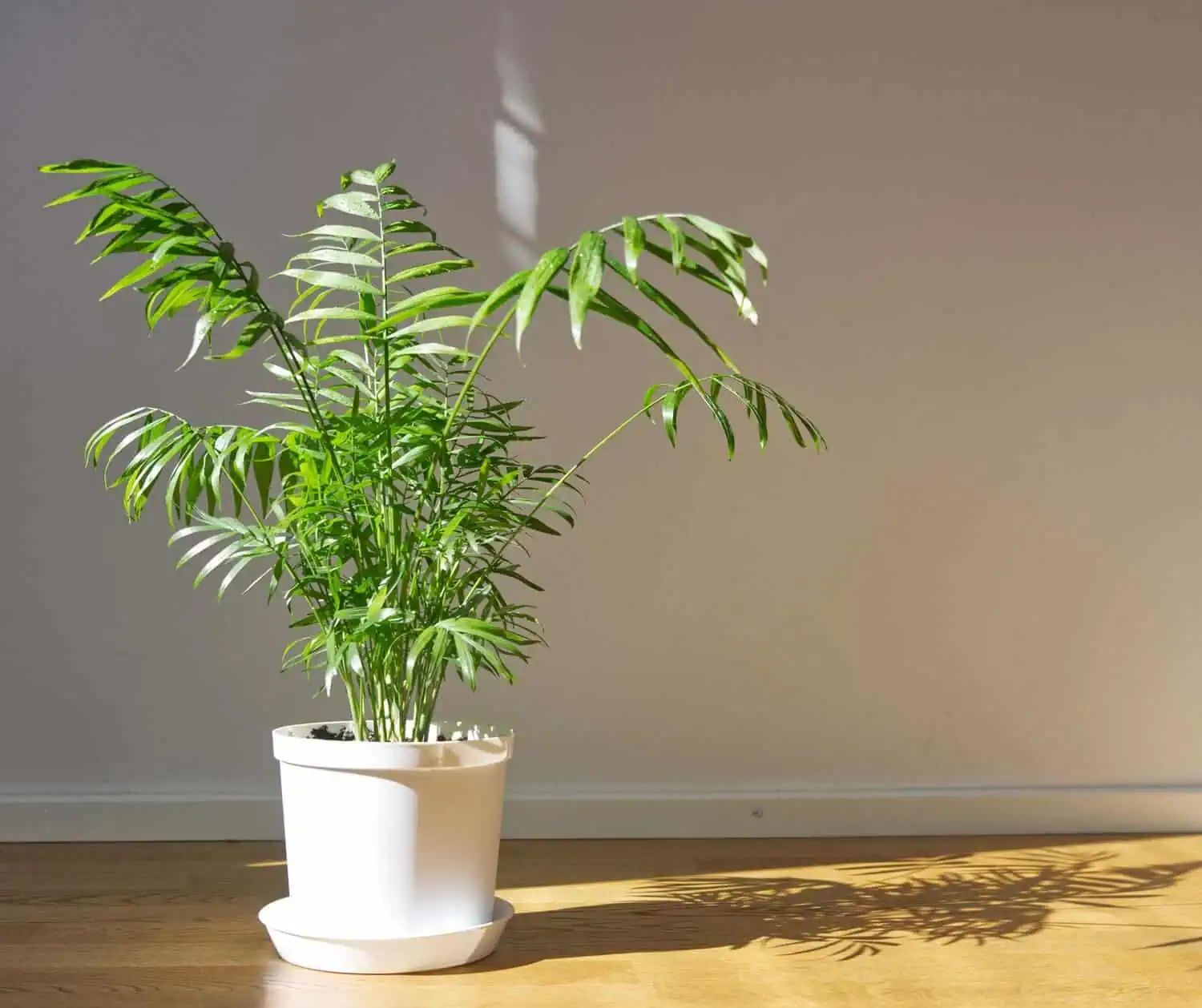
The parlour palm (Chamaedorea elegans) has been a houseplant favorite for generations, and its success isn't difficult to understand. It produces graceful green fronds, stays relatively compact, and grows slowly enough that it won't immediately take over your bedroom.
It tolerates indirect light and light shade, usually stays around 30–60 cm tall for quite some time, and doesn't need frequent repotting.
You can therefore put it in a corner, give it reasonable light, and let it quietly do its thing rather than constantly moving furniture around to accommodate an enormous plant.
10. Prayer Plant
Credit: Shutterstock
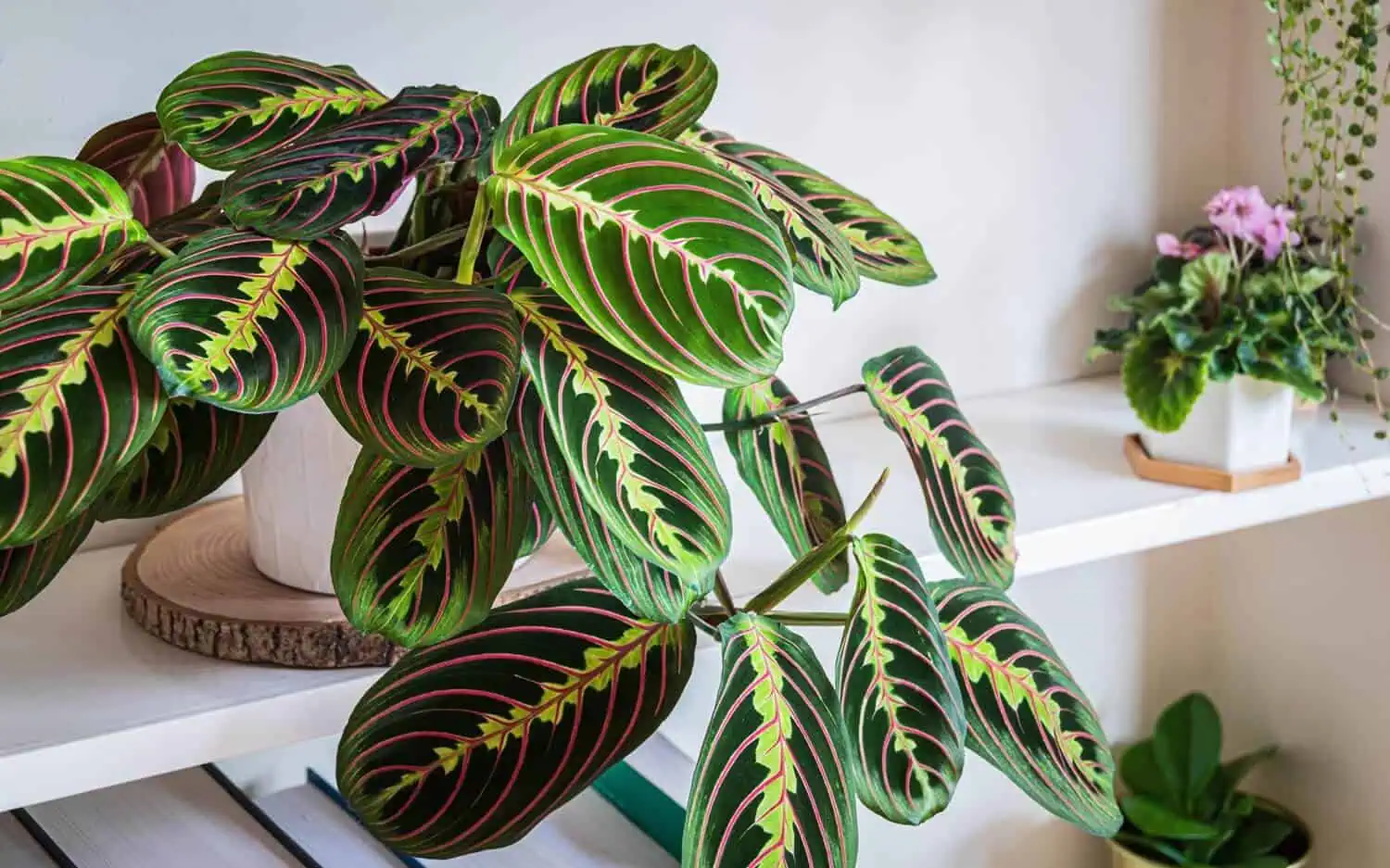
Prayer plants, including plants sold under the Calathea name such as exotica and medallion, have one of the most fascinating bedtime routines in the houseplant world. Many members of the group display nyctinasty, meaning their leaves move upward at night and open again during daylight.
That's where the common name "prayer plant" comes from. The leaves can appear to fold their hands as darkness arrives, which makes the plant unusually appropriate for a bedroom.
A living plant that visibly changes with the day can make the room feel connected to natural rhythms, which some people may find pleasant as part of a bedtime routine.
11. English Ivy
Credit: Martha Stewart
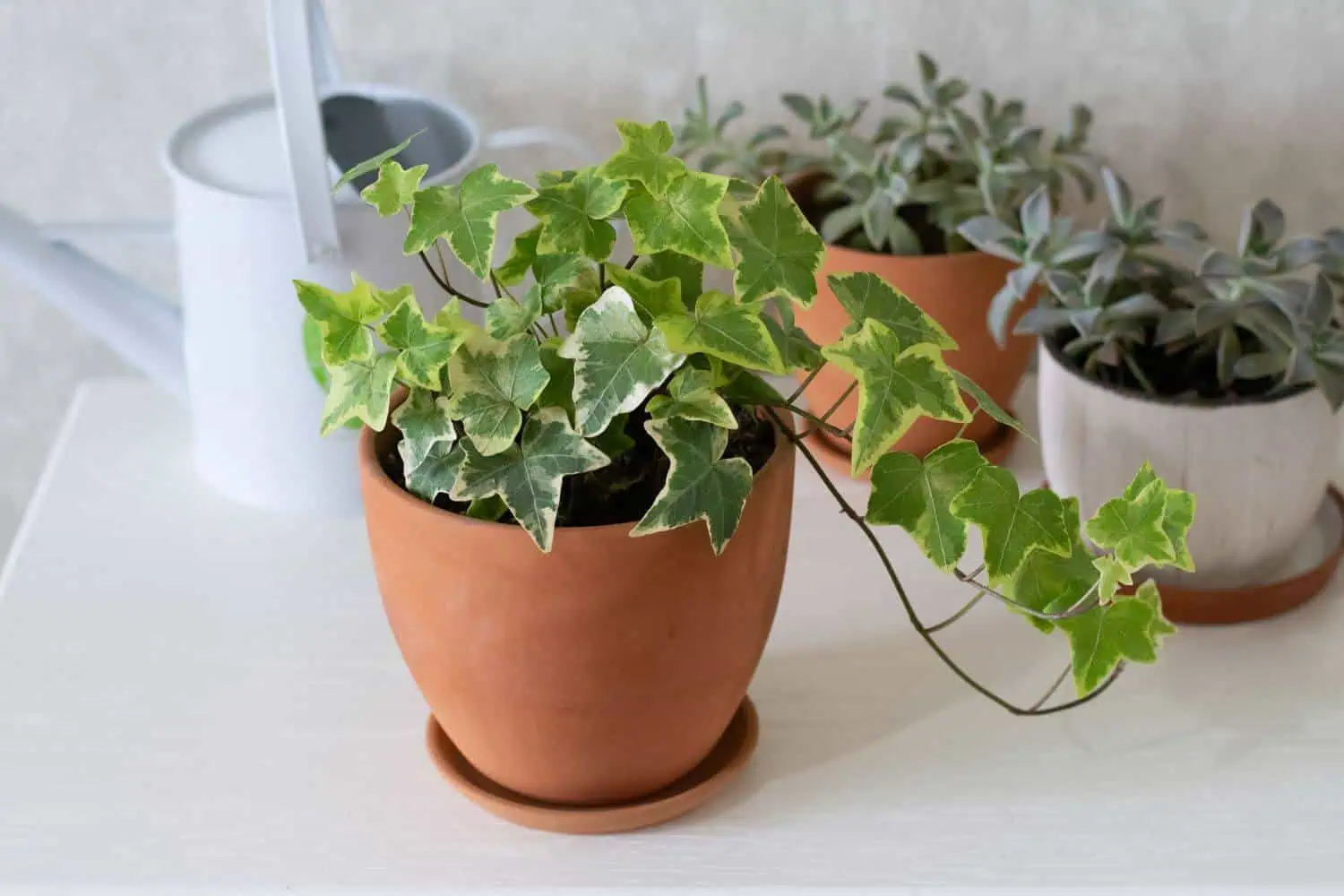
English ivy (Hedera helix) is one of the most useful plants when floor space is limited. Its long trailing stems look excellent spilling from a hanging pot or climbing a small support, while its tolerance of lower light makes it practical for bedrooms that aren't flooded with sunshine.
Smaller, slower-growing cultivars are particularly suitable as houseplants. However, there's a safety issue worth taking seriously. English ivy is harmful if eaten and can irritate the skin; ASPCA also lists it as toxic to dogs and cats.
12. Pothos
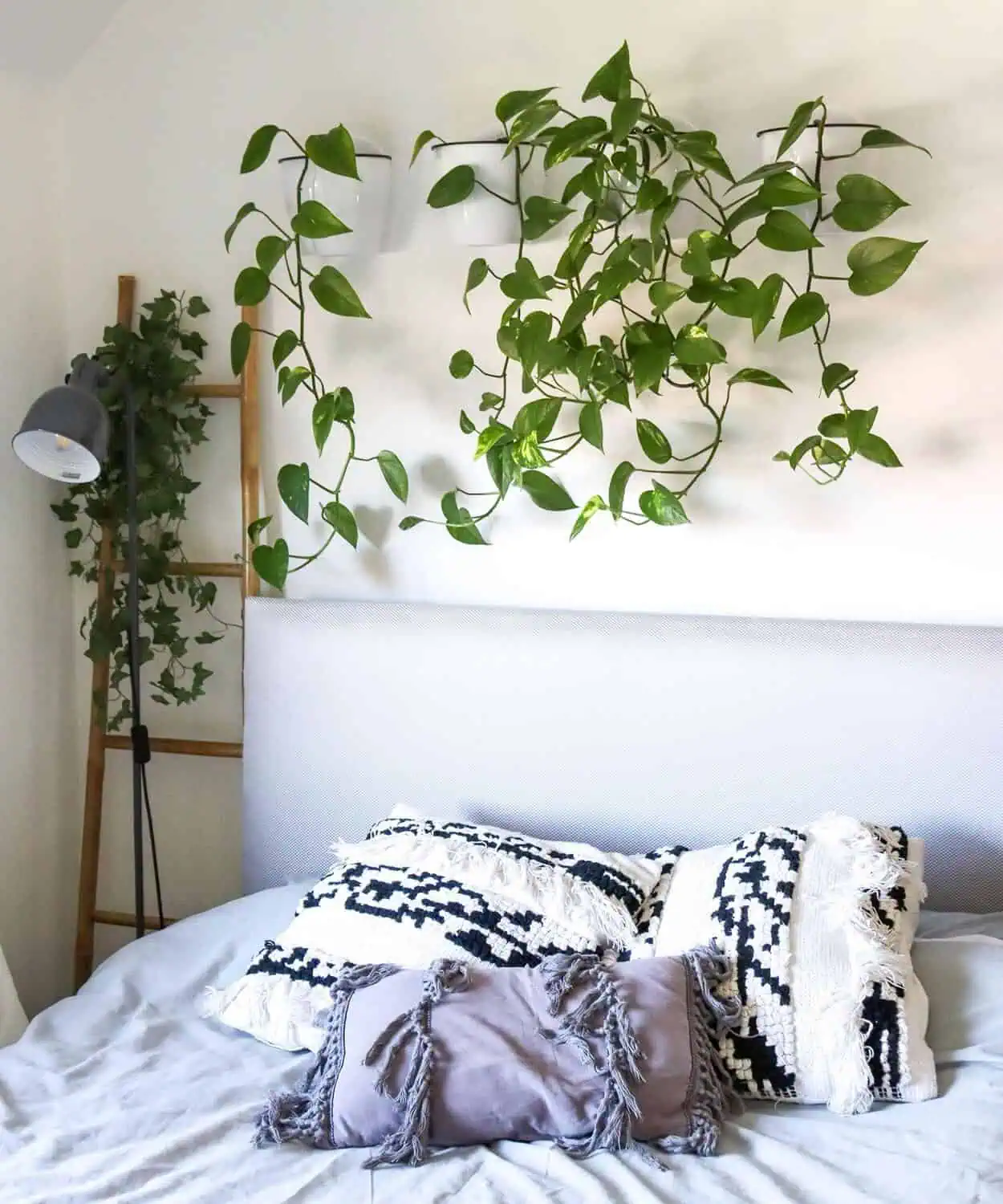
Credit: Sian Victoria/ Alamy Stock Photo
Golden pothos (Epipremnum aureum) is another plant that can turn an empty shelf into a cascade of green. It's an evergreen climber with heart-shaped leaves, and its stems can grow several metres long when allowed to trail or climb.
It tolerates a fairly broad range of indoor conditions and is particularly useful when you want a large visual effect from a relatively small pot. If you want to learn how to grow and care for pothos, here’s a definitive guide.
The only drawback is that pothos are toxic to dogs and cats because of insoluble calcium oxalates, which can cause intense irritation of the mouth and difficulty swallowing if eaten.
13. Rubber Plant
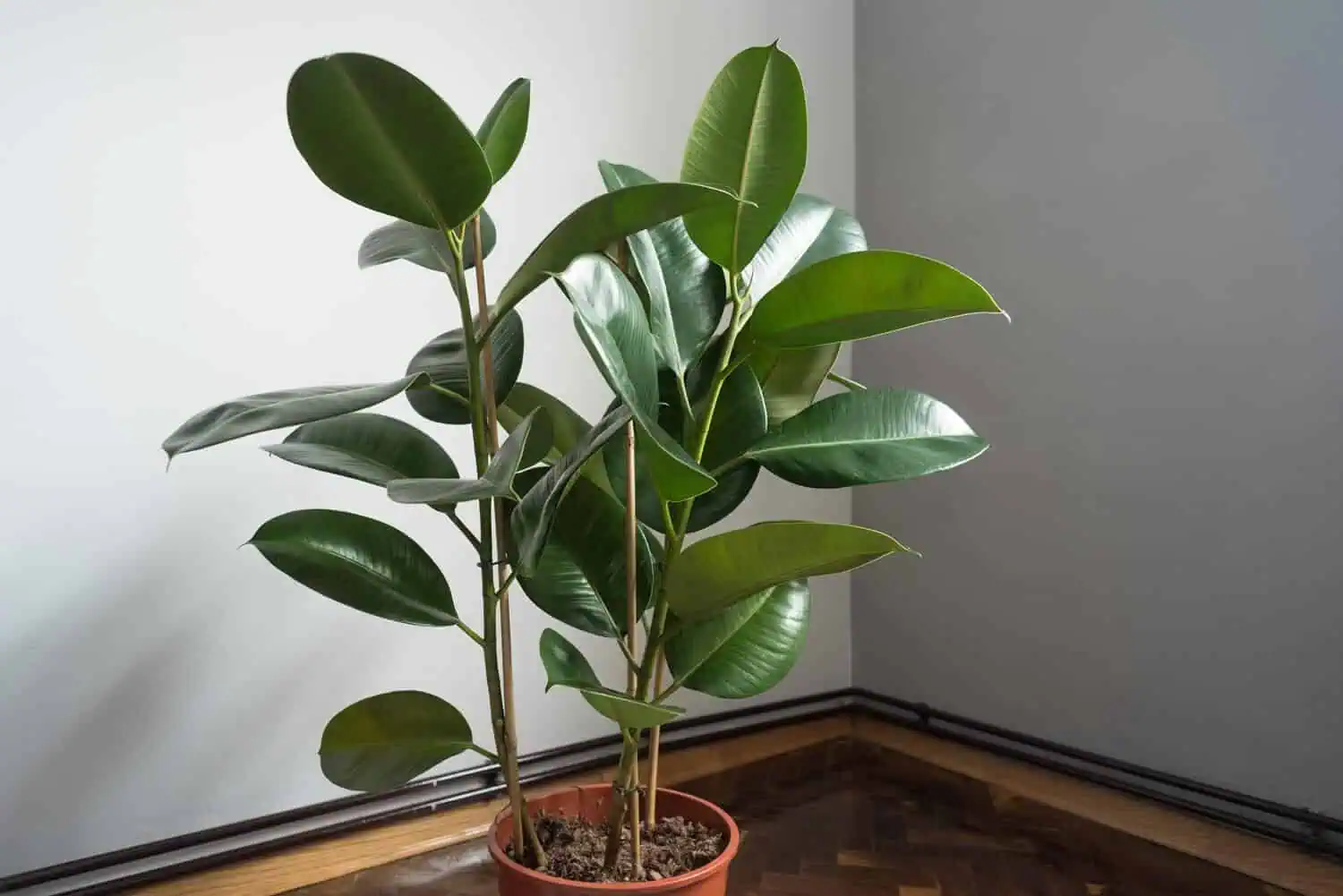
The rubber plant (Ficus elastica) is the choice for anyone who wants the bedroom plant to become part of the furniture. It's a large tropical evergreen with thick, glossy leaves that can eventually form an impressive indoor tree.
Unlike a delicate flowering plant, a healthy rubber plant has a strong architectural presence. It works especially well in a larger bedroom where a small pot would simply disappear into the background.
This plant can eventually become quite large, so pruning and occasional repotting may be necessary.
One point to remember is that the milky sap from Ficus plants can irritate the skin.
Conclusion
To recap, you don’t need all these 13 bedroom plants to help you sleep.
You just need a handful.
For instance, if fragrance helps you unwind, lavender or jasmine are great choices. If you want something virtually indestructible, choose a snake plant.
If your bedroom is humid and you enjoy lush foliage, a Boston fern or peace lily may fit beautifully. If you want something fascinating to watch as evening arrives, a prayer plant has a genuine botanical trick up its sleeve.
Choose one plant you genuinely enjoy looking after, give it the conditions it needs, keep the bedroom cool, dark and well ventilated, and build the rest of your sleep routine around those basics.
If you've got a bedroom plant that has become part of your own bedtime routine, share this article on Facebook and Pinterest and pass the idea along.