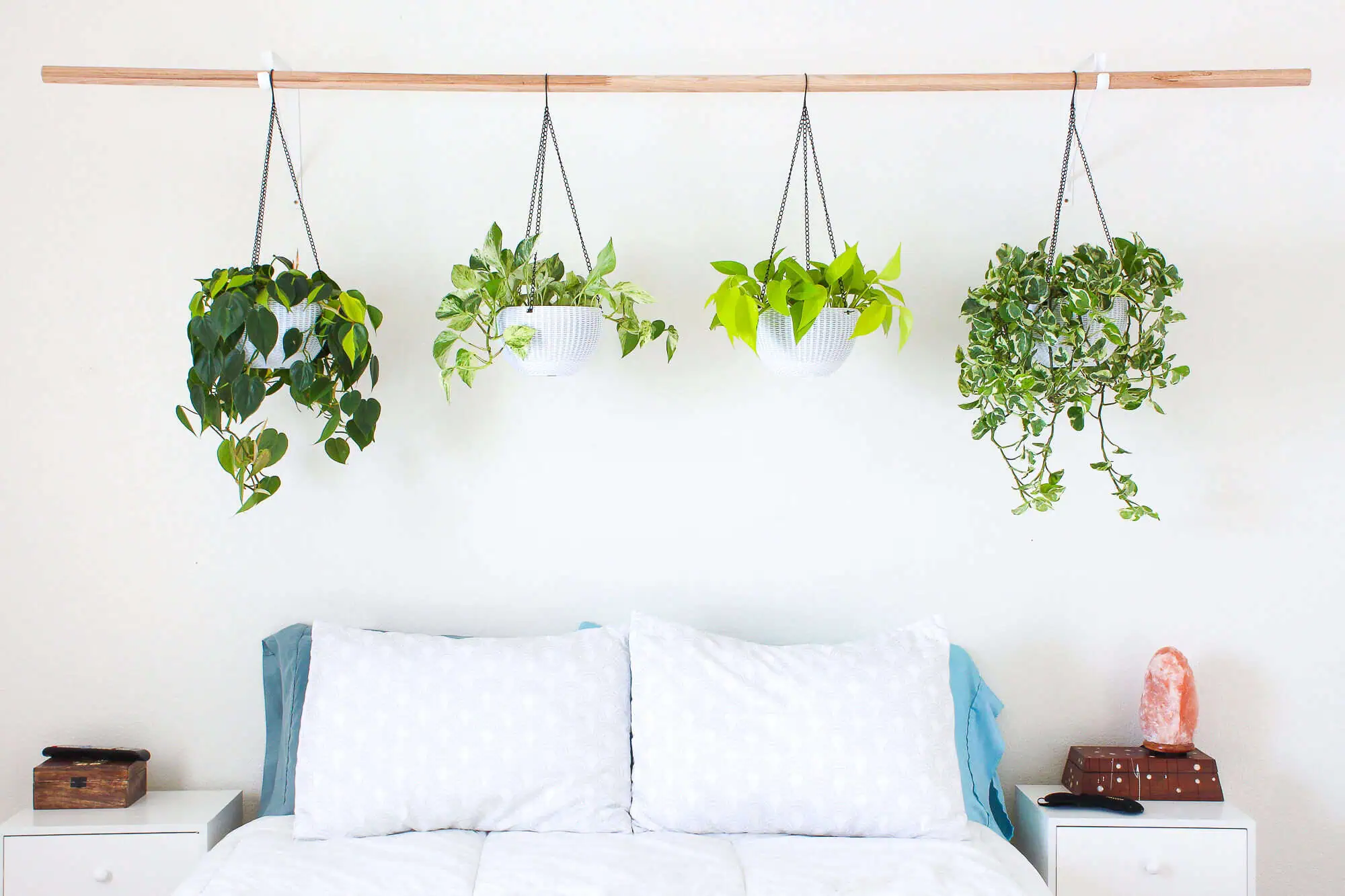
Interior designers sometimes talk about a “missing layer” in a room. The sofa is in place. The art is hung. The rug anchors everything nicely. Yet something still feels flat. Often, that missing layer is vertical life, something that draws the eye upward and softens hard architectural lines.
Hanging plants do this almost effortlessly. They add movement, texture, and a sense that a room is alive rather than staged. A trailing vine spilling from the ceiling or a cluster of suspended greenery near a window changes how the whole space feels.
Besides, indoor greenery improves mood and reduces stress in living environments. That explains why rooms with plants often feel calmer and more welcoming, even when nothing else changes.
The beauty of hanging plants is that they are less about the plant itself and more about placement. A simple pot becomes a design element when it’s floating in the right spot.
Here are fifteen ideas that show how hanging plants can transform a room, not just decorate it.
1. Frame a Window with Cascading Greenery
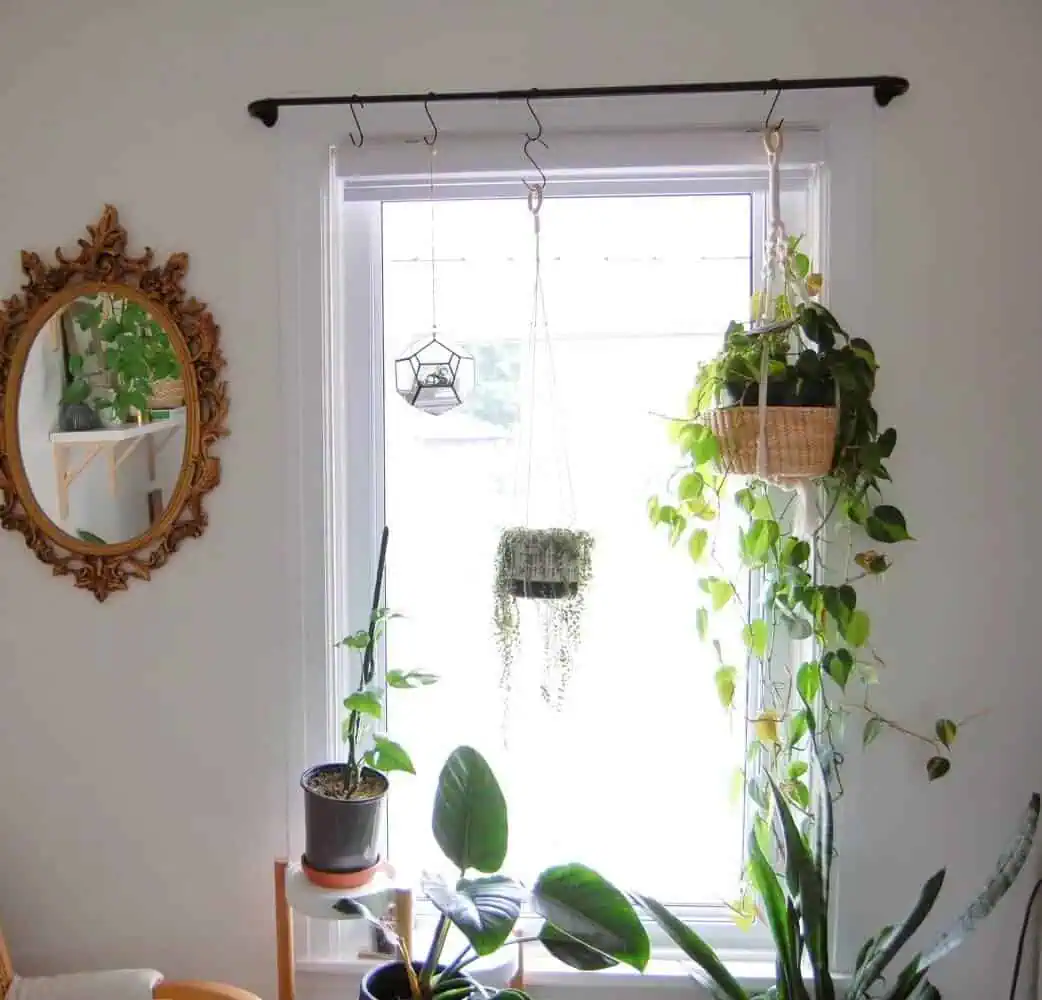
Windows already draw attention, so adding hanging plants nearby amplifies that natural focal point.
Suspending plants slightly above the window frame allows vines to trail down along the sides. The effect feels soft and organic, almost like curtains made of foliage. It blurs the line between indoors and outdoors.
This approach works especially well in living rooms and kitchens where windows receive consistent daylight. Instead of one plant centered in the window, try two or three placed asymmetrically.
The imbalance feels natural, almost like plants growing around a forest opening.
2. Create a Floating Plant Corner
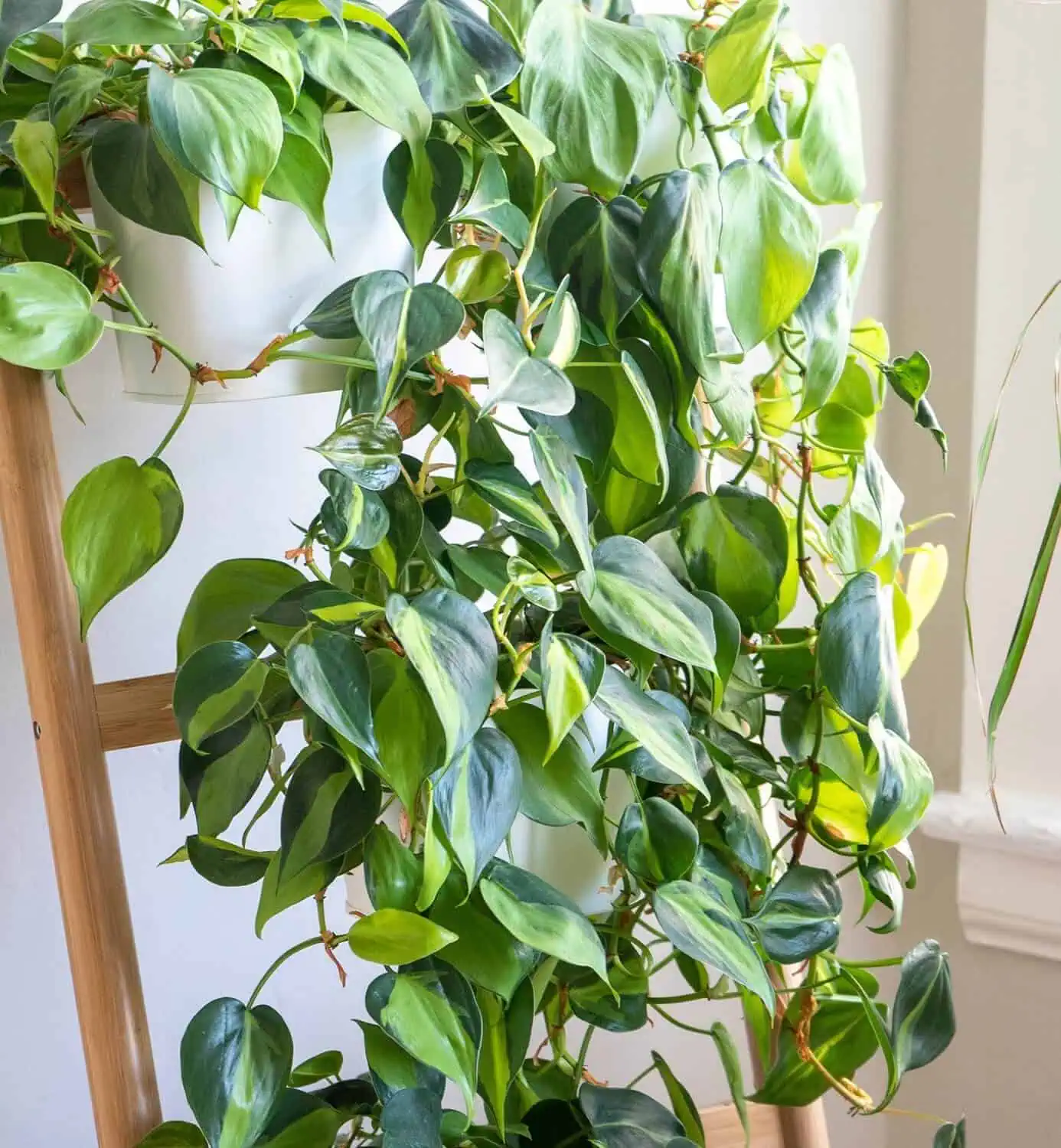
Corners can feel awkward. Furniture rarely fits perfectly, and the space often becomes an afterthought.
A hanging plant solves that problem beautifully. Suspended greenery softens the angle and gives the eye somewhere to land. It turns a forgotten corner into a visual feature.
Try layering two or three hanging pots at different heights. When plants occupy vertical space, the corner suddenly feels intentional rather than empty.
The trick is height variation. A cluster that staggers upward feels dynamic, almost sculptural.
3. Use Plants to Soften Ceiling Lines
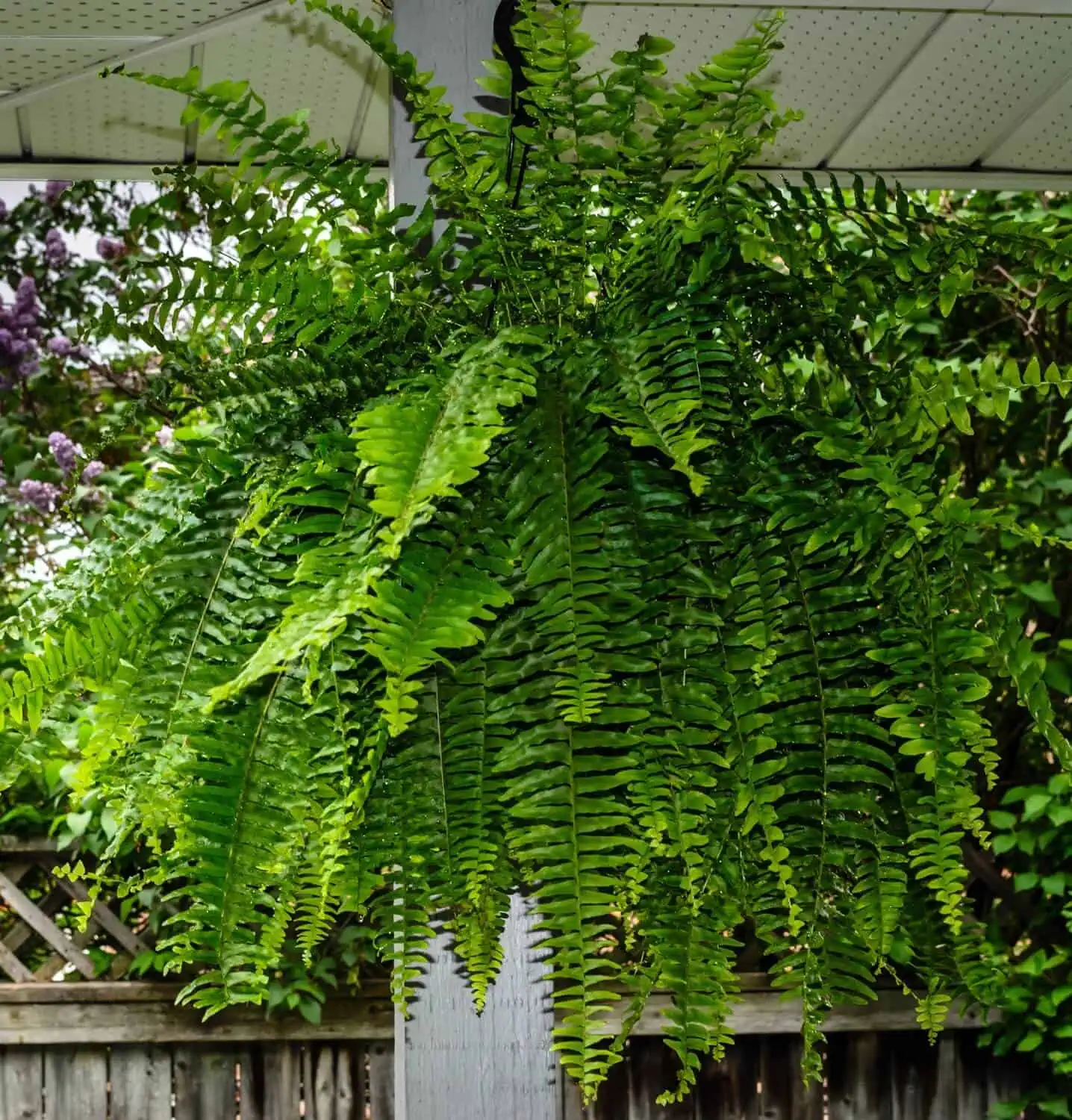
Rooms with high ceilings sometimes feel a little echoey or cold. Everything sits far below the ceiling, leaving a large empty gap above.
Hanging plants visually pull the ceiling down, but in a gentle way. They fill that vertical void without making the room feel cramped.
Position a few planters above eye level but below the ceiling line. The greenery creates a soft transition between furniture and architecture.
This works especially well in lofts or open-plan apartments where ceilings stretch higher than usual.
4. Hang Plants Above a Dining Table
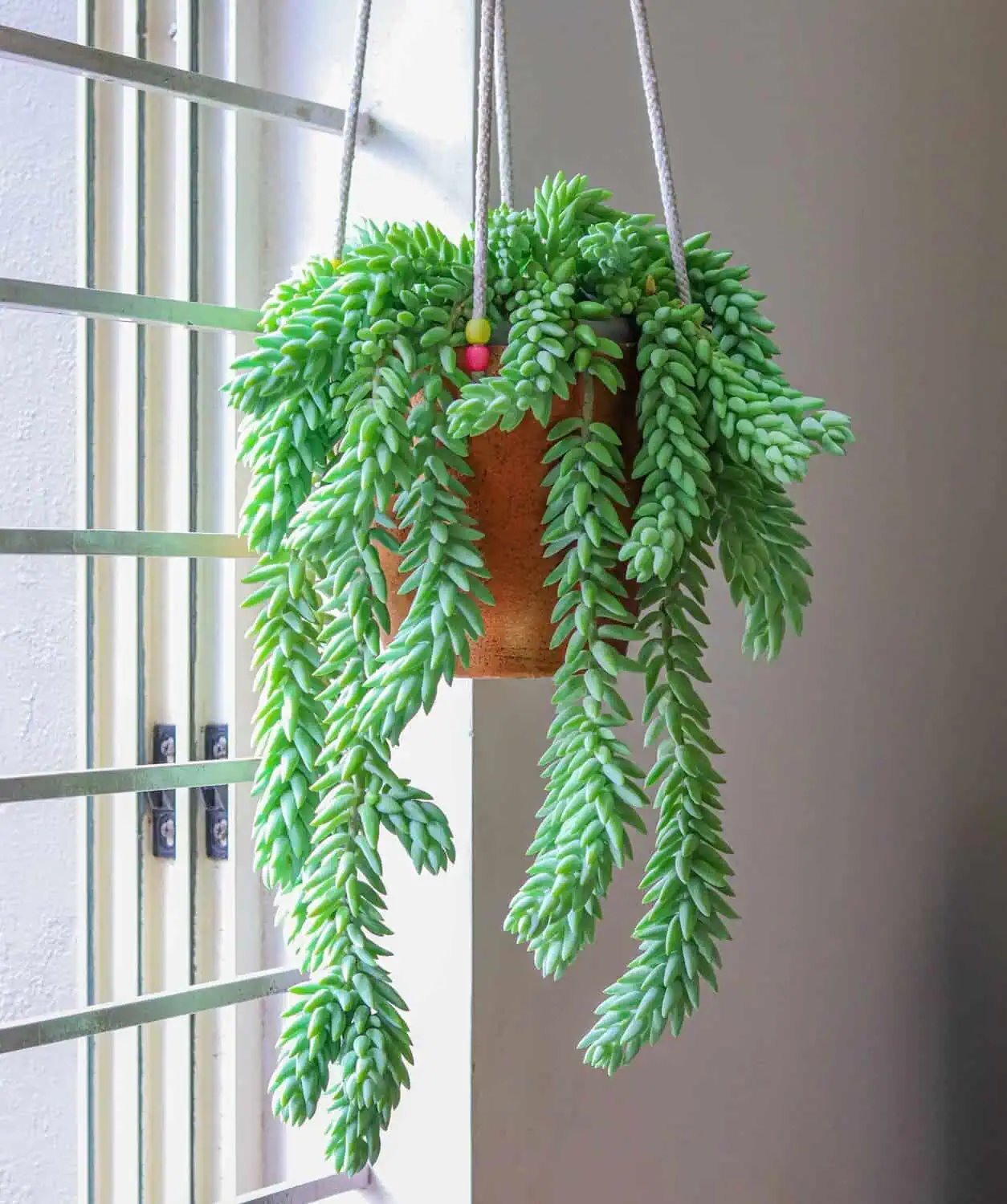
Lighting usually takes center stage above a dining table, but plants can share that role.
Suspending greenery around a pendant light adds warmth and softness. It turns the dining area into a kind of indoor canopy.
There’s also a psychological effect. Plants naturally make spaces feel more relaxed, which suits dining areas perfectly. Meals feel slower, and conversations last longer.
Keep the planters slightly above head height so the table still feels open and uncluttered.
5. Turn a Shelf into a Hanging Garden
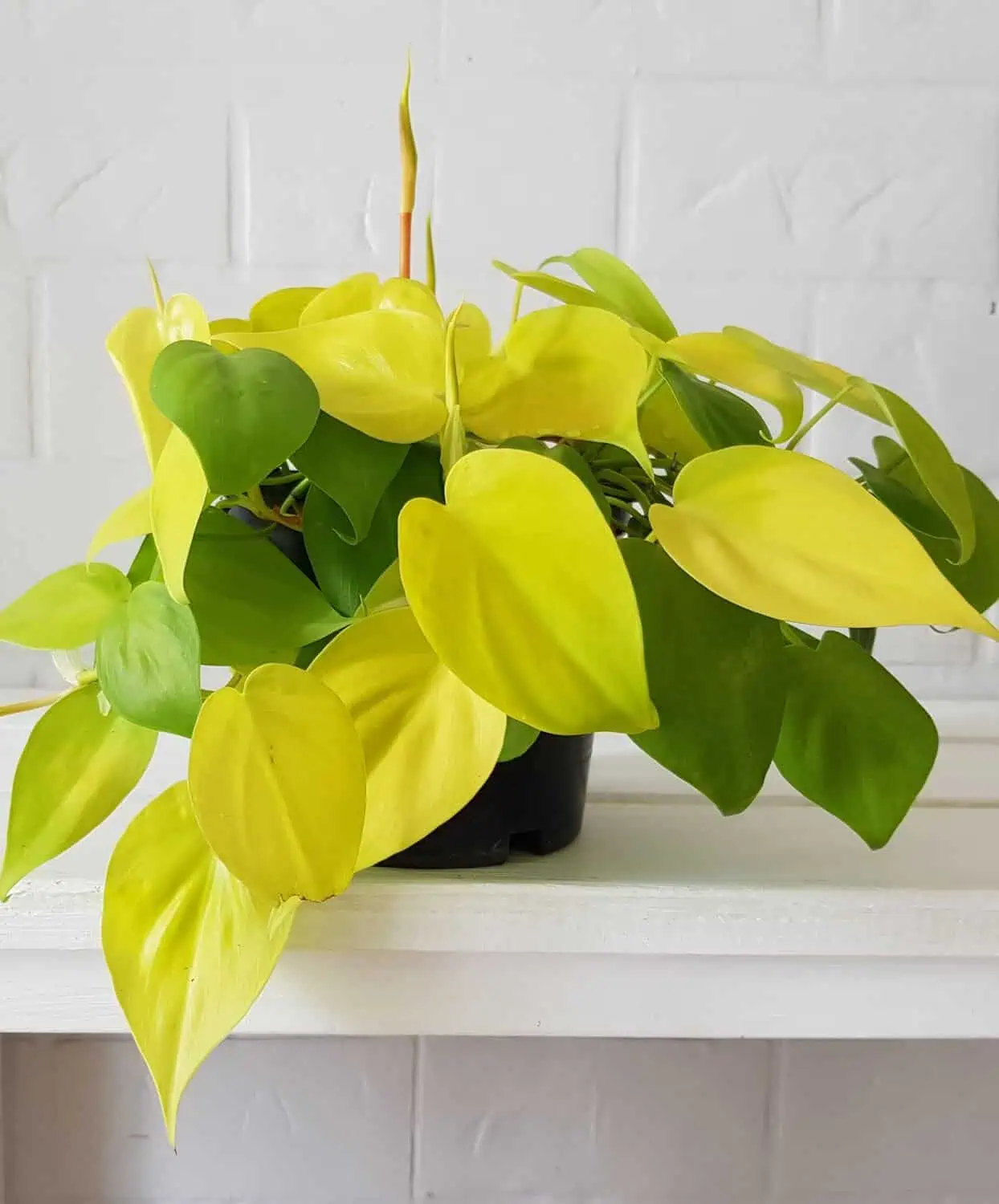
Floating shelves are great, but they often look static. Everything sits neatly in a row.
Hanging plants below the shelf changes the whole dynamic. Suddenly, the display has movement. Vines trail downward while books and objects anchor the top.
This layered approach makes a wall feel deeper and more textured.
Designers often talk about “visual rhythm.” Alternating objects above and plants below creates that rhythm naturally.
6. Hang Plants in the Bathroom for a Spa-Like Feel
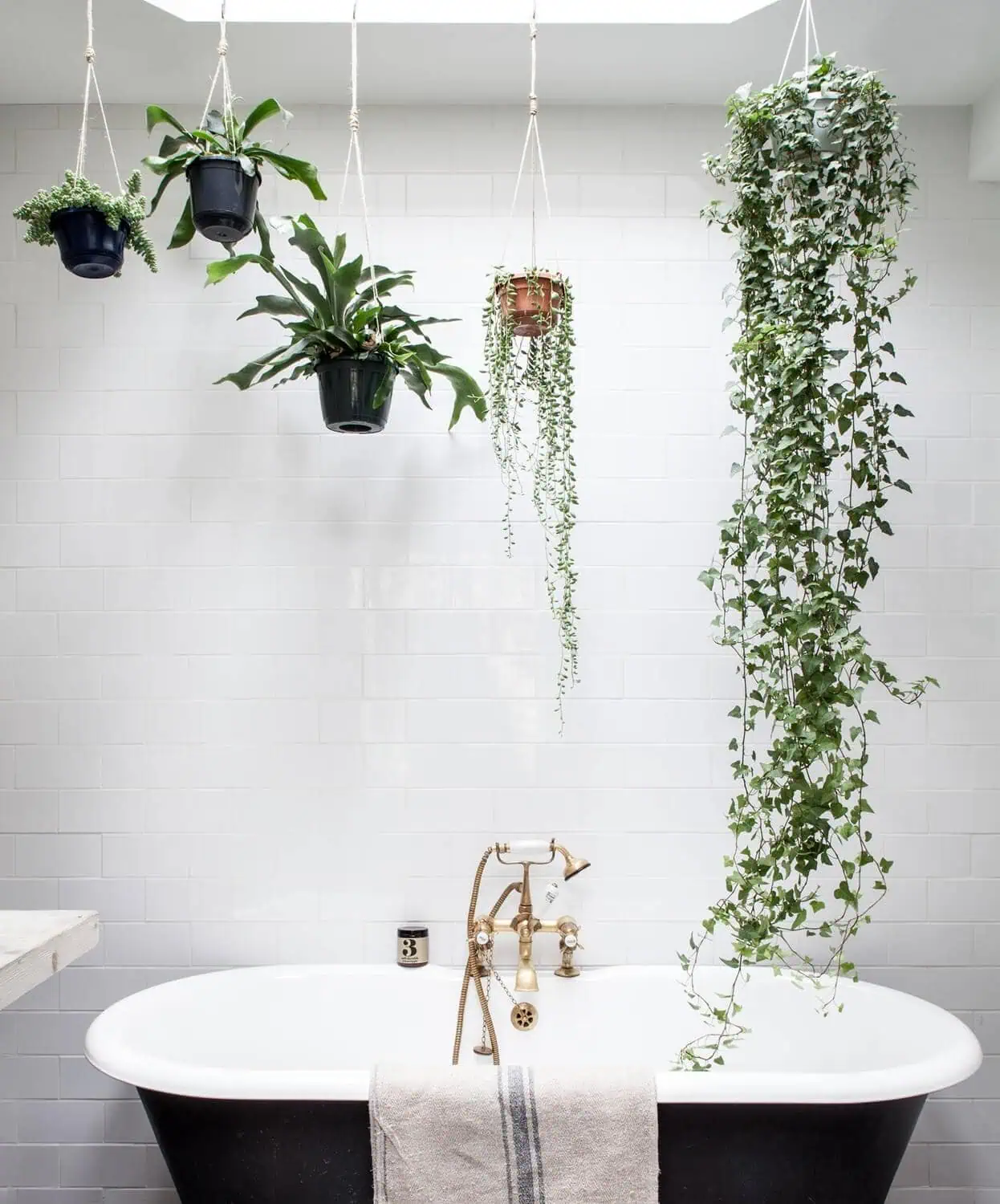
Bathrooms tend to rely on tile, mirrors, and metal fixtures. All those surfaces can feel a little cold.
A hanging plant softens the room instantly. It introduces organic shapes and color in a space that’s usually very structured.
Position one near a window or above a bathtub if the layout allows it. The greenery adds a spa-like atmosphere without any renovation.
The key idea here is contrast. Natural elements bring warmth to highly polished spaces.
7. Create a Living Headboard
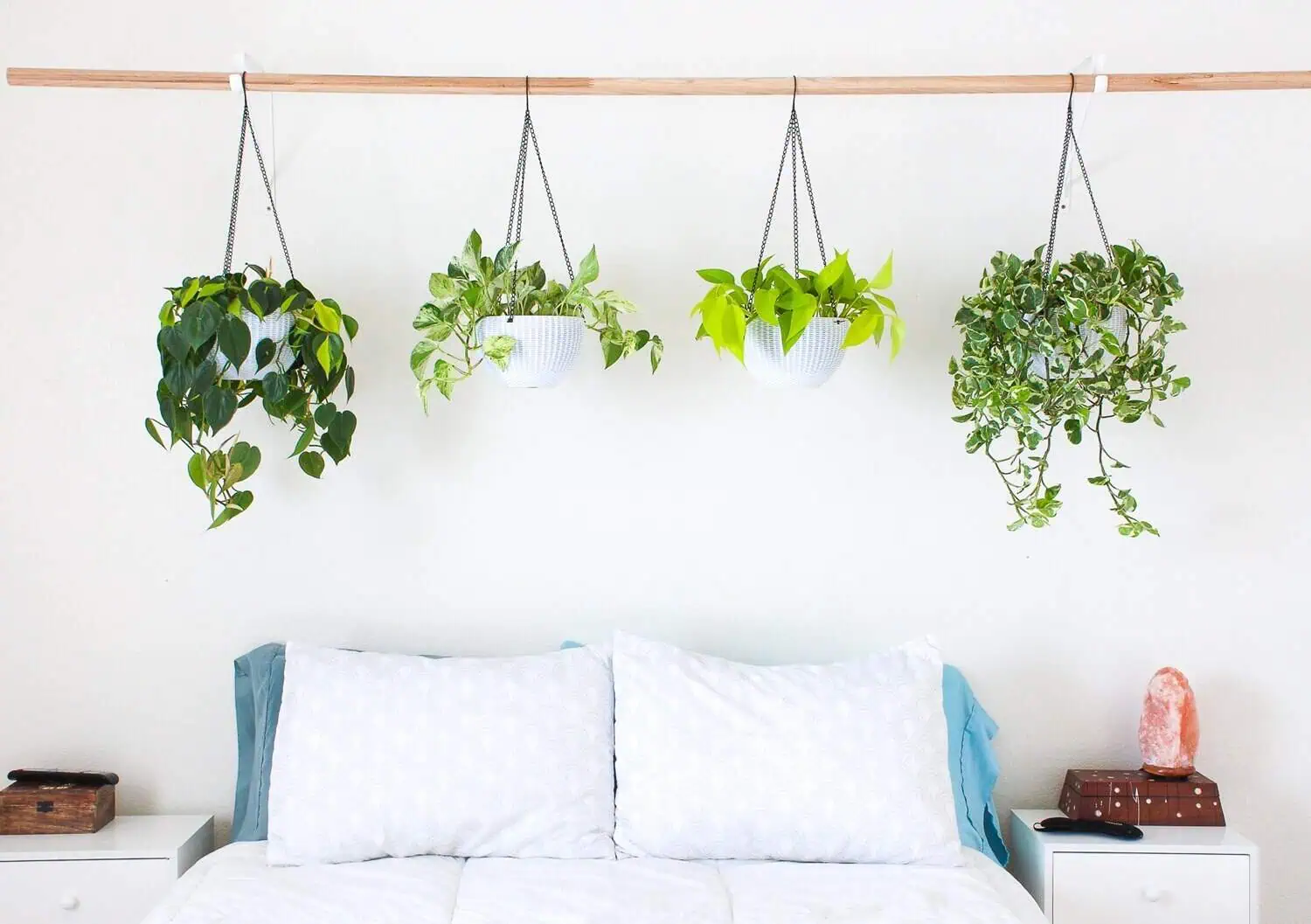
Bedrooms benefit from a calm, layered design. Hanging plants above the headboard can contribute to that softness.
Instead of artwork, suspend a few small planters so foliage gently frames the bed. The effect feels relaxed and slightly bohemian.
Spacing matters here. Keep plants high enough that they don’t feel heavy above the bed.
When done well, the arrangement feels like a living canopy.
8. Highlight a Staircase with Hanging Plants
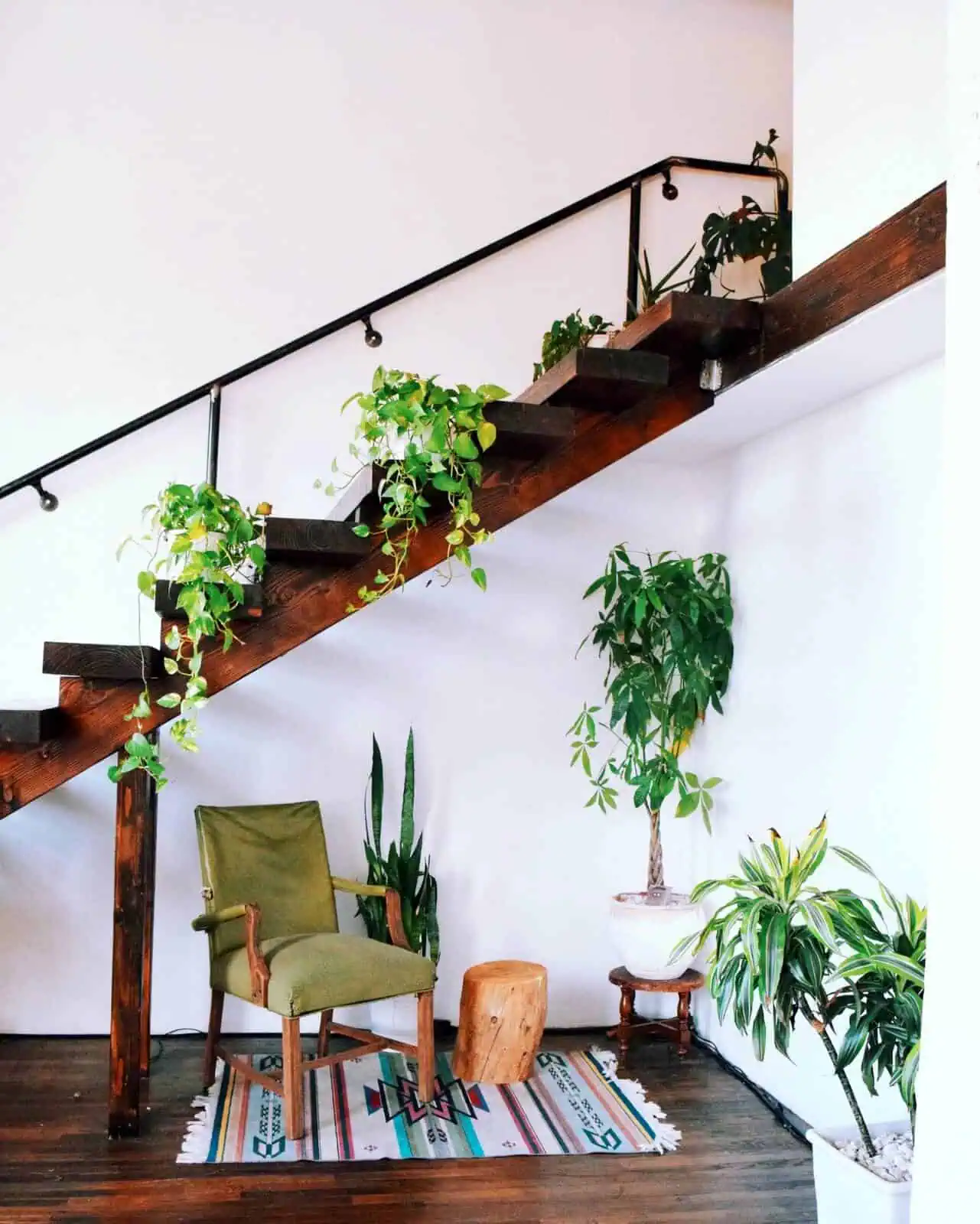
Staircases already have movement built into their design. Hanging plants can amplify that sense of motion.
Place several planters along the staircase wall, following the upward slope. Each plant sits slightly higher than the last.
This creates a visual path that naturally guides the eye up the stairs. It’s subtle, but surprisingly powerful.
Instead of a blank wall, the staircase becomes a living gallery.
9. Suspend Plants Above a Kitchen Island
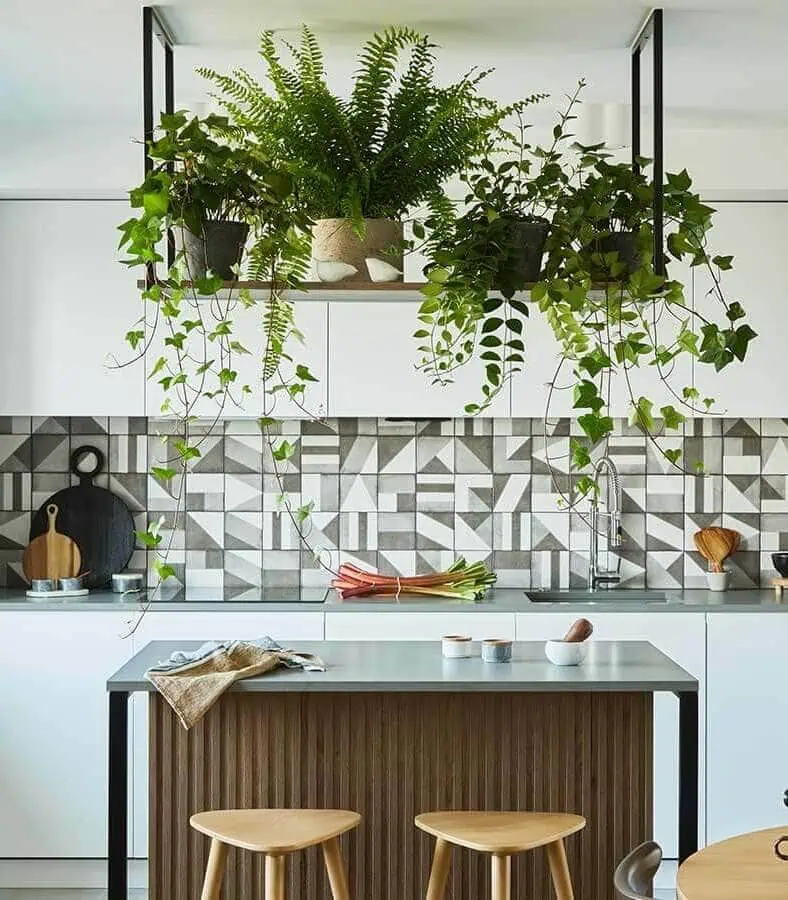
Kitchen islands are natural gathering points. People cook, talk, and hover around them.
Hanging plants above the island softens the space while keeping countertops clear. That’s the beauty of vertical décor. It adds personality without sacrificing function.
Try grouping two or three planters along the island’s length. The greenery breaks up the hard surfaces of stone and metal.
Even a small cluster can make the kitchen feel warmer and more lived-in.
10. Use Plants to Divide a Room
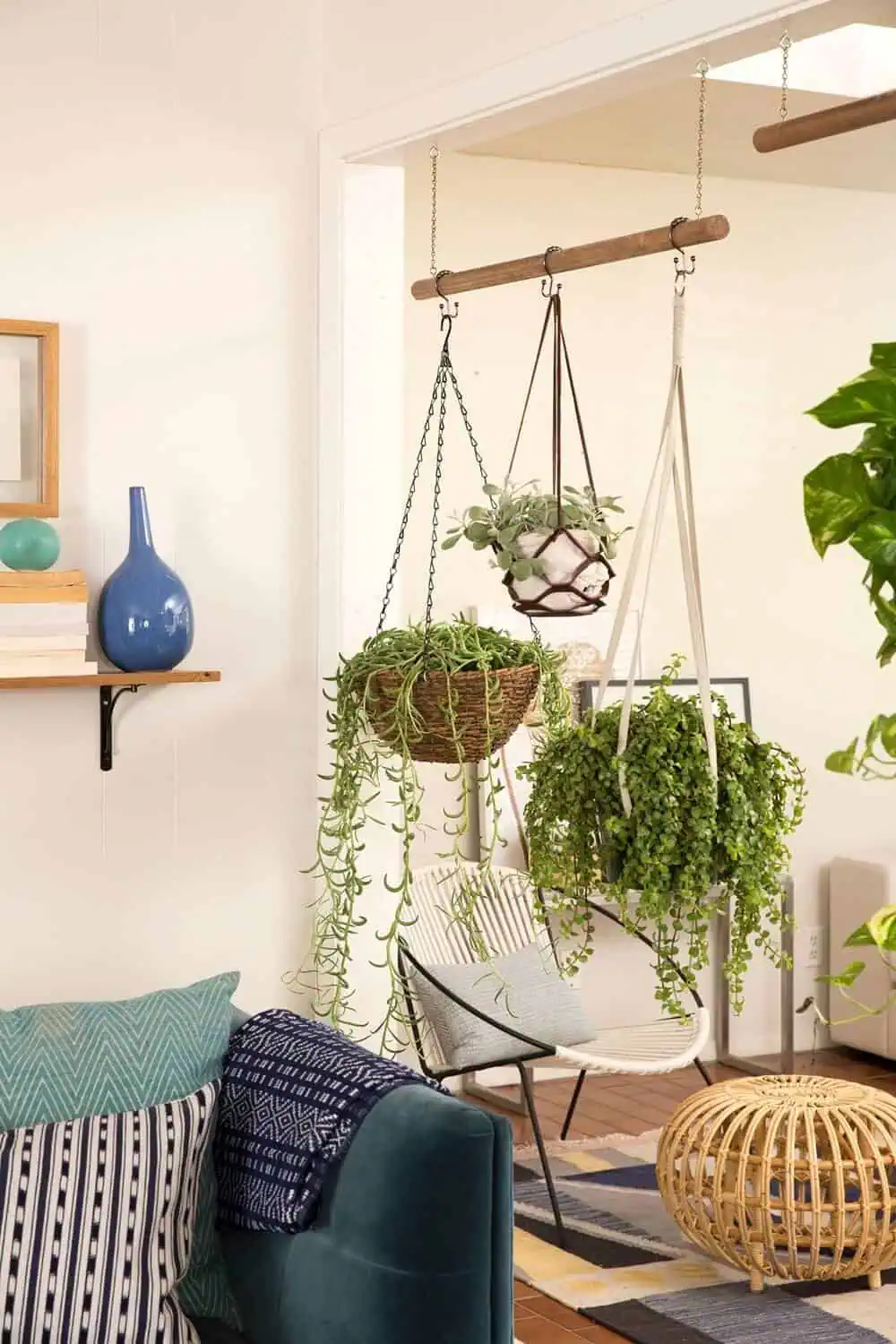
Source: BHG
Open floor plans are great for light and movement, but sometimes they blur functional spaces.
A row of hanging plants can act as a subtle divider. Suspended greenery creates a soft boundary between areas like the living room and dining space.
Because plants aren’t solid barriers, the room still feels open. Yet there’s a visual cue that one zone ends and another begins.
It’s like drawing a line in the air.
11. Hang Plants Next to Artwork
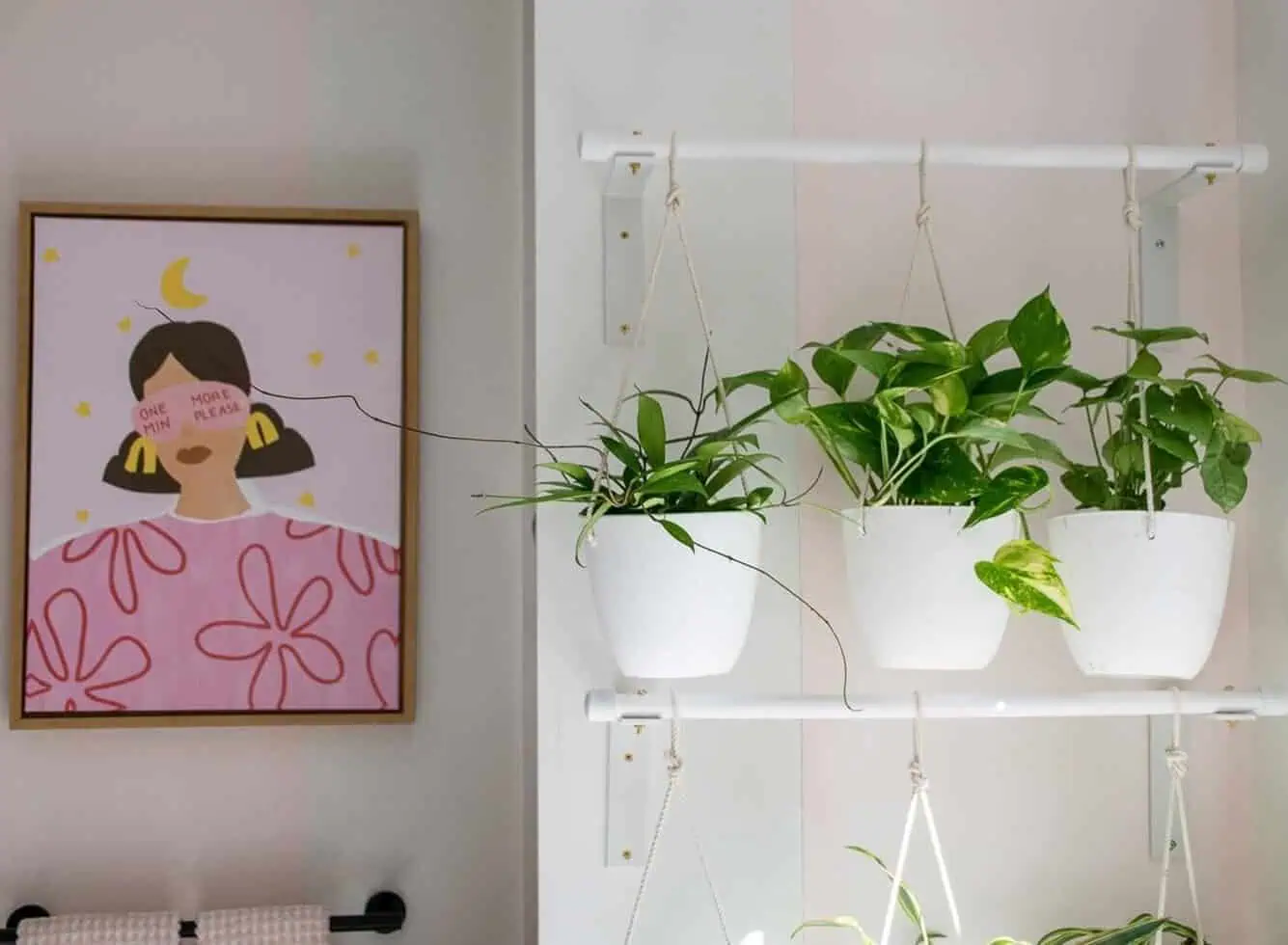
Source: At Charlotte's House
Artwork and plants often complement each other beautifully.
A trailing plant near a framed print adds movement next to something static. The contrast makes both elements stand out more.
Keep the plant slightly offset from the artwork so neither competes for attention.
Think of it as pairing sculpture with painting. One element is structured, the other organic.
12. Fill Empty Wall Space with Suspended Greenery
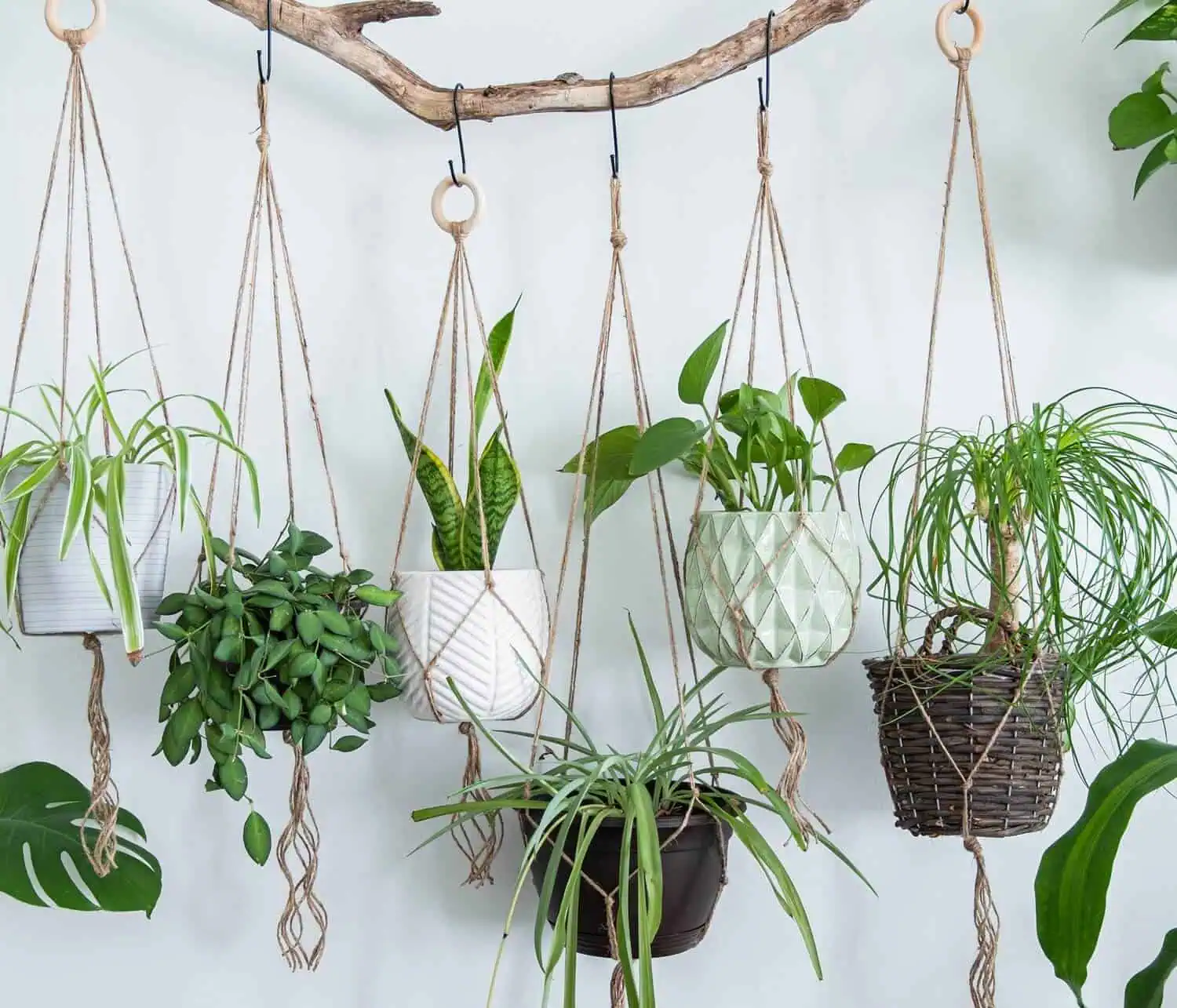
Large blank walls can feel intimidating. Art alone sometimes isn’t enough to soften them.
A cluster of hanging plants arranged at different heights can create a vertical garden effect. The wall becomes textured and layered rather than flat.
Vary the planter styles slightly. A mix of ceramics, woven baskets, or simple terracotta adds visual interest without clutter.
The goal is to create depth, almost like a living tapestry.
13. Use Hanging Plants in Small Apartments
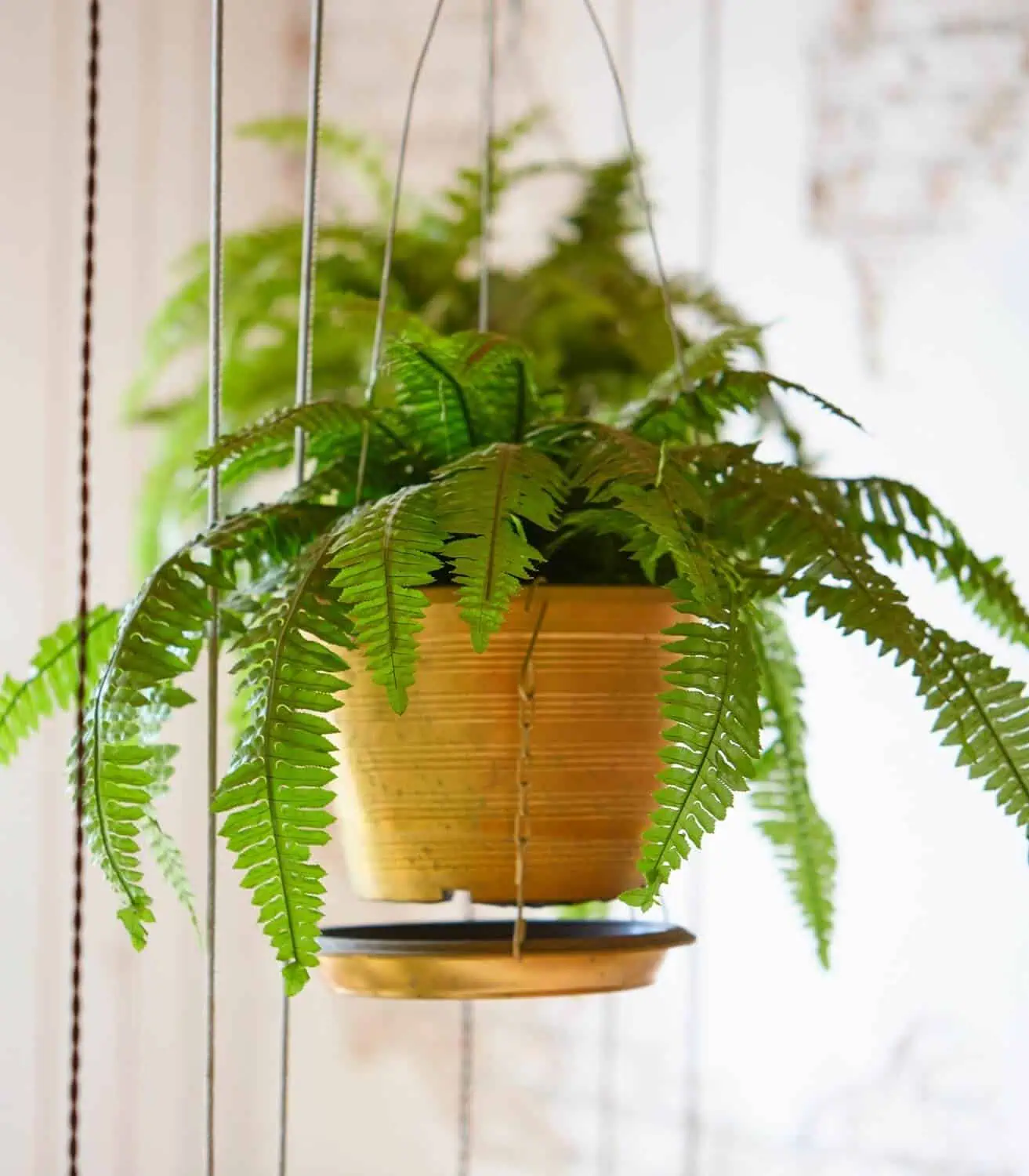
Small spaces often struggle with storage and floor space. Every square foot matters.
Hanging plants solve that challenge by occupying unused airspace. Instead of adding more furniture or décor, you build upward.
A few well-placed planters near windows or corners can make a small apartment feel lush without crowding it.
Vertical design is often the secret weapon of compact interiors.
14. Frame a Reading Nook
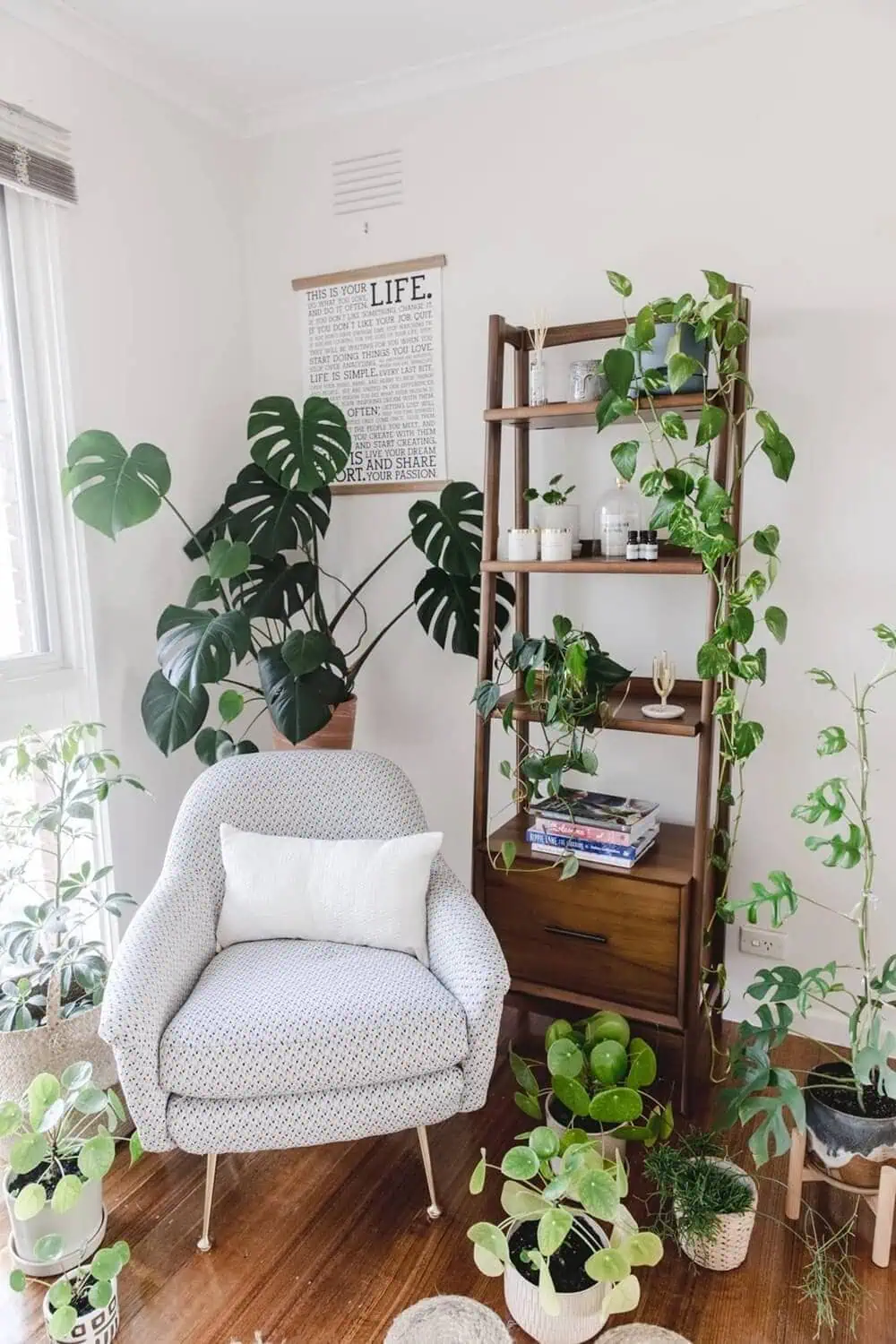
A cozy chair, a lamp, and a small table create the basics of a reading nook. Hanging plants can complete the atmosphere.
Position a plant slightly above and behind the chair so vines drape nearby. The greenery creates a gentle enclosure, almost like a quiet hideaway.
People tend to linger longer in spaces that feel sheltered and calm.
A little greenery can turn a simple chair into a retreat.
15. Create a Clustered Plant Chandelier
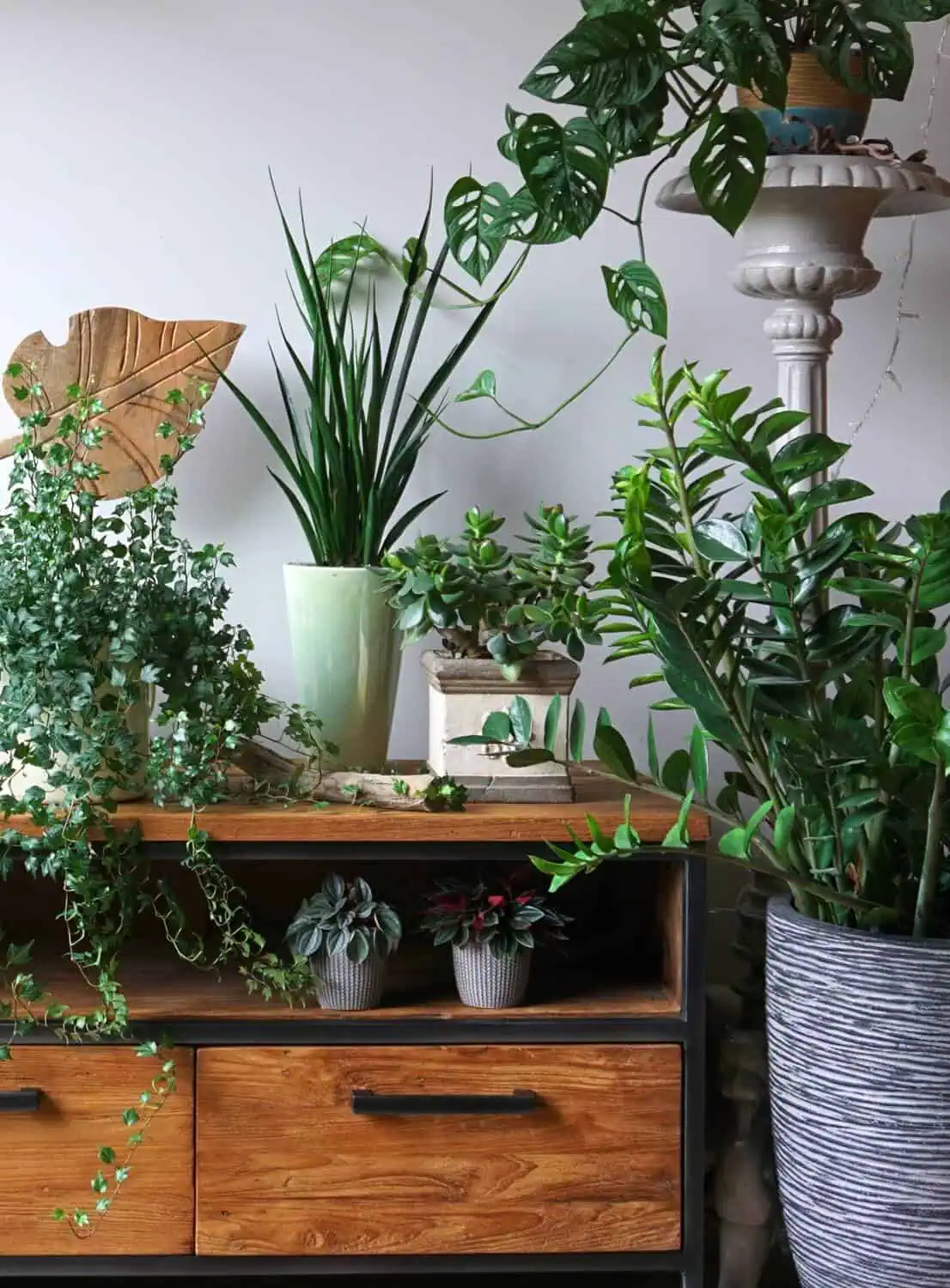
Sometimes one hanging plant isn’t enough. A cluster can become a statement piece.
Grouping several plants at slightly different heights creates a chandelier-like effect. The arrangement becomes sculptural, almost like a living artwork suspended from the ceiling.
This works beautifully in entryways or above coffee tables where there’s room for something dramatic.
The key is balance. Let the plants overlap slightly, but keep enough space between them so each one stands out.
Conclusion
Great interior design isn’t always about adding more objects. Often it’s about using space differently.
Hanging plants remind us that a room has three dimensions, not just length and width, but height as well. When greenery rises into that vertical space, the entire room changes its feel.
Walls feel softer. Corners feel intentional. Even quiet spaces gain a sense of life and movement.
In the end, the most powerful decorating trick might be the simplest one. The space above us is often the most overlooked design opportunity in the home, and a few well-placed plants can turn it into the most beautiful part of the room.