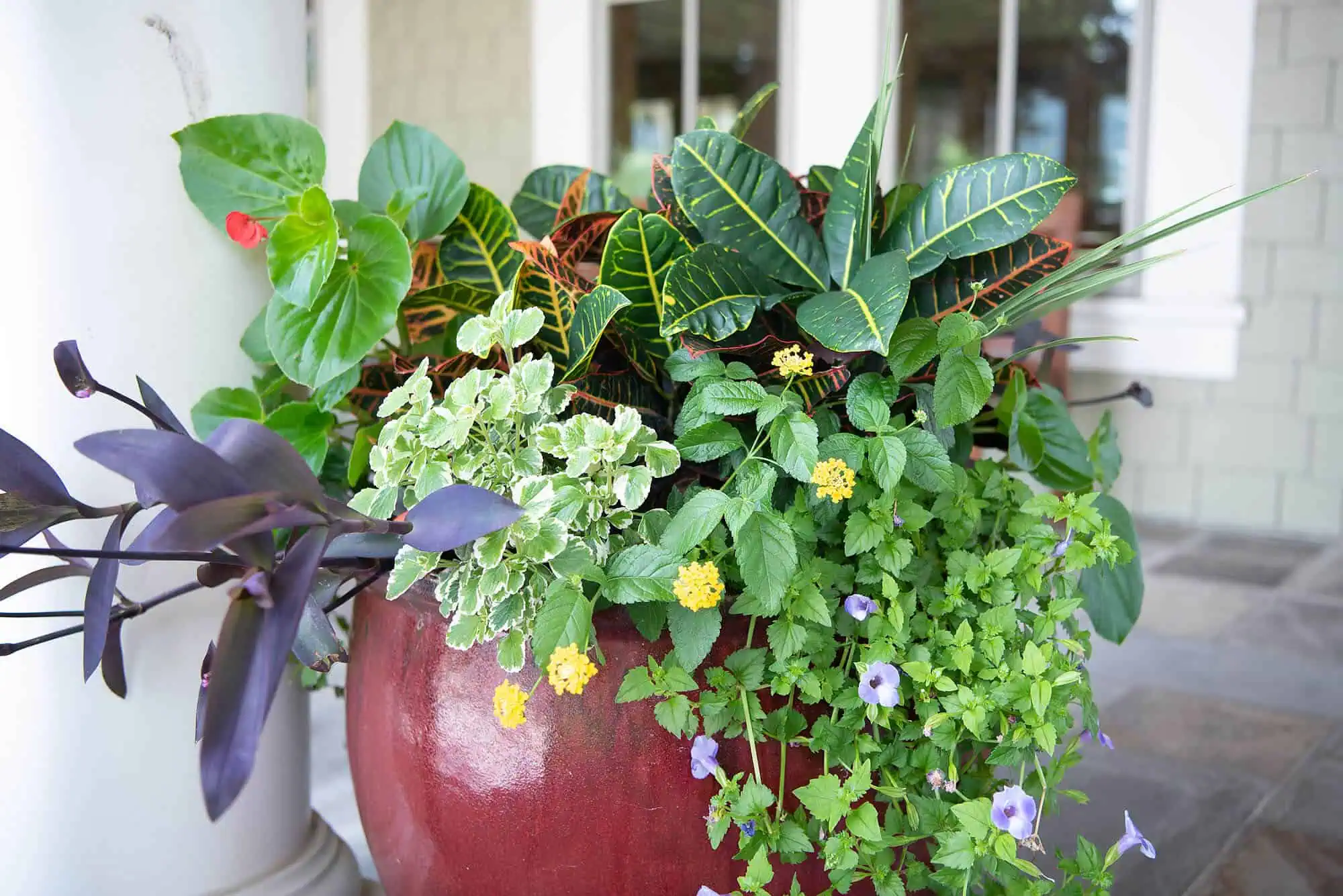
When it comes to growing lantana in a container with other plants, no single one is the star for long. Some blooms, some spills, and some plants quietly fill the gaps. The magic is in how they share the space.
That companionship and synergism are what make mixed pots gorgeous and inviting.
All said, Lantana camara is the one plant that pulls everything together. It’s bright, tough, and generous with color.
However, if you plant the whole container around lantana without thinking about the plants, you’ll most likely fail.
Therefore, the goal isn’t to grow lantana in a pot per se. But to grow a small, balanced growing system where lantana is the focal point, with other plants adding interest.
In today’s post, I’ll discuss how to achieve just that.
How to Grow Lantana in Companion with Other Plants in a Container
Choose the Right Companion Plants
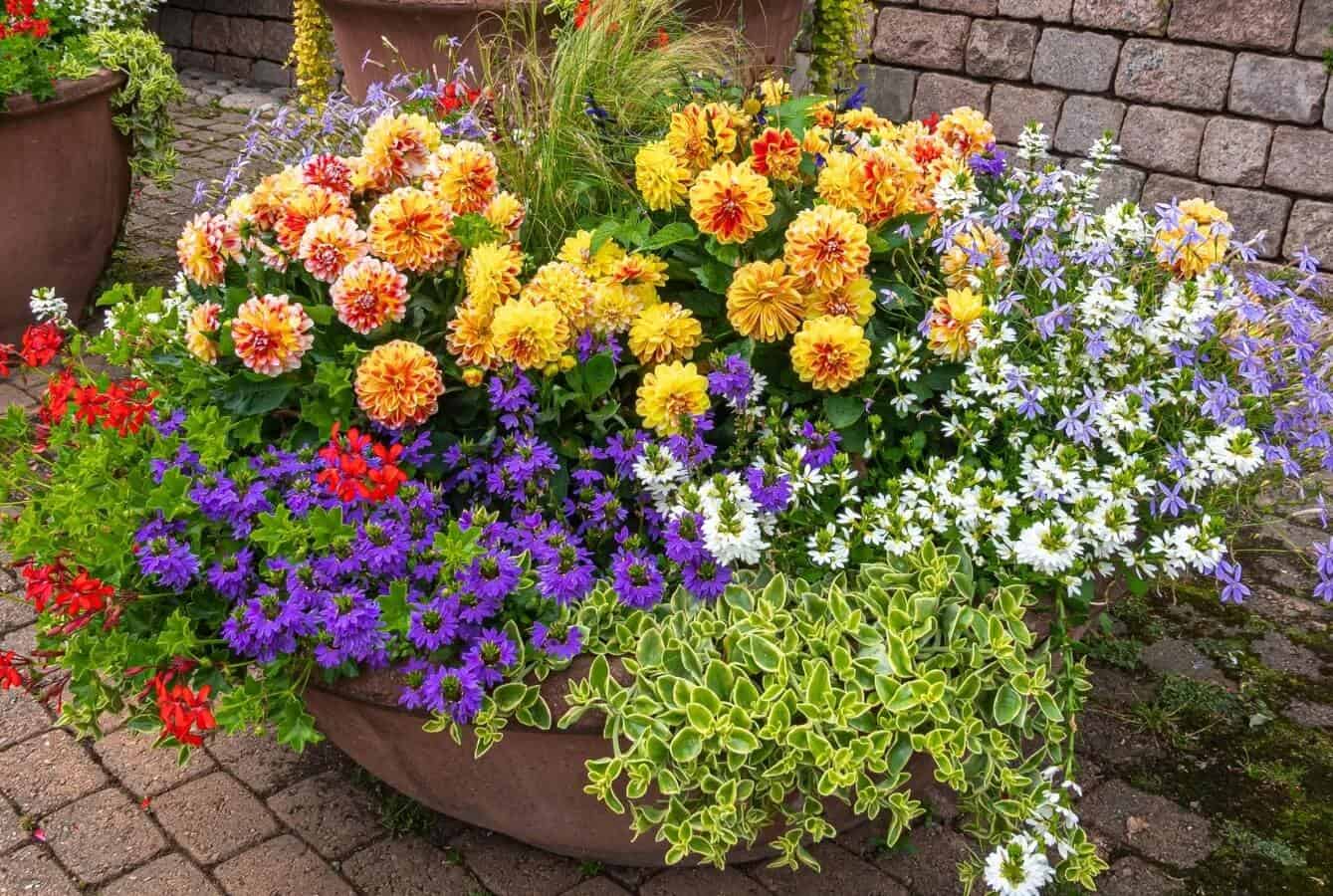
It’s tempting to pick plants based on color alone. But mixed containers succeed or fail underground based on the root system.
Every plant in that pot is sharing the same soil, the same water, and the same sunlight. If their needs clash, you end up constantly compensating. More water for one, less for another, shifting the pot around trying to please each plant.
With lantana, the baseline is clear. It prefers full sun and well-drained soil, and it doesn’t like sitting in constant moisture. So, the smartest move is to choose companion plants that are comfortable in those same conditions.
Plants like Verbena, Calibrachoa, Coleus, and Petunia tend to play nicely here. For foliage contrast, the Sweet potato vine or trailing Bacopa can work, as long as you keep an eye on moisture balance.
Pot Size and Container Selection
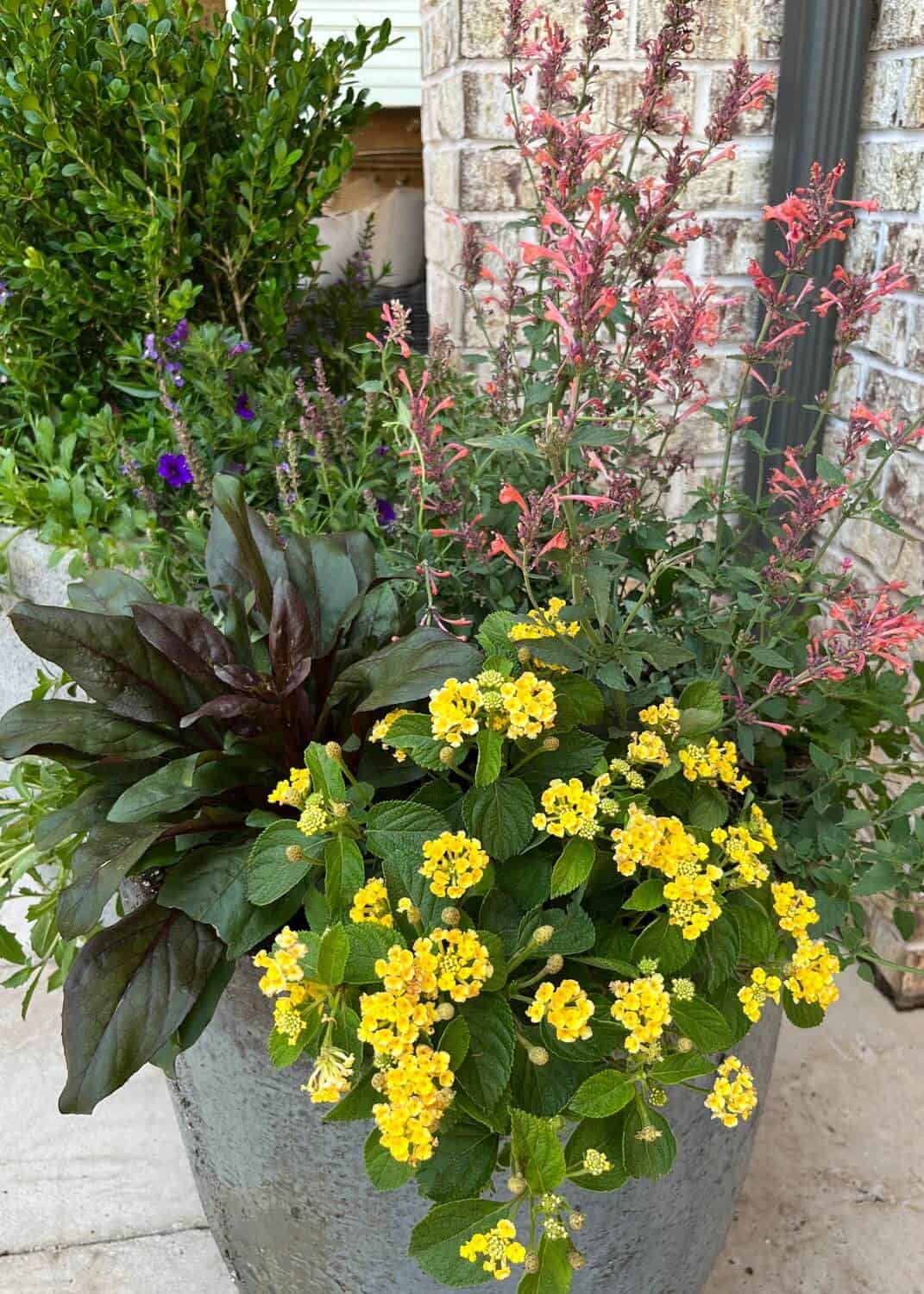
Source: Monrovia
Lantana alone can fill a small pot, so when you add companions, things get crowded quite fast. Roots compete for water and nutrients, and growth becomes uneven.
Therefore, it’s important to go bigger than you think you need when selecting a container.
A pot in the 12 to 16 inch range is usually the minimum for a balanced mix. Larger containers give each plant its own pocket of soil, which reduces stress and makes watering more forgiving.
The pot material also plays a significant role. For instance, clay pots tend to dry faster, which suits lantana but can stress thirstier companions. Plastic or glazed pots hold moisture longer, which helps balance things out.
It’s for this reason that I always recommend plastic or glazed pots for companion planting.
Suitable Potting Mix for Mixed Planting
Aside from the container, the potting mix is probably one of the most important considerations.
Luckily, most plants prefer a well-draining soil that partly retains some moisture. While this is achievable, Lantana prefers slightly faster drainage, while some companion plants appreciate a bit more moisture.
Striking a balance is key, and you can easily achieve it through good watering practices.
As a general rule, a good potting mix with compost, coco coir or peat, and perlite usually does the trick. It drains well but still holds enough moisture for the rest of the group.
If you go too sandy, everything dries out too fast. Too dense, and the roots stay wet too long. You’re aiming for that middle ground where water moves through, but not instantly.
Mixing in a slow-release fertilizer helps keep nutrients steady across all plants, especially since they’re sharing the same limited space.
Plants Arrangement in the Container
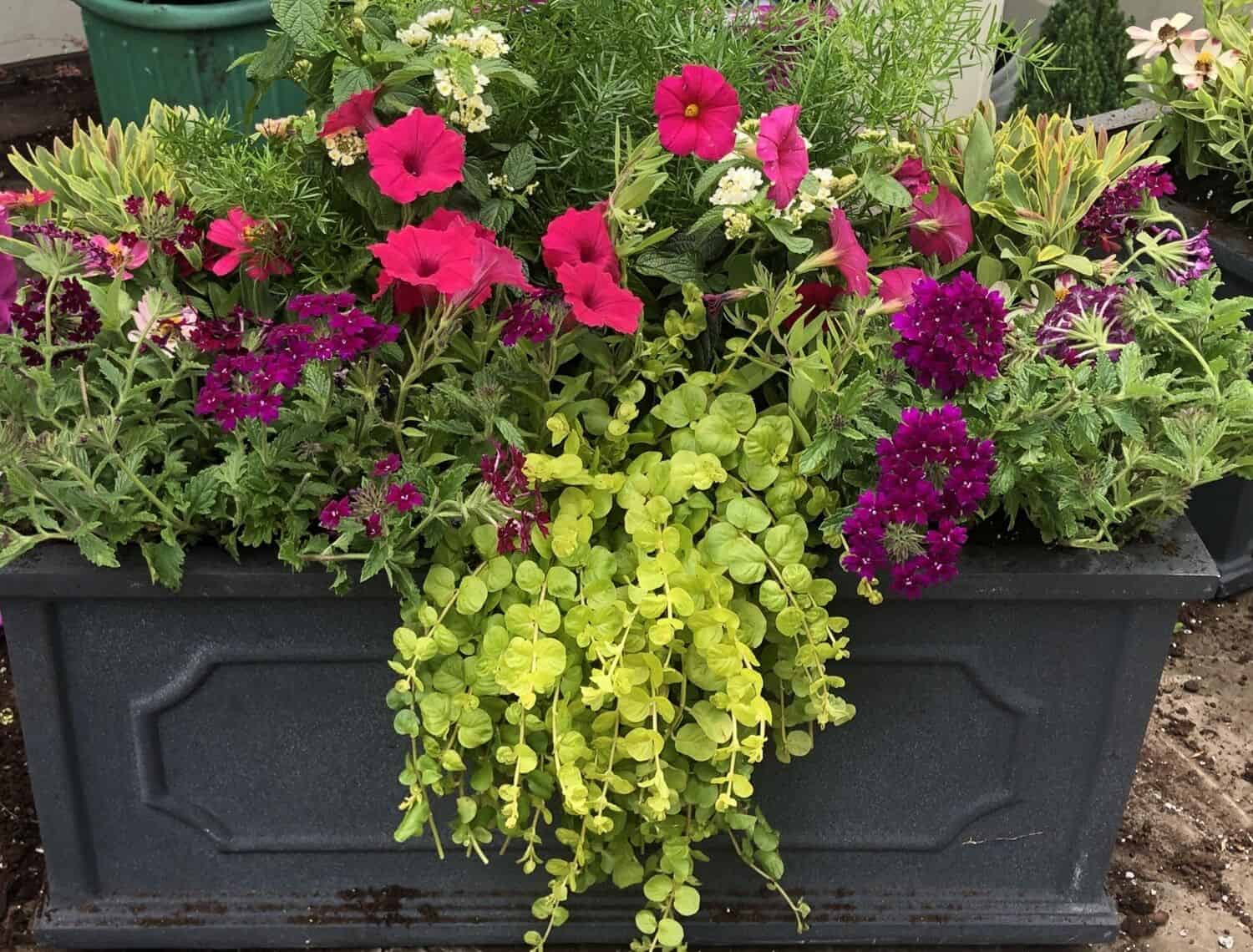
When planting, it’s easy to focus on how things look today. You need to focus on how much space each plant will ultimately need in the future, its growth habit, and its mature growth size.
Only then can you arrange them appropriately inside the container.
Generally, you should place lantana slightly off-center so it has room to expand without swallowing everything else. Surround it with mid-height plants that can fill gaps, then position trailing plants near the edges.
In essence, give each plant a bit of breathing room. It might look sparse at first, but that space disappears quickly as everything grows in.
How to Water a Mixed-Plant Pot
If you water only for lantana, you risk stressing plants that prefer consistent moisture. If you water for thirstier plants, you may keep the soil too wet for lantana.
The good news here is that, by choosing the right potting mix, you’ve already solved half of the problems, but watering and how you do it are major factors.
Start by checking the soil about an inch or two down. If it’s dry at that level, it’s time to water. Then water deeply so the entire root zone is reached, not just the top layer.
The type of plants you chose earlier matters too. When everything in the pot has similar needs, this balancing act becomes much easier.
In hotter weather, you might water more often as the pot mix tends to dry out faster. When it’s cool, reduce the watering frequency. The rhythm changes, but the principle stays the same.
Sun vs Shade Consideration
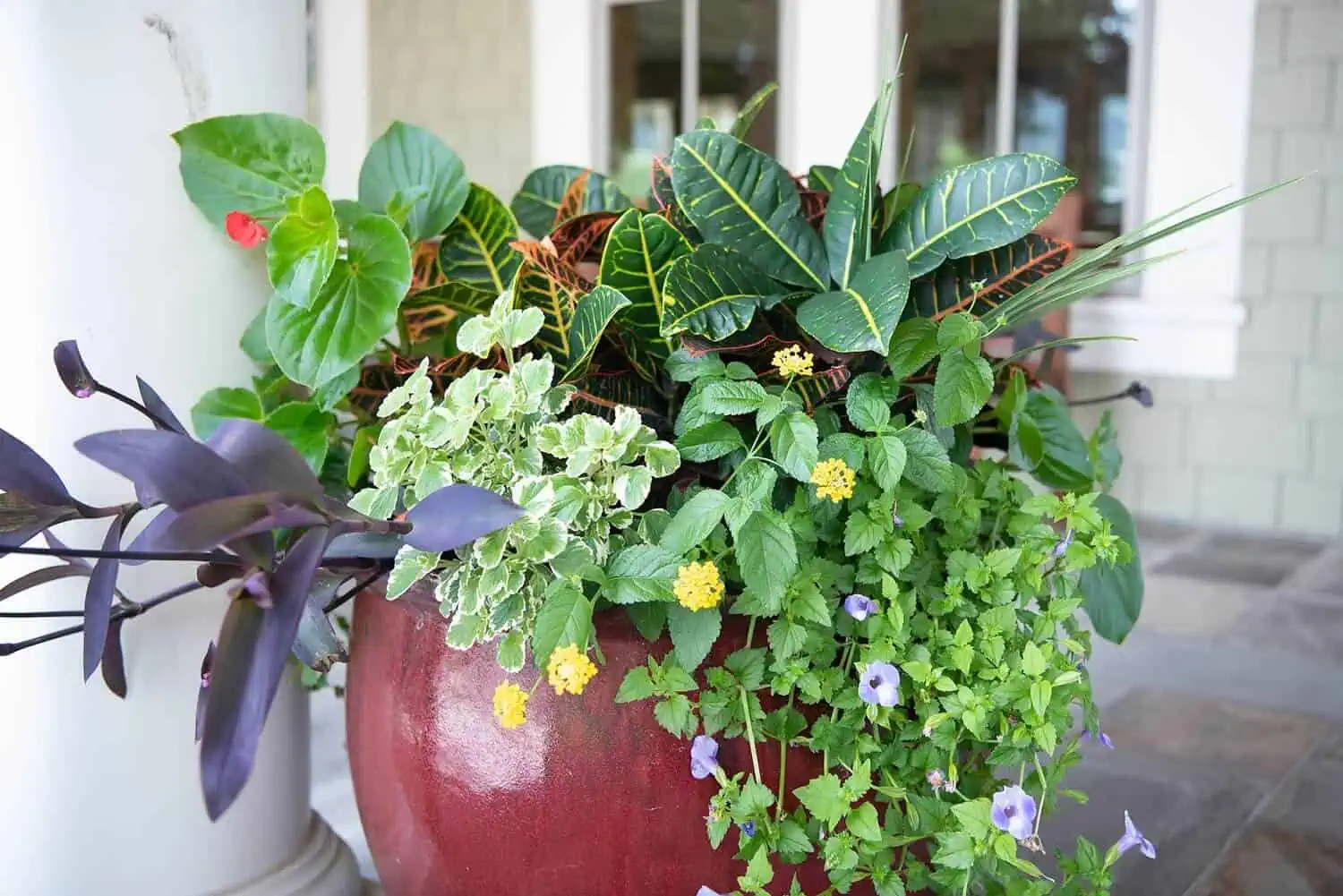
Most of the drought-tolerant plants, like the Lantana, love full sun. But in a mixed container, you can’t tuck in a shade-loving plant and hope it figures things out. It won’t.
So, place your pot where it gets at least 6 hours of light (which is intermediate). Then make sure every plant in that mix can handle that exposure.
If one plant starts stretching or fading, it’s usually a sign it’s in the wrong light conditions, not that it needs more care.
Pruning to Maintain a Beautiful Display
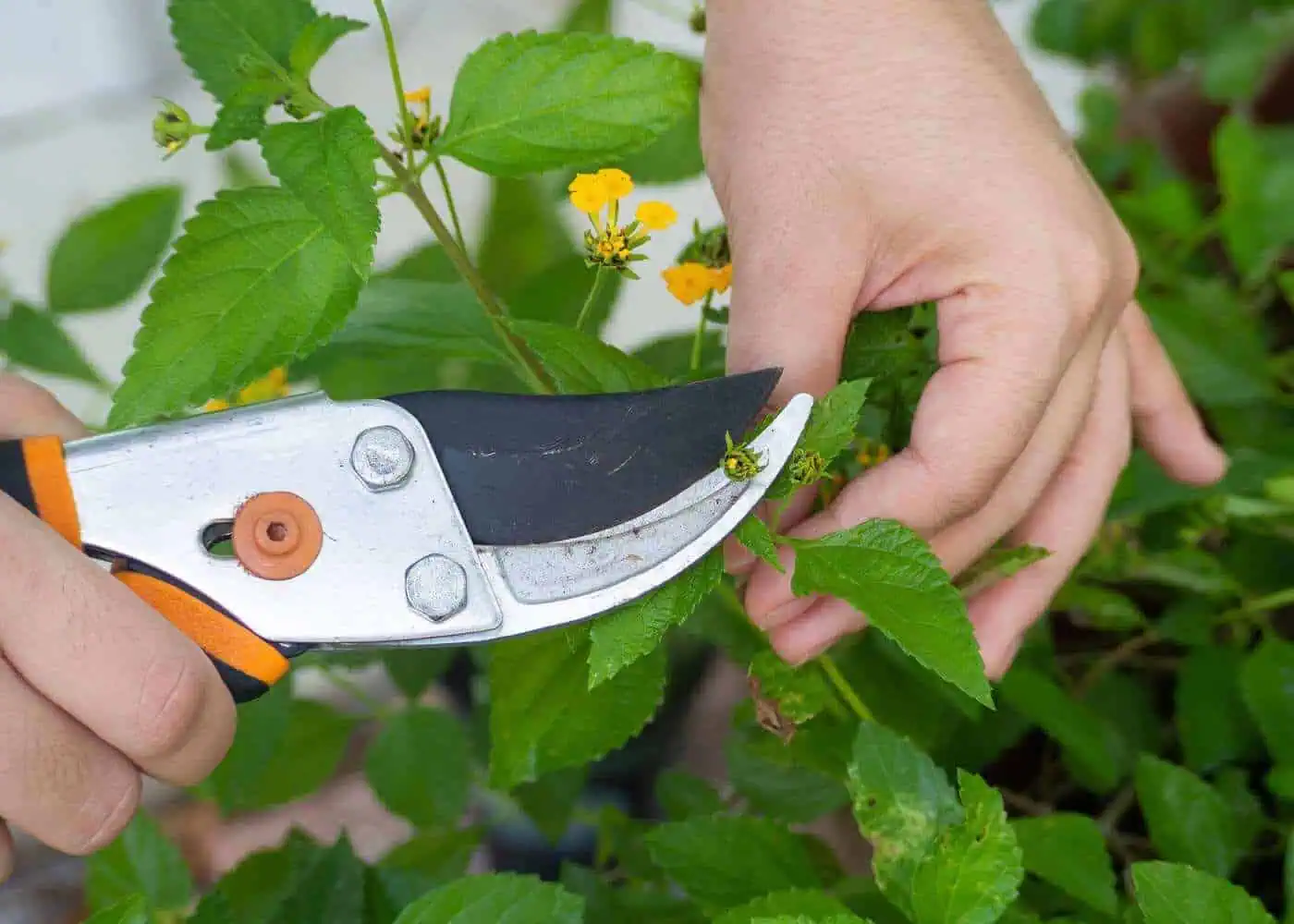
When some plants grow faster than others, they might take over and suffocate others.
Regular trimming keeps those plants from crowding out their neighbors and encourages fuller growth. But you shouldn’t stop there. Instead, check the whole container and prune accordingly.
If one plant starts dominating, cut it back slightly. If another is getting buried, give it space and light. Pruning also encourages a fuller container, which guarantees an inviting display.
Besides, it improves air circulation, hence controlling cases of fungal infections.
Fertilizing a Mixed Container
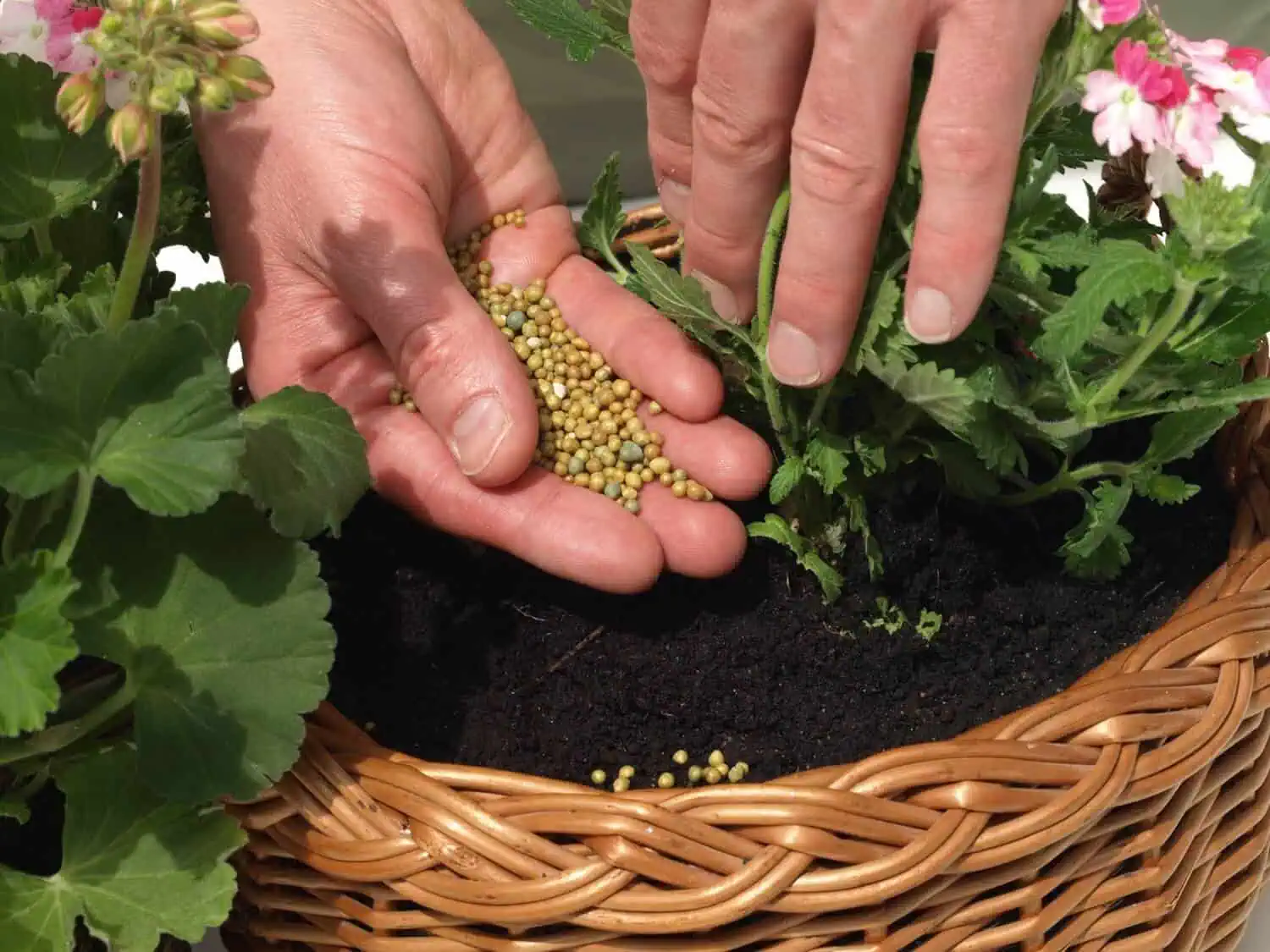
This is the part many people underestimate, and it shows up later as weak growth or fewer blooms.
In a garden bed, nutrients are more stable. In a pot, they get used up quickly or washed away with watering. And in a mixed container, multiple plants are competing for that same limited supply.
Therefore, proper feeding becomes essential.
Start with a slow-release fertilizer mixed into the soil when planting. This gives all plants a steady baseline of nutrients over time.
Then, every couple of weeks during the growing season, use a diluted liquid fertilizer. Something balanced works well because you’re feeding a mix of flowering and foliage plants, not just lantana.
Remember, too much fertilizer application pushes excessive leafy growth, especially in lantana, and you may end up with fewer flowers. Too little, and the whole container becomes malnourished.
Here’s a list of the best slow-release fertilizers for flowers and shrubs.
Why Pollinators Love These Containers
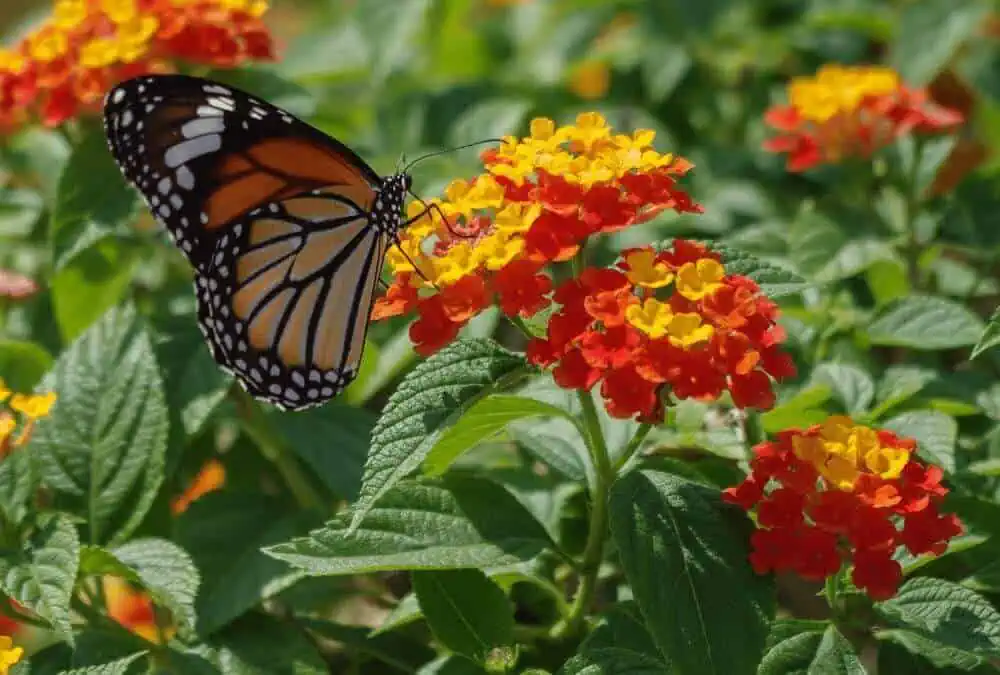
One of the quiet rewards of growing lantana in a mixed pot is the activity it brings.
Lantana is known for attracting butterflies and bees thanks to its nectar-rich flowers. When paired with other bloomers like Verbena or Petunia, you create a small feeding station right outside your door.
Research on pollinator behavior consistently shows that clustered, diverse plantings attract more visits than single-species displays. So your mixed container attracts biodiversity as it is attractive.
It becomes part of a larger ecosystem, even in a small space.
Conclusion
At some point, care guides stop being useful, and your observation and experience become even more important.
You notice when the soil dries faster than usual. When one plant surges ahead. When another quietly struggles.
That’s the moment a mixed container shifts from a project to a living system.
Lantana plays its role well. It brings color, resilience, and energy. But the real success comes from how you manage the other companion plants.
If there’s one thing to carry forward, it’s this. Grow plants for synergism instead of just growing them side by side. When the conditions, space, and care are shared thoughtfully, the container thrives.
I hope you’ve enjoyed today’s post. If you have, consider sharing or saving on Pinterest.