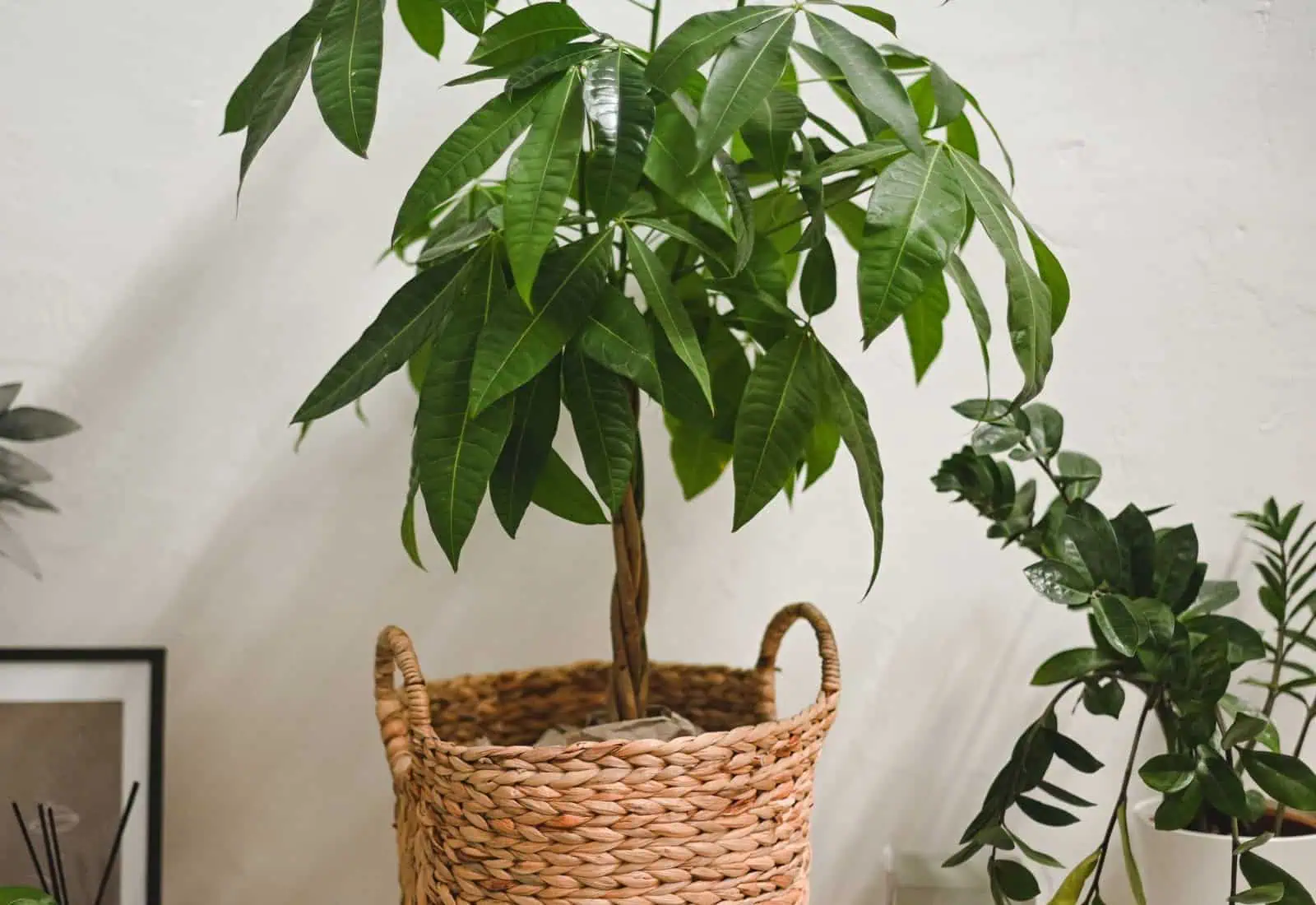
In some countries like Taiwan, the money tree is a symbol of prosperity and good fortune. You’ll often see it braided, tucked into homes and offices, quietly standing for luck, prosperity, and steady growth.
It’s the kind of plant people gift when they want to say, “I hope things go well for you,” without saying a word.
Also known botanically as Pachira aquatica, is a popular houseplant that can easily tolerate most of indoor environment. In feng shui, it’s considered one of the lucky plants that purifies the interior environment.
But most importantly, it’s considered a pet-friendly plant.
Let’s find out you can easily care for your money tree plant so that it thrives rather than survive.
An Easy Guide for Money Tree Plant Care
Provide adequate light
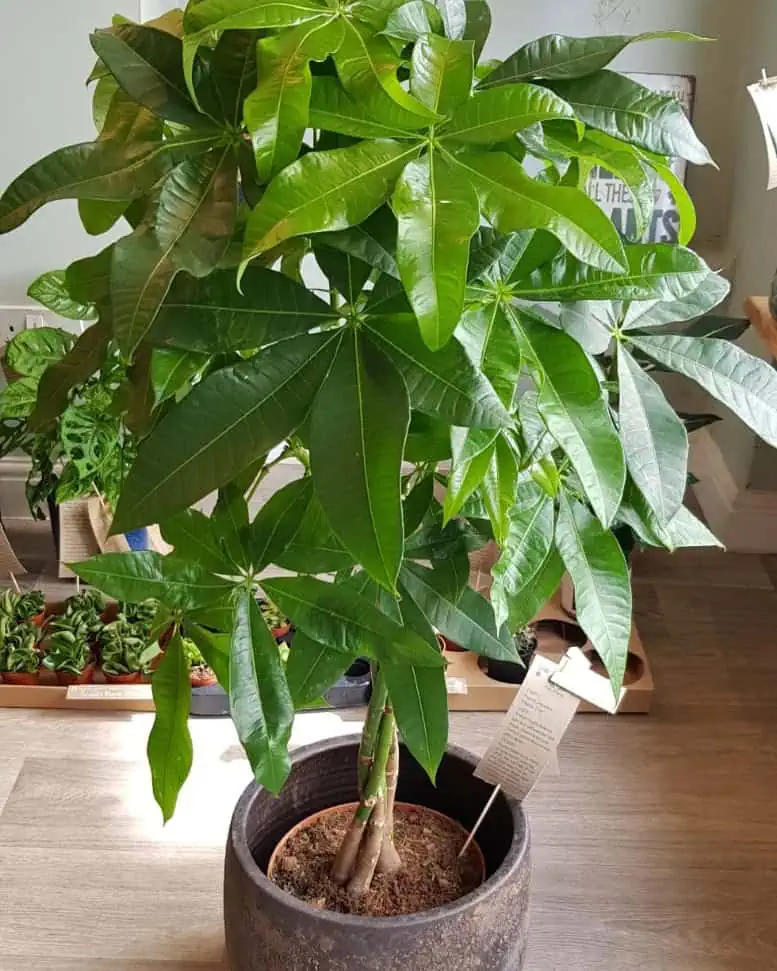
Money trees like bright, indirect light. Think of a spot near a window where there’s sufficient sunlight, but it doesn’t blast the plant directly for hours.
I’ve noticed this is where most people go wrong. Too much direct sun scorches the leaves, while too little light makes the plant stretch and look tired. It’s like it’s reaching for something it can’t quite get.
If you’re unsure, watch the leaves. Healthy ones are a deep green and slightly glossy. If they start fading or leaning heavily in one direction, that’s your cue to adjust the light.
Also remember that money trees will naturally grow toward the light. If you leave them in one position for too long, they start leaning sideways in search for exposure.
Rotating the pot every couple of weeks keeps growth even.
A simple takeaway here, place your money tree where you can comfortably read a book during the day without turning on a light.
Practice need-based watering
It’s tempting to water on autopilot, every Sunday, every three days, whatever routine feels convenient. But like most houseplants, money trees don’t care about your calendar.
They care about their specific needs within the potting mix.
Therefore, the best practice is to only water when needed. To that stick your finger about an inch or two into the soil. If it feels dry, go ahead and water. If it’s still slightly damp, wait. Luckily, after a while, you’ll develop an instinct for watering.
Overwatering is the fastest way to stress this plant. The roots sit in soggy soil, oxygen gets cut off, and suddenly you’re dealing with yellow leaves and root rot.
When you do water, do it thoroughly. Let water run through the drainage holes, then empty the saucer. I have a detailed guide on how to water potted plants.
Be sure to check it out.
Select a functional container and potting mix
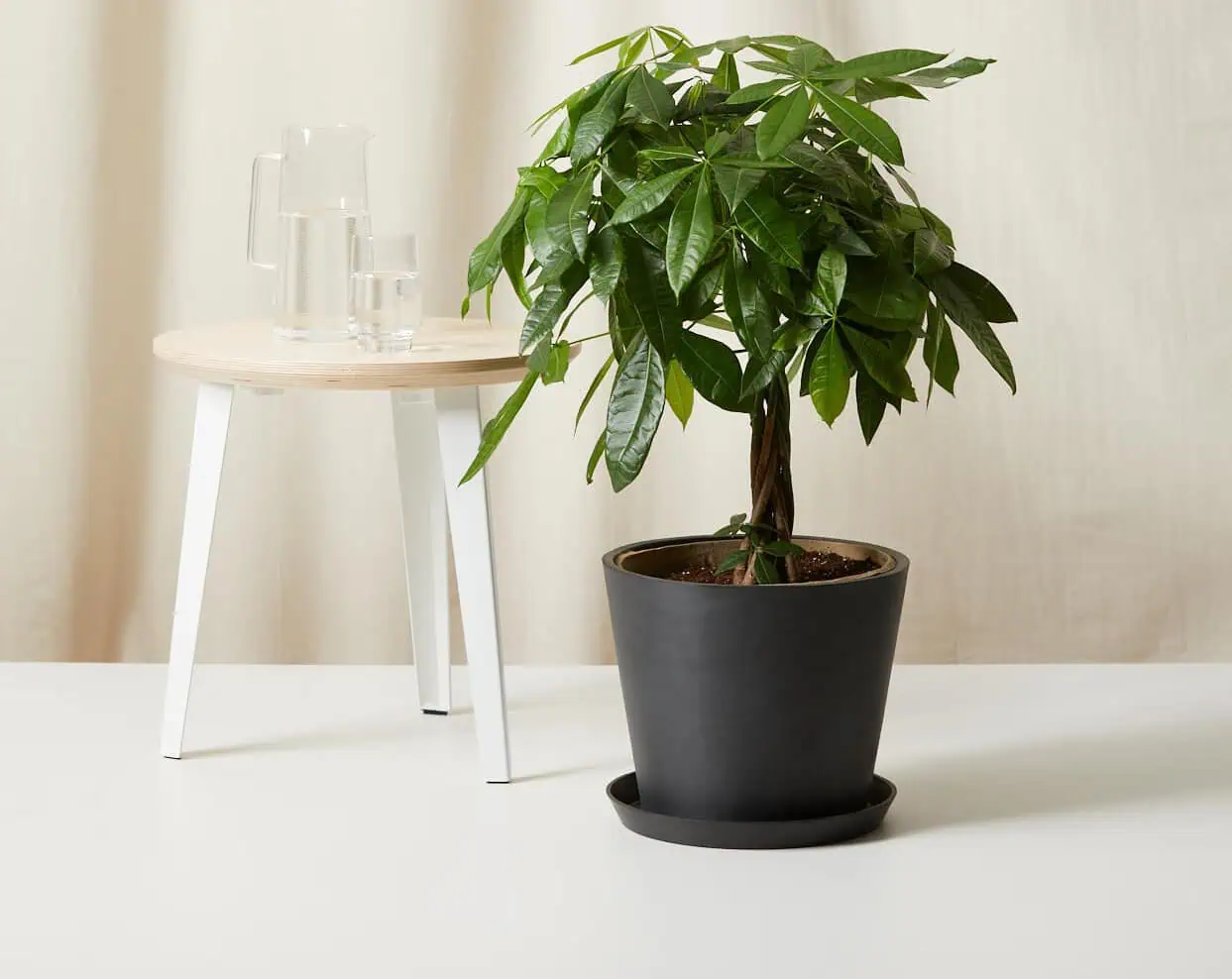
A beautiful pot is great, but if it doesn’t drain well, it will quietly work against you.
Money trees prefer pots with drainage holes, paired with a well-draining mix. Something that holds moisture but doesn’t stay heavy and compact works best. Regular potting soil mixed with a bit of sand or perlite does the job.
If your plant came in a decorative pot with no drainage, consider it temporary. It might look nice now, but long-term, it’s a gamble.
These plants prefer being root-bound but repotting every couple of years also helps. Also, because fresh soil gives their roots room to breathe and access nutrients.
Ideal temperature and humidity
In my experience, room temperature in most homes is sufficient for optimum growth. The main challenge is the humidity levels. Being native to tropical environments, these plants are used to air that feels a bit thick, not dry and crisp like what you get from fans or air conditioning.
If the air in your home is dry, the leaf edges might start browning. It’s subtle at first, then it spreads.
However, there’s an easy solution that costs nothing. And that’s grouping plants together. Also, a simple tray with water and pebbles under the pot works too. Even occasional misting can give the plant a small boost.
But if you want more control, it may be beneficial to consider using an indoor plant humidifier.
Apply fertilizers when needed at the correct rate
During the growing season, usually spring and summer, feeding your money tree once a month with a balanced liquid fertilizer is enough.
Too much fertilizer can do more harm than good. You’ll see salt buildup in the soil, and the plant can actually struggle to absorb water properly.
In fall and winter, you can ease off. Growth slows down, and the plant doesn’t need the extra push.
A good rule, feed when the plant is actively growing, and let it rest when it’s not.
Remember to prune
At some point, your plant might get a little wild. Long stems, uneven growth, leaves crowding each other.
That’s where pruning comes in.
Trimming back overgrown stems encourages the plant to branch out and look fuller. It also helps light reach more parts of the plant, which keeps everything balanced.
Use clean scissors or pruning shears, and cut just above a leaf node to encourage new growth.
Watch out for pests and diseases by regular monitoring
Incidents of pests and diseases in potted plants aren’t as drastic as outdoor growing conditions. Besides, when such cases are discovered early, it becomes easy to manage them.
That’s why it’s necessary to monitor your plants regularly. The most common pests to look out for include spider mites, mealybugs, and scale insects, which can show up, especially in dry conditions.
To prevent the infestation, quarantine new plants for 2 to 4 weeks, wipe leaves with a damp cloth dipped in alcohol, use insecticidal soap if needed, and isolate the plant if the issue spreads.
Similarly, scout for any symptoms that could indicate a disease infection such as powdery mildew and leaf bright. Lucky for us, your plants will be safe as long as you’ve followed the best care practices.
In serious cases, you may consider discarding your money tree all together to prevent spreading to other plants or spray with an appropriate fungicide.
Make sure you read the label and follow all the instructions.
Conclusion
If you’re looking for a large indoor plant to add interest to your living room then money tree plant is an obvious choice.
And with the tips and tricks you’ve just read about its care will guarantee you have a thriving plant for years.
If you’ve enjoyed this post, take a moment to share on Facebook or save on Pinterest for future reference and so that others can find it as well. Whichever way, I appreciate having you around.