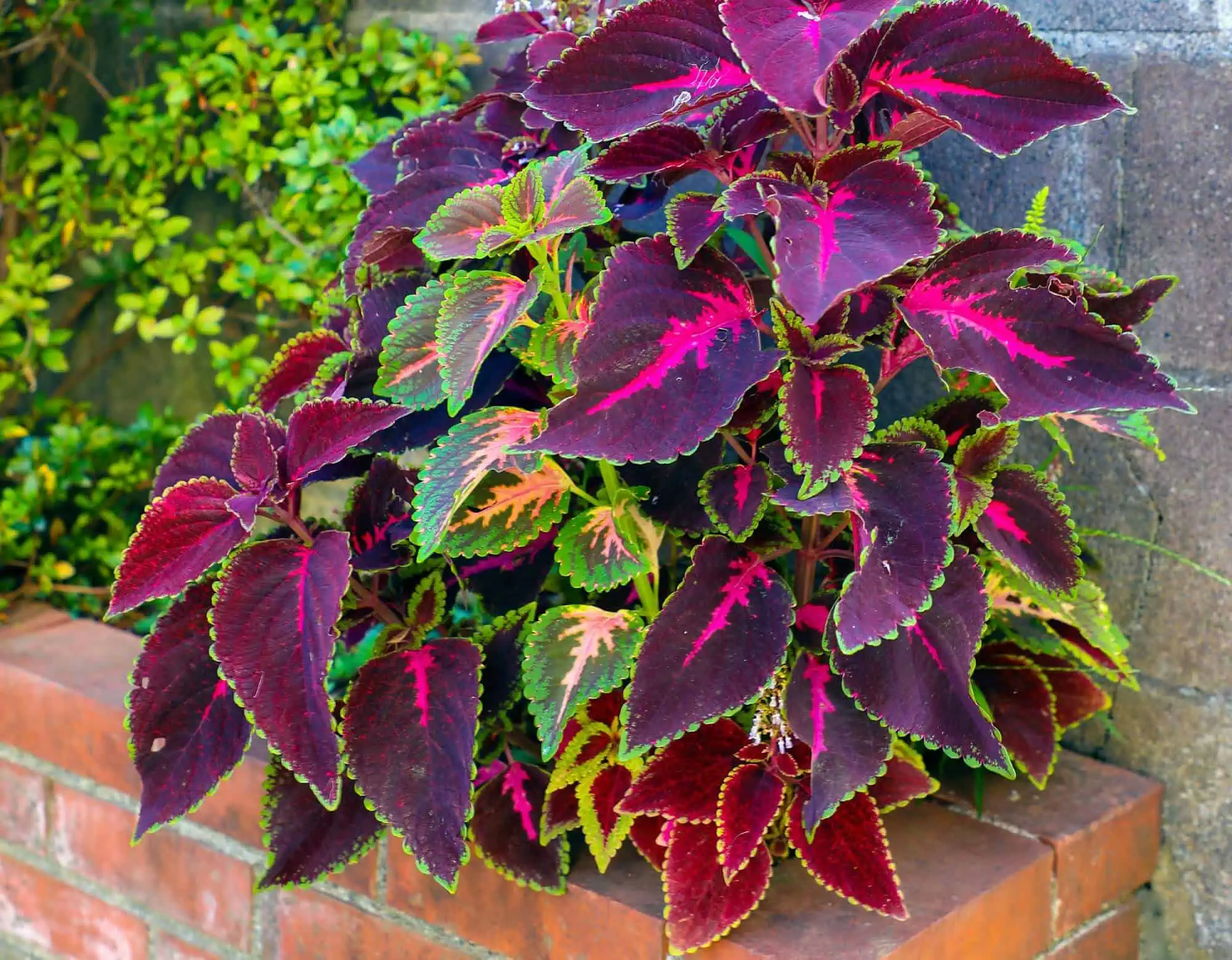
A while back, I bought a bunch of different types of coleus and placed them on my balcony with other nonflowering plants (picture below). I’m not sure why, but every morning, I was excited to just go check them out.
Suddenly, my balcony became a favorite pastime place. After all, who can resist their charm? Their leaves look painted, splashed with lime green, burgundy, magenta, yellow, and sometimes almost black.
With coleus plants in your plant arsenal, you really don’t need finicky flowering plants to brighten your planting.
Besides, growing coleus in pots is one of the easiest ways to enjoy the plant’s wild colors. Since containers let you control the soil, the watering, the sunlight, and even the overall look of the plant.
In short, it’s just an easy plant to deal with.
Still, “easy plant” doesn’t mean “ignore it completely.” A thriving coleus in a pot comes down to a few simple habits. The right container, consistent watering, and occasional pruning are all the price you have to pay.
How to Grow and Care for Coleus Plants in Pots
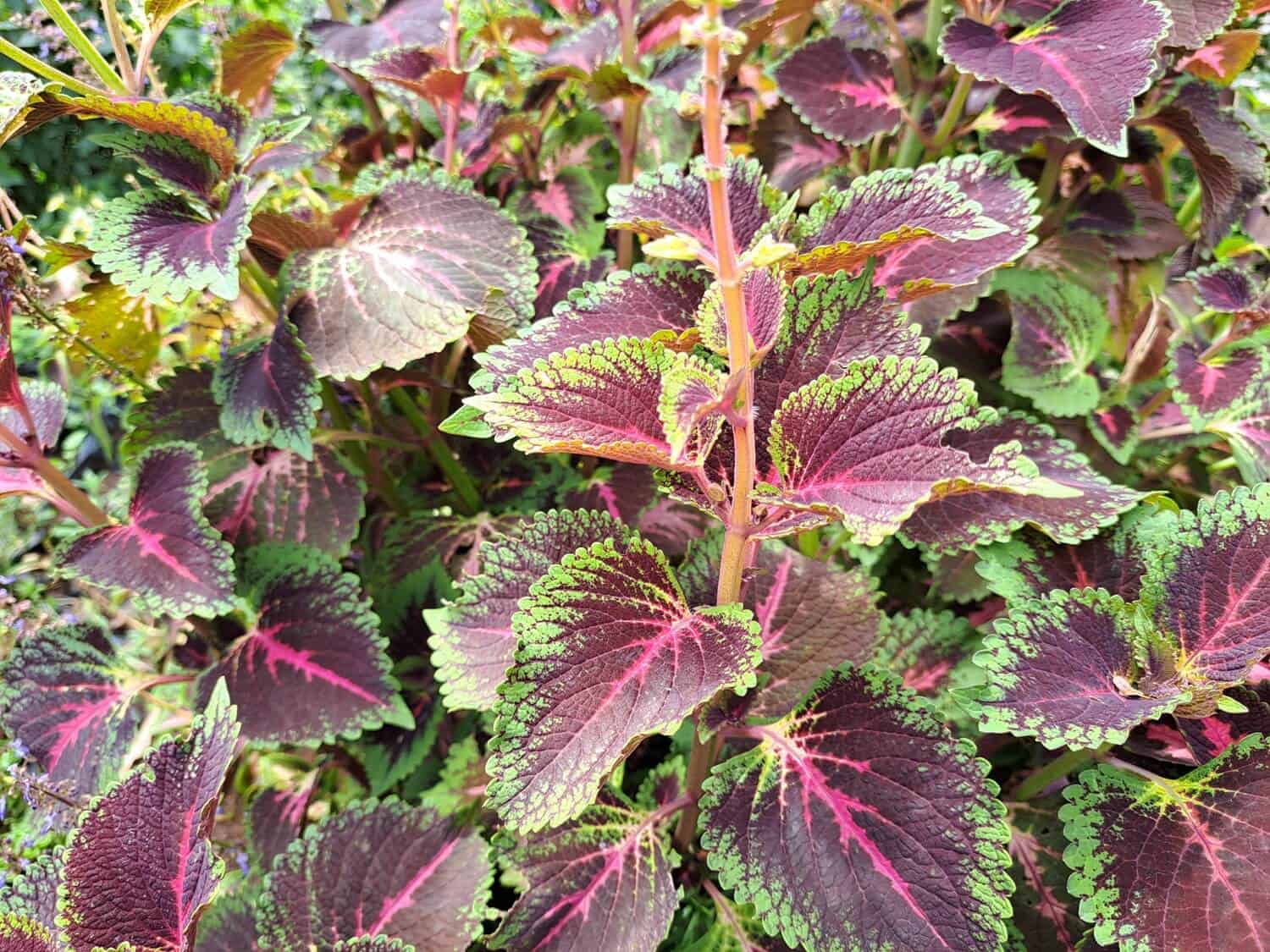
Coleus on my balcony
Choosing the Right Pot
The coleus plant doesn’t need an enormous pot, but it does need room for roots. I usually recommend a container at least 8 to 12 inches wide for a single plant. If you want a full, bushy display, a 12 to 16-inch pot works beautifully.
It’s worth noting that larger pots also hold more water than small ones.
The second consideration is pot drainage. Always choose a container with sufficient drainage holes. When water sits at the bottom of a pot, roots begin to suffocate, thus causing root rots.
Lastly, pay attention to the pot material. For instance, plastic pots hold moisture longer, which can be helpful in hot climates, while terracotta pots dry out faster because the clay is porous. If you tend to forget watering, plastic may save you some headaches.
If you live somewhere warm and dry, larger containers help stabilize soil moisture. Small pots heat up quickly and dry out fast.
Ideal Potting Media
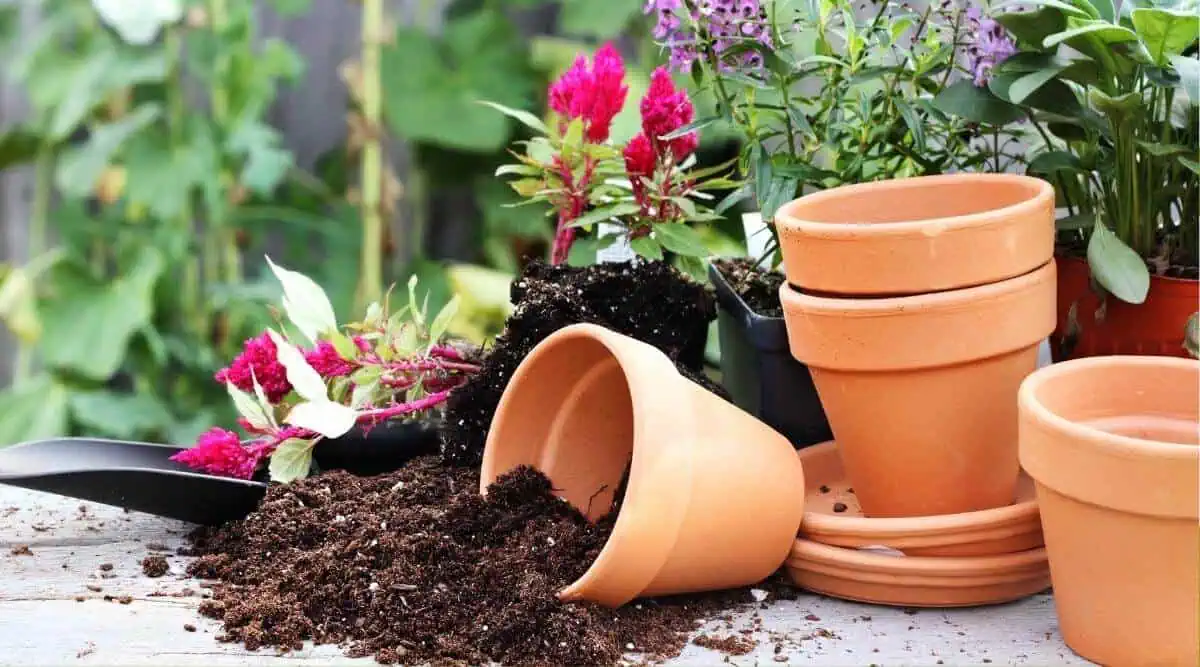
While these plants can survive in ordinary garden soil in the short run, it presents a challenge later on. For example, the garden soil can easily compact, forming a dense hard pan, hindering drainage and root development.
Moreover, it’s loaded with organisms, some including pests such as nematodes and other pathogens.
So, what’s the solution?
Coleus requires a well-draining potting mix with proper moisture retention. A standard indoor or outdoor potting mix works well. Many mixes contain peat moss or coco coir, which hold water while keeping the soil light. Perlite or vermiculite improves drainage and prevents compaction.
If you’d like to mix your own home-made soil instead, a simple blend of the following works well:
- Two parts quality potting mix
- One part perlite or coarse sand
- Optional compost for extra nutrients
Here’s a guide to improve drainage in potted plants.
Light Requirements
Not all coleus cultivars have the same light requirements. Therefore, this is not a blanket direction because there are several breeds that can tolerate the shade, while some prefer a bit of sun.
Some varieties produce deeper pigmentation when exposed to moderate sunlight. When you purchase your coleus, try to ask for the ideal light or check the label.
As a general rule, bright indirect light or morning sun works beautifully.
If the leaves look dull or washed out, the plant may be getting too much sunlight. If the colors look muted and the stems stretch, the plant may need more light.
A few hours of gentle morning sun often bring out the richest leaf colors.
Watering your coleus
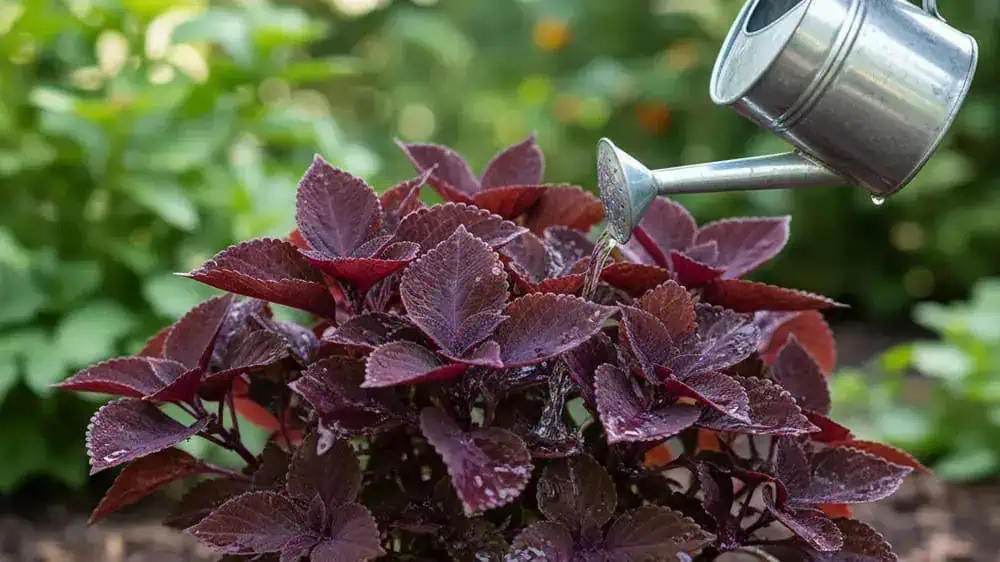
Image: Gardeningnote
Remember, potted plants tend to dry out faster than those grown in the garden, so watering is key. But you have an idea of when and how to water.
The season plays an important role in watering frequency. When it’s hot, you should water at least twice a week and once when cooler.
However, when you follow a specific schedule, you’re likely to overwater or underwater. Hence, if your plant’s health is important to you, it helps to invest in a cheap moisture detector to know when to water.
When watering, pour the water until it flows from the drainage holes. This ensures the entire root system gets moisture.
Here’s a great guide on watering potted plants.
Temperature and Humidity
These plants thrive when temperatures stay between 60 and 85°F (15 to 29°C). Cold temperatures slow their growth. If you grow coleus outdoors in cooler regions, wait until nighttime temperatures stay above 50°F (10°C) before placing plants outside.
Humidity helps, too, but coleus is surprisingly adaptable. Outdoor plants rarely struggle with humidity unless the air is extremely dry.
Indoor plants may appreciate occasional misting, a humidifier, or placement near other plants.
The good news is that these plants will thrive without problems in most homes.
Fertilizing Coleus in Containers
Since coleus are heavy feeders, a balanced liquid fertilizer every two to four weeks works well during the growing season. Look for something like a 10-10-10 or 20-20-20 formula.
That said, more fertilizer doesn’t mean more color. Too much feeding can actually produce large green leaves with less vibrant pigmentation.
Moderation keeps the plant compact and colorful.
Slow-release fertilizers also work nicely in containers. These release nutrients gradually over several months, reducing the need for frequent feeding.
Pruning for Fuller, Bushier Plants
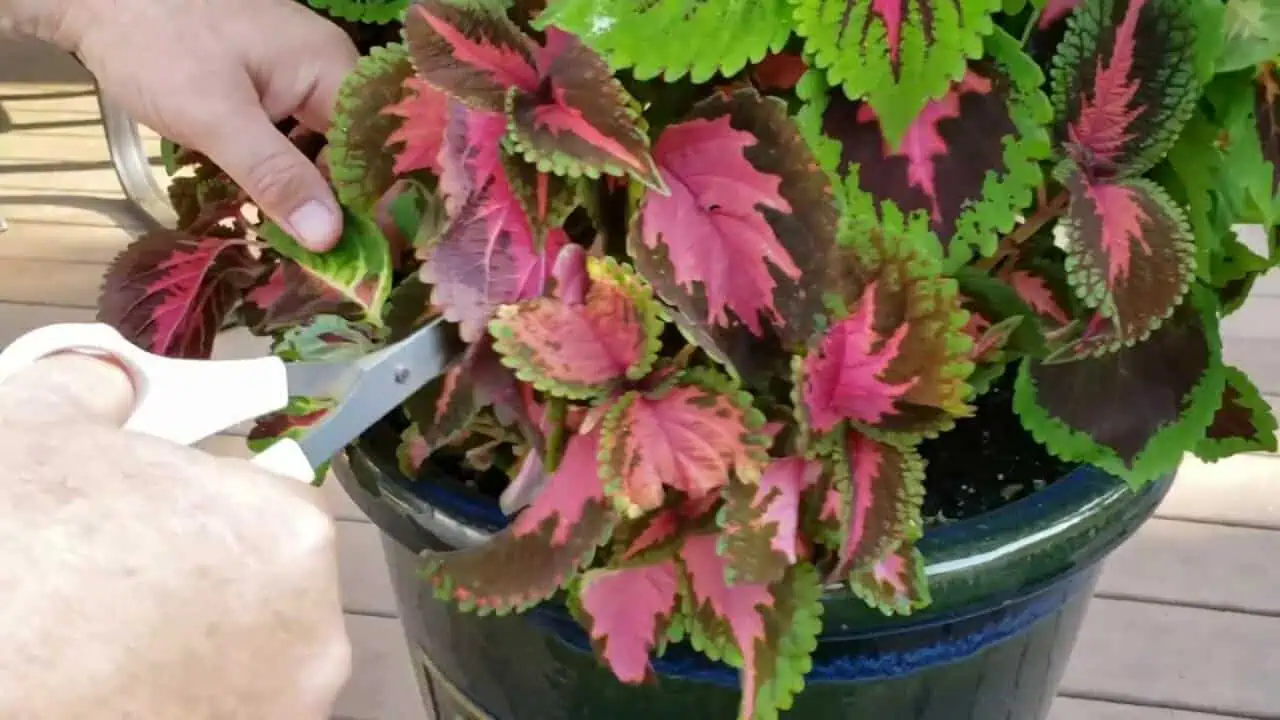
Coleus naturally grows tall and a bit leggy. Pruning encourages branching, which creates a fuller plant.
To prune, pinch off the growing tip when stems reach about 6 to 8 inches long. The plant responds by sending out lateral shoots, resulting in a much more compact and lush growth.
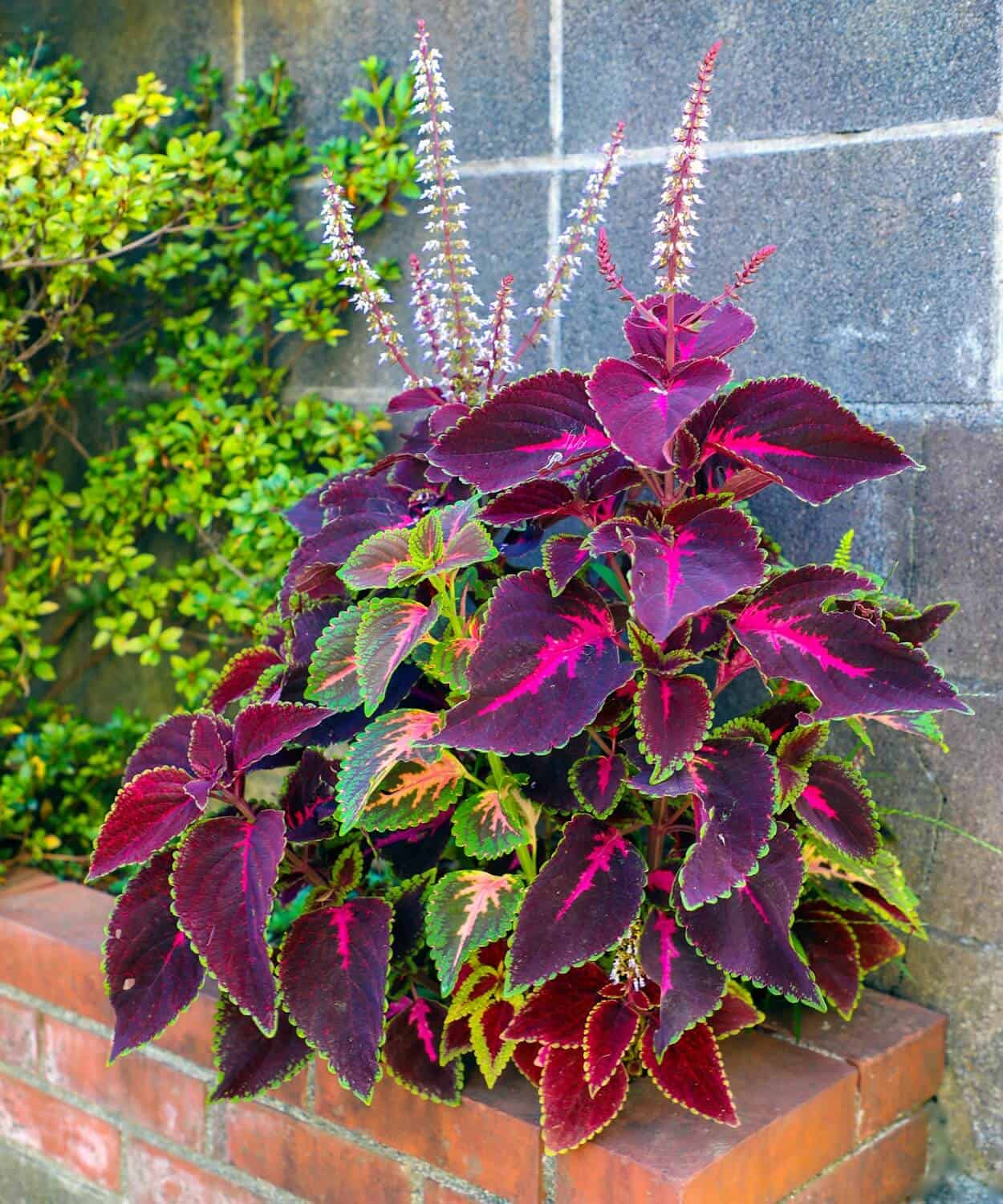
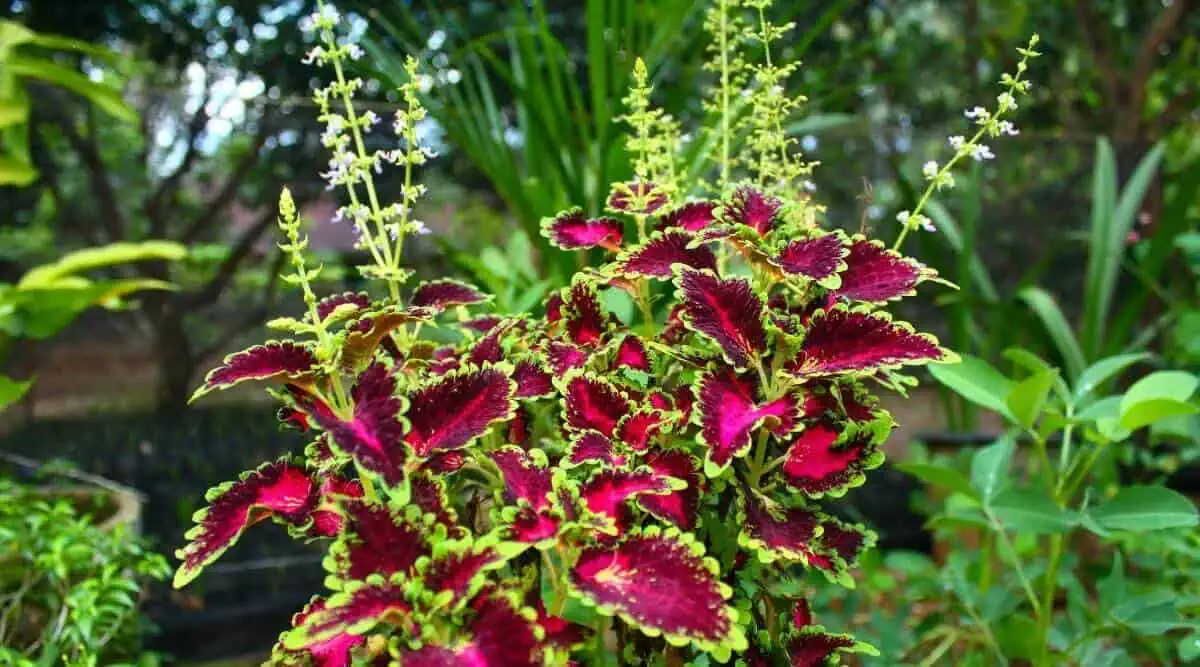
You should also remove any flower spikes and buds. Surprisingly, coleus produces small purple or blue flowers, but they’re not the star of the show.
Therefore, once the plant starts flowering, it often puts less energy into leaves, which is undesirable. A quick pinch redirects that energy back to the foliage.
Propagating Coleus from Cuttings
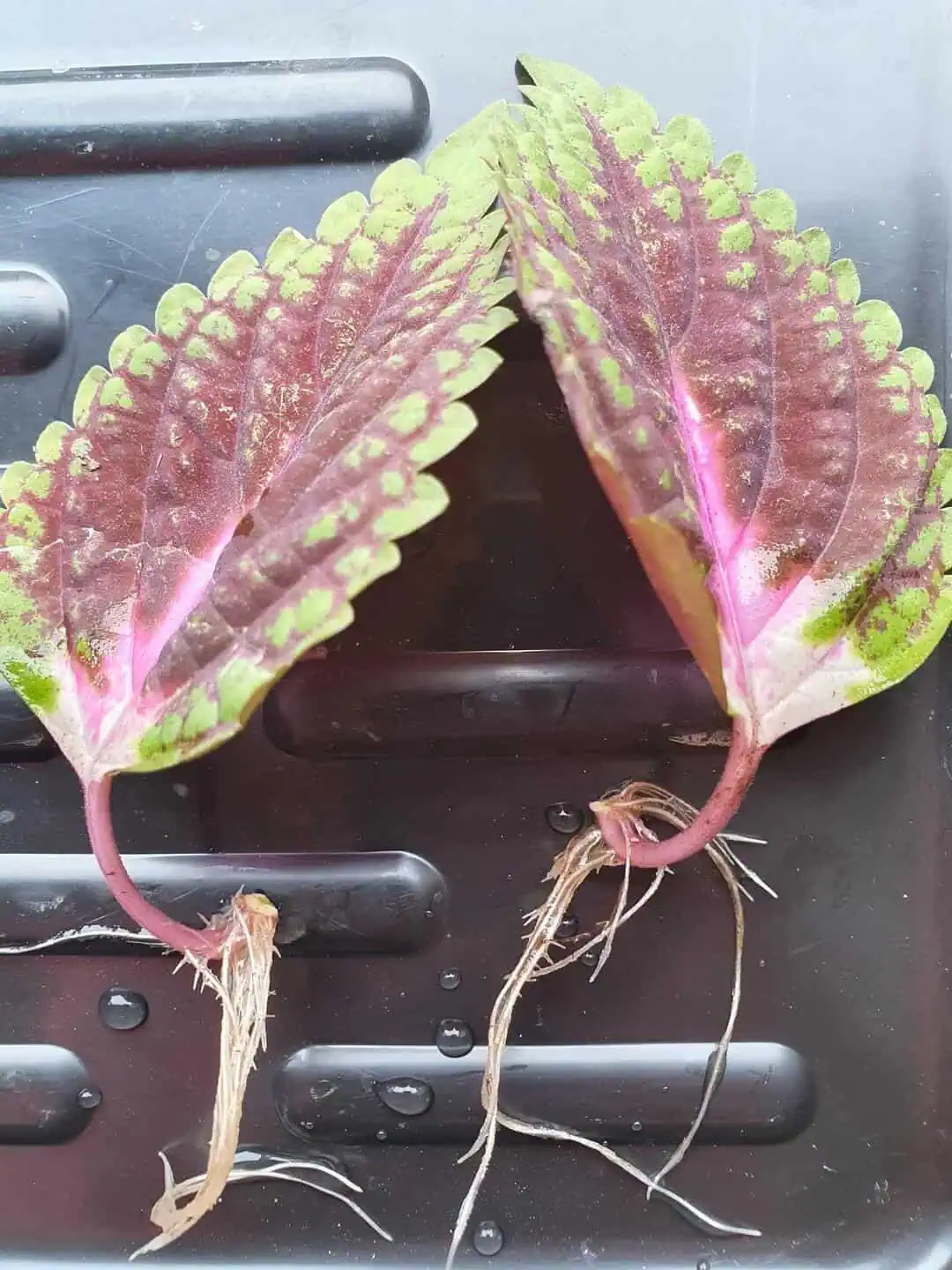
Based on several studies, coleus cuttings root quickly because the plant naturally produces growth hormones in its stems, resulting in high success rates.
To propagate coleus plants, take a cutting about 4 to 6 inches long from a healthy stem. Remove the lower leaves, then place the stem in a glass of water.
Within a week or two, tiny roots usually appear.
Once the roots reach about an inch long, the cutting can be planted in fresh potting mix.
This simple trick lets you turn one plant into several. It’s also a great strategy to multiply plants for sharing with your friends as gifts.
Overwintering Coleus in Containers
Because coleus is sensitive to frost, many gardeners treat it as an annual. But it doesn’t have to be. Before the first frost, bring container plants indoors and place them in bright light.
Indoor growth tends to slow down during winter, so watering should be reduced slightly.
Another option is to take cuttings in late summer or early fall. Small cuttings root easily indoors and can grow into full plants by spring.
Designing Beautiful Coleus Container Displays
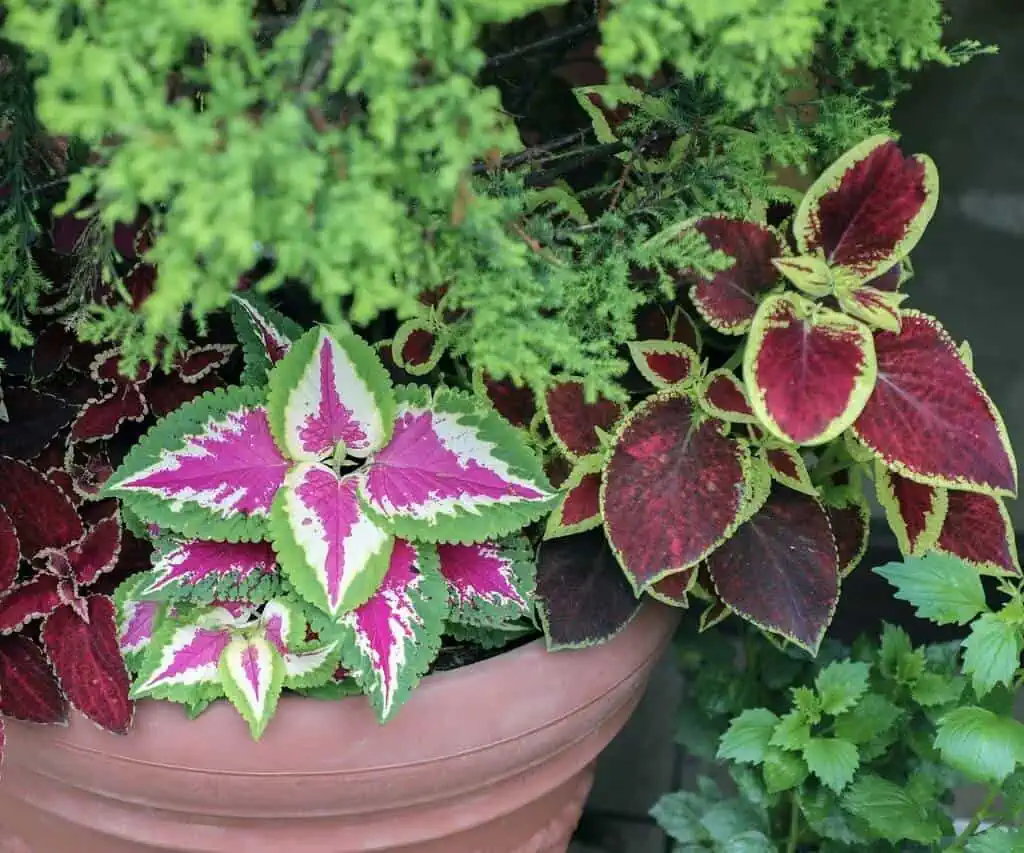
Image: B&G
This plant works beautifully as a focal plant or filler in mixed containers.
Its bold leaves pair well with trailing plants like sweet potato vine or creeping Jenny. The contrast between upright coleus and trailing greenery creates a layered look.
Color combinations can also be dramatic. Deep burgundy coleus beside lime green foliage creates a striking contrast.
Conclusion
Coleus plants don’t rely on flowers to impress; their colorful leaves are everything. And I hope this guide has been helpful to you.
Just remember, growing and caring for plants isn’t the same as raising kids. The point is to have fun while enriching our lives with nature, and don’t worry too much if something goes wrong.
Coleus plants are easy, and they’ve been growing in the wild without our intervention.