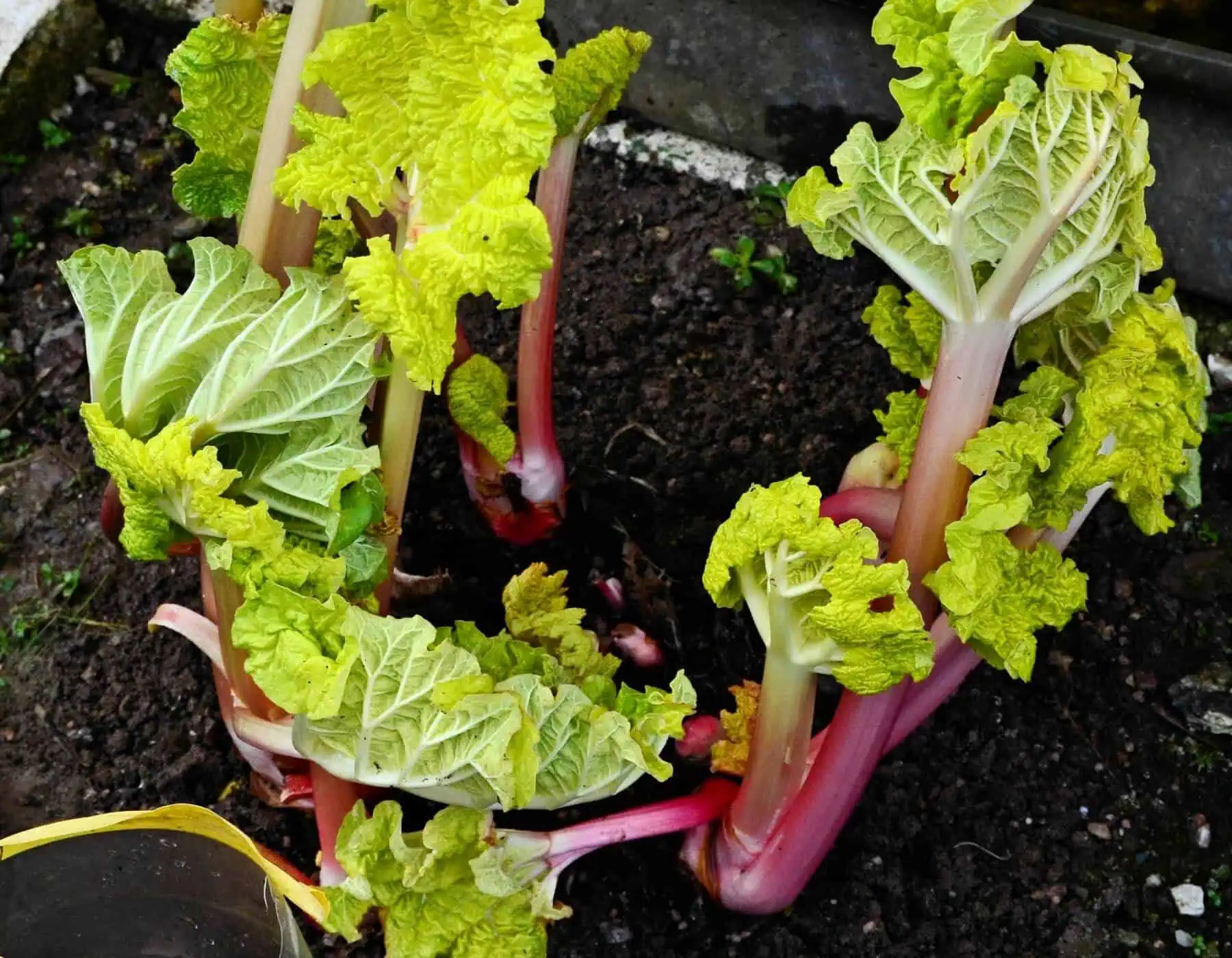
Rhubarb is a rather unusual crop.
Botanically, it’s a vegetable, although we tend to eat it like a fruit. The stalks are cooked into pies, crumbles, jams, and other sweet dishes, while the large leaves are discarded.
It’s also a perennial, so once established, a rhubarb plant can remain productive for many years. Its popularity has an interesting history, too.
Before imported fruit became readily available, rhubarb was often the first sweet crop of the year. Winter stores of apples would run low, while the first summer fruits were still weeks away, making those first rhubarb stalks particularly exciting.
For me, rhubarb has always had an association with Easter, especially when it’s served alongside baked egg custard. It has that unmistakable taste of early spring, arriving just when we're ready for something fresh and sweet again.
If you're ready to grow one in a pot, these 11 tips will help you get the basics right and avoid the mistakes that can leave rhubarb stunted, stressed, or disappointingly thin-stemmed.
How to Grow Rhubarb Plants in Pots
1. Start with a healthy crown or established plant
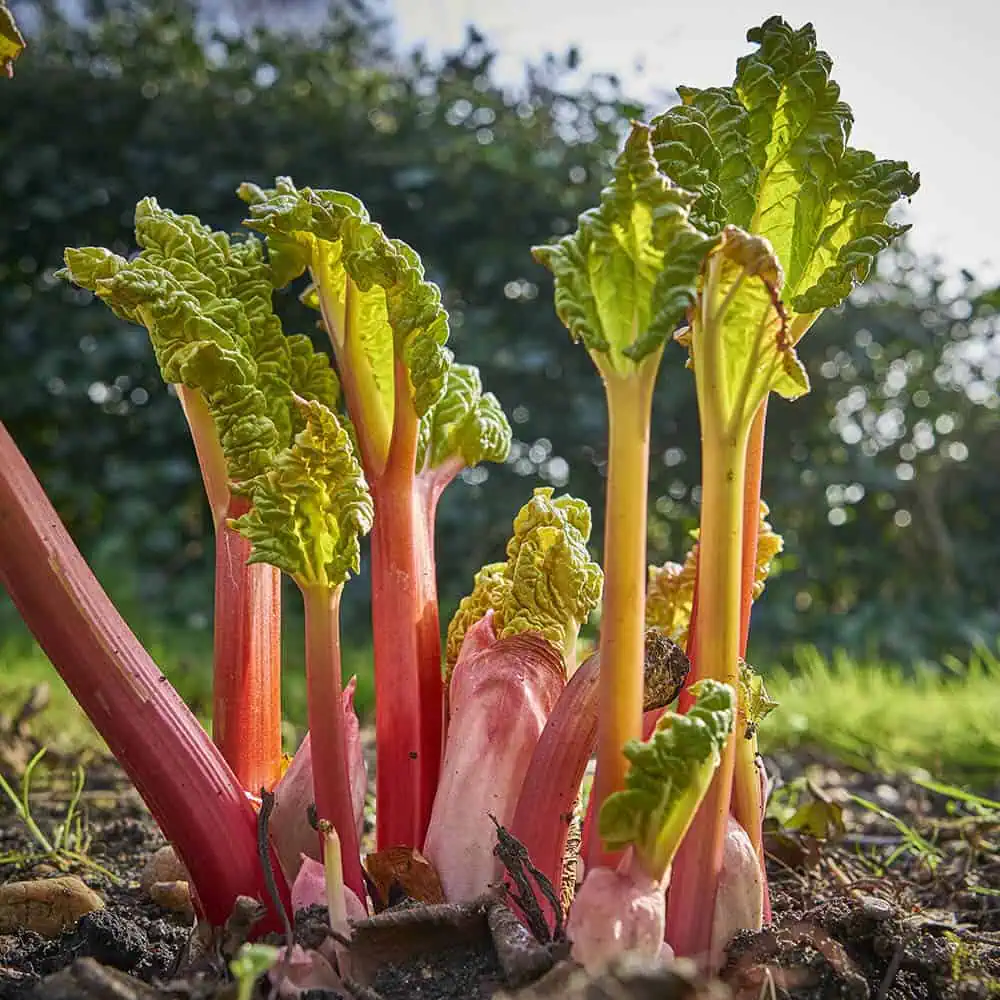
For container growing, starting with a rhubarb crown is usually the easiest way to establish a strong plant.
You can grow rhubarb from seed, but seedlings take longer to reach harvestable size and aren't necessarily identical to the parent plant.
Named varieties are generally propagated by division, so buying a crown or young plant gives you a much better idea of what you'll eventually grow.
Look for a firm, healthy crown with one or more plump buds. Avoid anything soft, rotten, badly dried out, or showing obvious signs of disease.
If you're buying a young rhubarb plant in a nursery container, check the roots and foliage as well. A healthy plant should have vigorous growth without obvious pest damage or widespread yellowing.
2. Choose a large container
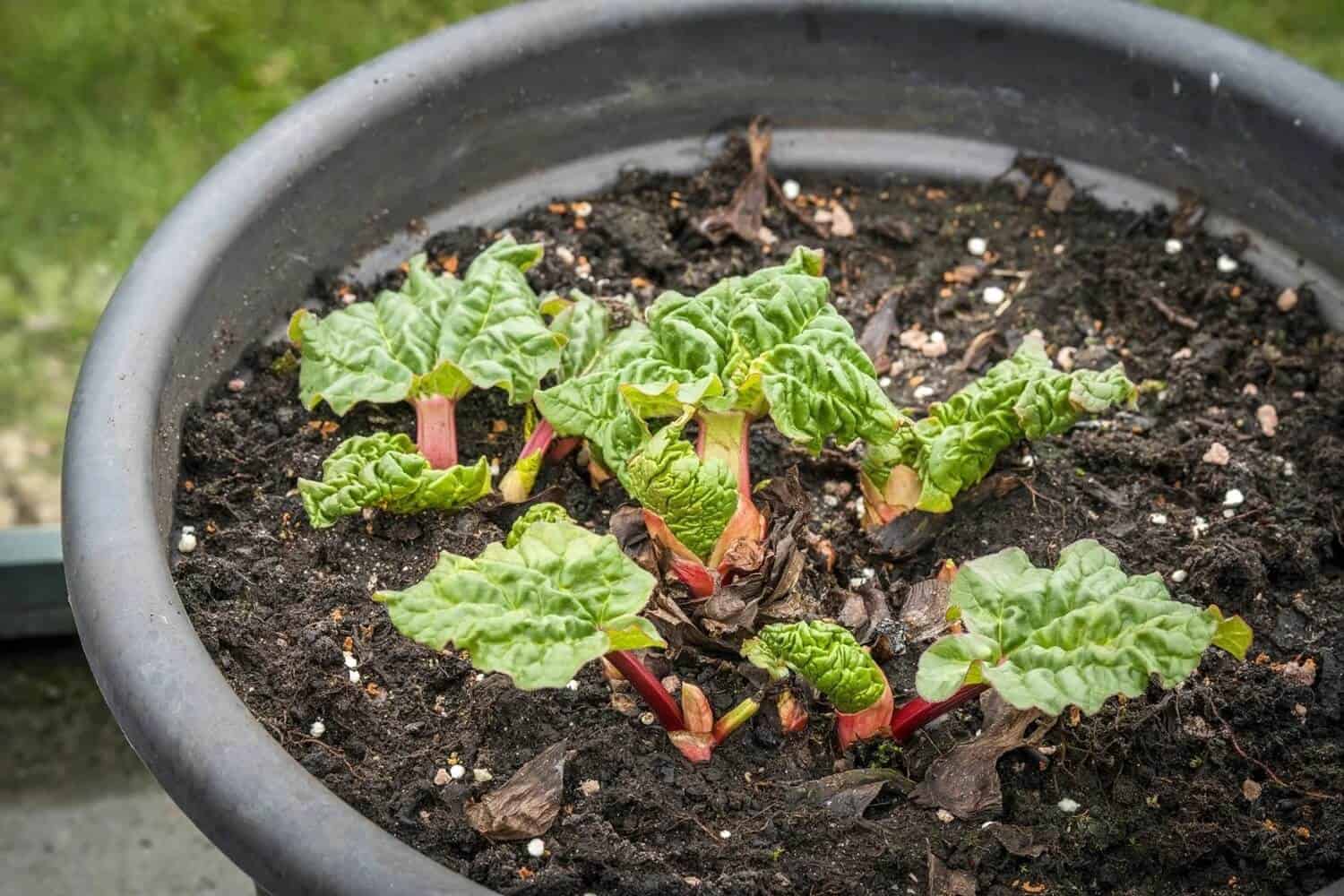
Rhubarb is capable of becoming a huge plant, and its roots need enough room to support that growth.
A container at least 50 cm (20 inches) wide and 50 cm deep is recommended for rhubarb. This is particularly important if you intend to keep the plant in the same container for several years.
A wide container also gives the plant enough physical stability. Once those huge leaves develop, rhubarb can become surprisingly top-heavy, especially in windy locations.
Before filling a large pot, decide exactly where it's going to live. A container of that size becomes extremely heavy once filled with growing medium and water, so moving it later isn't something to look forward to.
3. Choose a variety that suits container growing
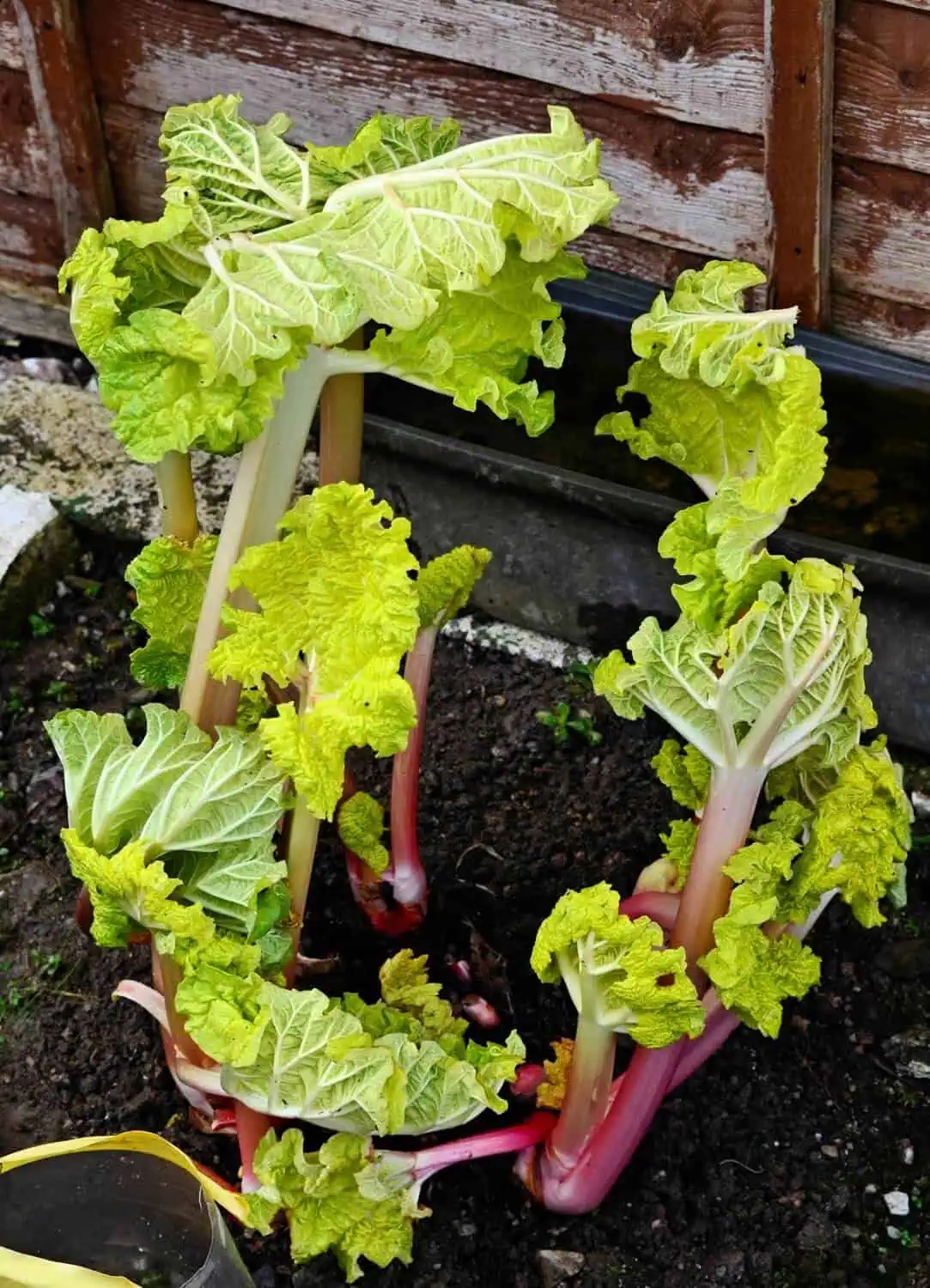
Not all rhubarb cultivars are suitable for growing in pots.
Some produce particularly vigorous, large plants. Others are more compact and therefore easier to accommodate in a pot.
You'll also encounter varieties selected for characteristics such as stalk color, flavor and cropping season. Deep red stalks can be attractive, but color alone shouldn't determine your choice.
If you're buying from a nursery or specialist supplier, ask specifically about compact cultivars and their mature size.
A suitably sized variety won't eliminate the need for a large container, but it can make the plant much easier to manage as it matures.
4. Use a rich growing medium
These plants like fertile soil that holds moisture, but their crowns are particularly vulnerable to sitting in saturated conditions.
That balance can be hard to achieve in a container because a pot that drains too quickly leaves the plant thirsty, while a dense, poorly drained medium can remain wet around the crown after watering.
A good-quality soil-based or substantial peat-free container compost is a sensible starting point. The growing medium should retain moisture while allowing excess water to drain freely.
Make sure it has several drainage holes at the bottom, and don't place it somewhere water regularly collects underneath.
5. Plant the crown with the growing bud exposed
Rhubarb crowns need to be planted at the correct depth, and this is one occasion when planting a little too shallow is preferable to planting too deeply.
Position the crown so that the main growing bud sits at or just above the surface of the compost. The roots should be covered, but the crown itself shouldn't be buried under a thick layer of growing medium.
Deep planting can delay growth and increase the risk of crown problems. Once you've positioned the crown, fill around the roots and firm the compost gently.
Then give the plant a thorough watering to settle everything into place.
As new shoots emerge, resist the temptation to pile more compost around the base. The crown needs good air circulation and should remain close to the surface.
6. Find a bright position (well lit but not too hot)
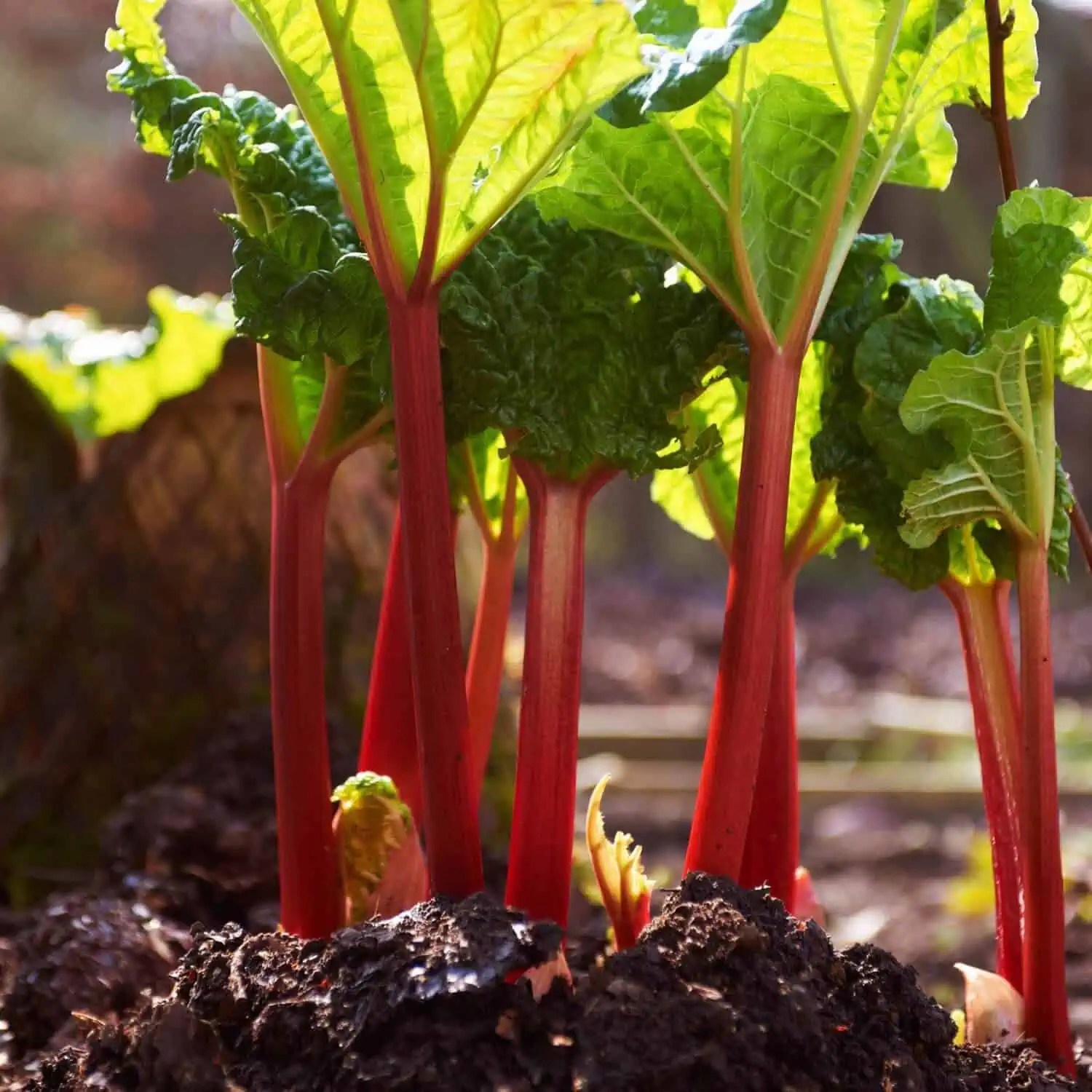
In a mild climate, several hours of direct sunlight can produce vigorous growth. However, rhubarb is fundamentally a cool-season perennial, and very high temperatures can cause growth to slow or stop.
This is especially true when temperatures rise above roughly 32°C (90°F).
It is particularly relevant with containers because the growing medium can heat up considerably, especially inside dark-colored pots sitting on concrete or against a sun-heated wall.
If your summers are extremely hot, some protection from the strongest afternoon sun can help.
Morning sunlight followed by light afternoon shade may be preferable to exposing the plant to intense heat for the entire day.
In cooler climates, meanwhile, don't hide rhubarb in a shady corner simply because it has large leaves. Good light is important for producing the energy the plant needs for healthy growth.
7. Consistent watering (need-based)
This plant’s leaves have a large surface area, and water can disappear quite fast from a container, particularly during hot, dry, or windy weather.
Unlike a plant growing in the ground that has access to a much larger volume of soil, a container plant has only the moisture available inside its pot.
Check the growing medium regularly rather than relying on a rigid watering schedule. If the surface is beginning to dry and the compost below feels noticeably less moist, it's time to water.
When you do water, apply enough to moisten the root zone thoroughly. Allow excess water to drain from the bottom rather than repeatedly giving the plant tiny amounts that barely penetrate the container.
Here’s how to water potted plants correctly.
8. Fertilizer application
In a garden bed, roots can explore a much larger volume of soil for nutrients. In a pot, the plant eventually exhausts some of the nutrients available in its relatively small growing medium, while regular watering can also carry soluble nutrients out through the drainage holes.
An annual application of well-rotted organic matter or an appropriate general-purpose fertilizer can help maintain fertility.
The timing and amount should follow the requirements of the product you're using rather than the assumption that more fertilizer will produce more rhubarb.
Avoid excessive nitrogen. It can encourage lush vegetative growth without necessarily producing the sturdy, balanced plant you're looking for.
If the plant is growing vigorously with healthy foliage, there's no prize for feeding it unnecessarily.
You may be interested in checking out a liquid iron supplement for your plants.
9. Give a newly planted crown time to establish
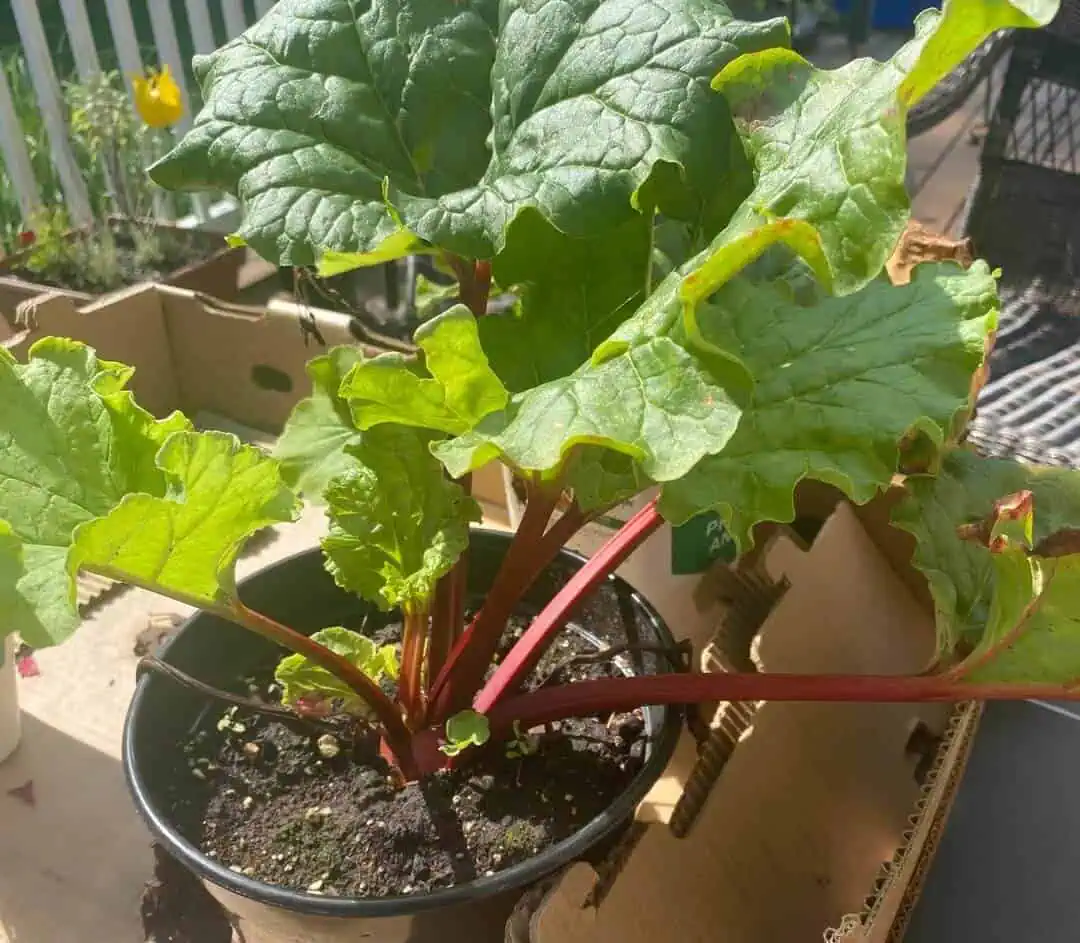
A newly planted crown needs time to establish its root system and build energy reserves. Pulling a large number of stalks during this period reduces the foliage available to fuel that development.
You should wait until the second growing season before harvesting, or do no harvest during the first year and only a light harvest during the second.
That means the first season is largely about establishment. Let the plant produce leaves, develop roots and strengthen its crown.
In the second year, you can begin taking a modest harvest if the plant is growing strongly. As the crown becomes larger and better established, harvesting can gradually become more substantial.
10. Remove flower stalks when they appear
Every so often, a rhubarb plant decides it would rather make flowers than leaf stalks.
The flower stalk is usually much thicker and more upright than the ordinary leaf stalks, and it eventually develops a conspicuous flower head. If you're growing rhubarb for eating, remove it as soon as you notice it.
Flowering and seed production require energy. Removing the flower stalk allows the plant to concentrate its resources on maintaining the crown and foliage instead.
Cut or pull the flowering stalk from as close to its base as you can without damaging the surrounding crown.
11. Harvest selectively and stop before you weaken the plant
When your rhubarb finally reaches harvesting age, it's tempting to pull every good-looking stalk you can see.
Don't.
Harvest the largest, well-developed stalks while leaving plenty of healthy foliage behind.
To harvest, grasp a mature stalk close to its base and pull it upward while twisting gently. The stalk should separate from the crown. Remove the leaves immediately after harvesting.
And there's one kitchen rule that shouldn't be forgotten: don't eat rhubarb leaves. The leaf blades contain high concentrations of oxalic acid and aren't considered safe to eat. The stalk is the part used as food.
As the season progresses, leave an increasing proportion of the plant untouched. Once you've finished harvesting, the remaining leaves continue working for the crown, storing energy that helps support the following season's growth.
Likely Problems with Your Rhubarb
Container rhubarb is generally straightforward once established, but a few problems are worth recognising early.
Thin stalks can have several causes. A young crown may simply need more time to mature, while overcrowding, inadequate nutrition, insufficient light or excessive harvesting can also reduce vigour.
Yellowing or wilting leaves deserve a closer look at the growing medium. Dry compost can indicate inadequate watering, while persistently wet compost raises concerns about poor drainage or root and crown problems.
Flowering is usually handled by removing the flower stalk promptly. However, if the plant flowers repeatedly and growth remains weak, review its growing conditions rather than simply cutting off flowers year after year.
Crown rot is particularly serious because the crown is the heart of the plant. Poor drainage, excessive moisture, and planting too deeply can create conditions that favor crown problems. If the crown becomes soft or begins to rot, simply watering less may not be enough to save it.
Conclusion
Growing rhubarb in containers gives you one useful advantage:
You can inspect the growing environment much more easily than you can diagnose what's happening deep beneath an established garden bed. If something seems wrong, look at the roots, drainage, and growing medium rather than assuming the leaves are the problem.
If you found this guide useful, share it with another gardener on Facebook or Pinterest. It might save someone from planting a rhubarb crown in a tiny pot and wondering why their "easy" perennial isn't very happy.