
A handful of fresh basil can make a simple pasta dish smell wonderful, while a few mint leaves can turn an ordinary glass of water into something much more refreshing. Thyme, rosemary, and oregano have their own way of transforming everyday meals, too.
The challenge is that buying fresh herbs for one recipe often leaves you with a bunch that wilts in the refrigerator before you get around to using them again.
Therefore, there is a need to grow herbs in water.
You can start with a few healthy cuttings, place them in glass jars, and keep them on a bright kitchen windowsill where they're easy to reach whenever you're cooking.
However, most herbs that root in water need more than plain water to produce vigorous growth over the long term. You can use water to establish cuttings, then move them into pots, or grow them hydroponically by supplying the roots with a suitable nutrient solution.
With that in mind, here are nine herbs worth growing in your kitchen, including the ones that root readily and those that require a little more effort on your part.
9 Herbs that Easily Grow in Water on the Windowsill
1. Basil (Ocimum basilicum)
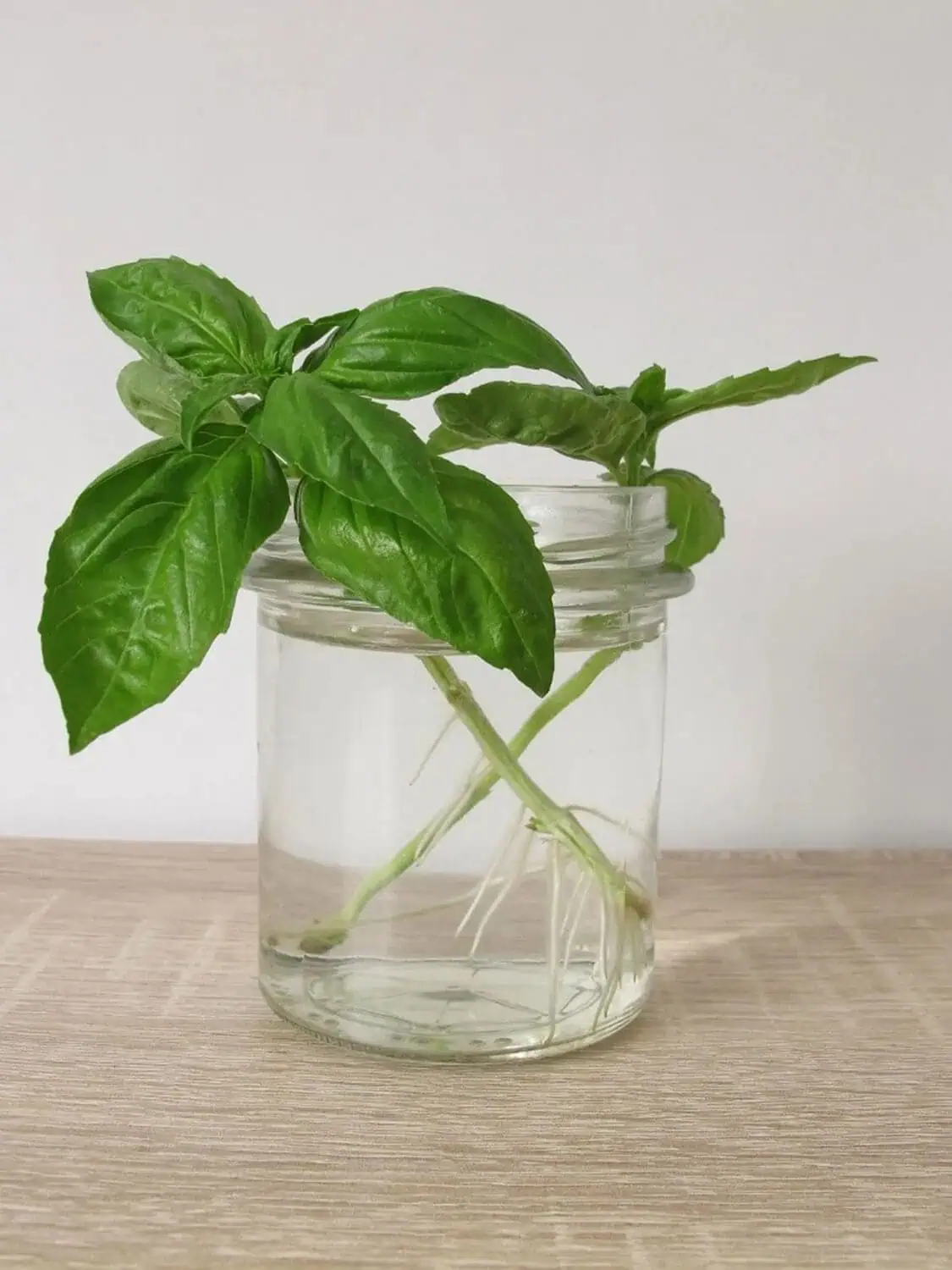
Basil is one of the first herbs I'd recommend trying in water, especially if you cook Italian food. Its soft, fragrant leaves work beautifully in pesto, pasta sauces, salads, and sandwiches.
You can also choose from several varieties, including sweet basil, Thai basil, and lemon basil, depending on the flavors you enjoy.
Choose a fresh, nonflowering stem about 4 to 6 inches long, then cut just below a leaf node, the point where a leaf joins the stem. Remove the leaves from the lower portion and place the cutting in a glass of water, keeping the remaining foliage above the waterline.
Place it somewhere warm with plenty of light. Roots can appear within a week or two, though conditions affect how quickly they do. Once the roots are established, pinch the growing tip to encourage branching.
If you’re interested, here’s how to grow an endless supply of basil and also check the best companion plants to grow with basil.
Pro Tip: Basil needs good light and warmth. A dim kitchen corner might keep a cutting alive for a while, but it won't give you the leafy growth you're looking forward to. For a continuous supply, start another cutting before the original plant gets old, woody, or starts flowering.
2. Mint (Mentha spp.)
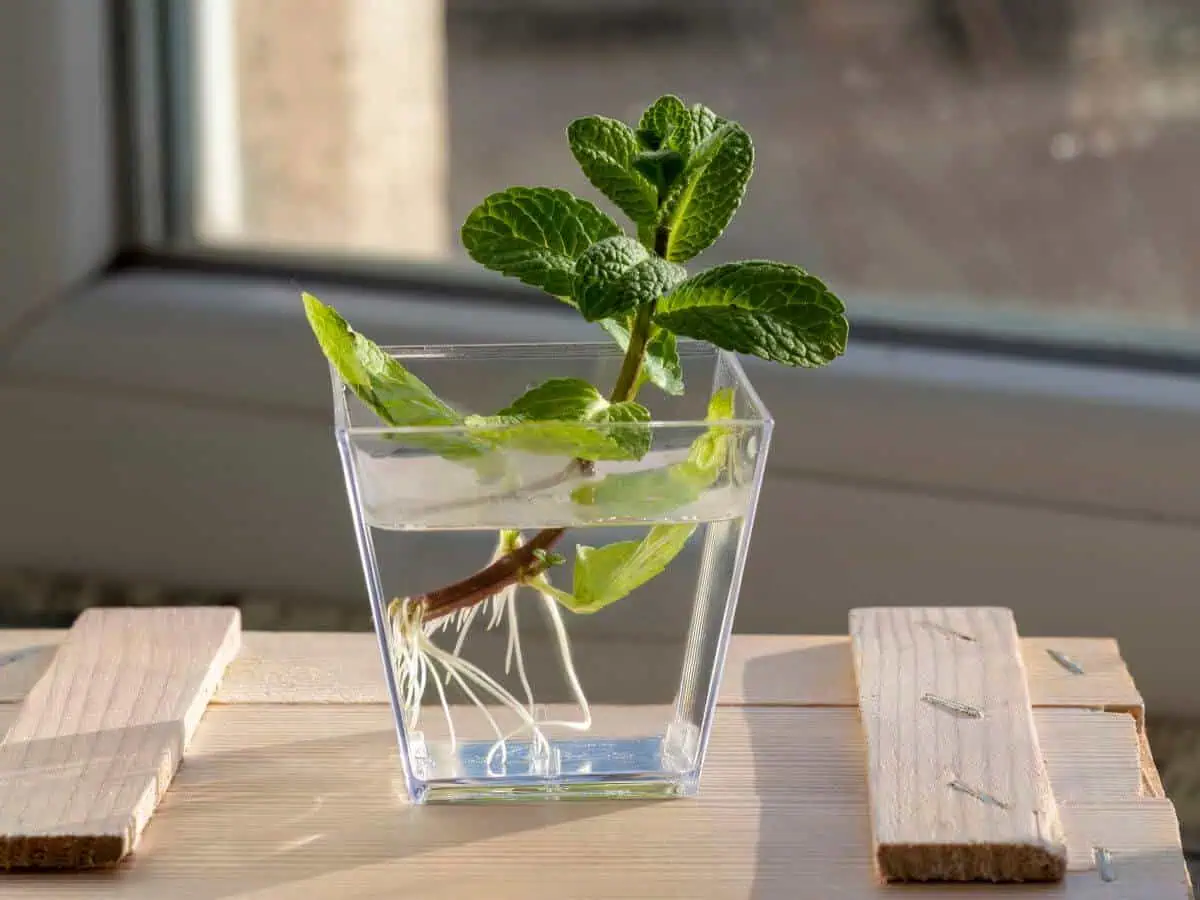
If you want an herb that's relatively forgiving, mint deserves a place near your kitchen or windowsill. Spearmint is especially great for teas, salads, sauces, and drinks, while peppermint brings a stronger, cooler flavor to the kitchen.
Mint is also among the easiest herbs to propagate from stem cuttings. Take a healthy green stem, remove the leaves that would sit underwater, and place it in a clean jar. With sufficient light and fresh water, roots often develop quite easily.
The best part is that you don't need a large cutting to get started. A few stems from a healthy mint plant can provide several potential new plants.
There is, however, a reason most people are careful about where they plant mint. In soil, it spreads aggressively through underground stems and can quickly occupy more space than intended.
A water-grown cutting avoids that particular problem while it remains in its jar, but mint can still become sprawling and crowded as it grows. Keep it trimmed, harvest the tips regularly, and give it its own container rather than squeezing several cuttings into one small glass.
Pro Tip: Mint can tolerate somewhat less direct sunlight than basil, but that doesn't mean it will thrive in a dark room. Give it a bright spot, and replace the water whenever it becomes cloudy or develops an unpleasant smell.
3. Oregano (Origanum vulgare)
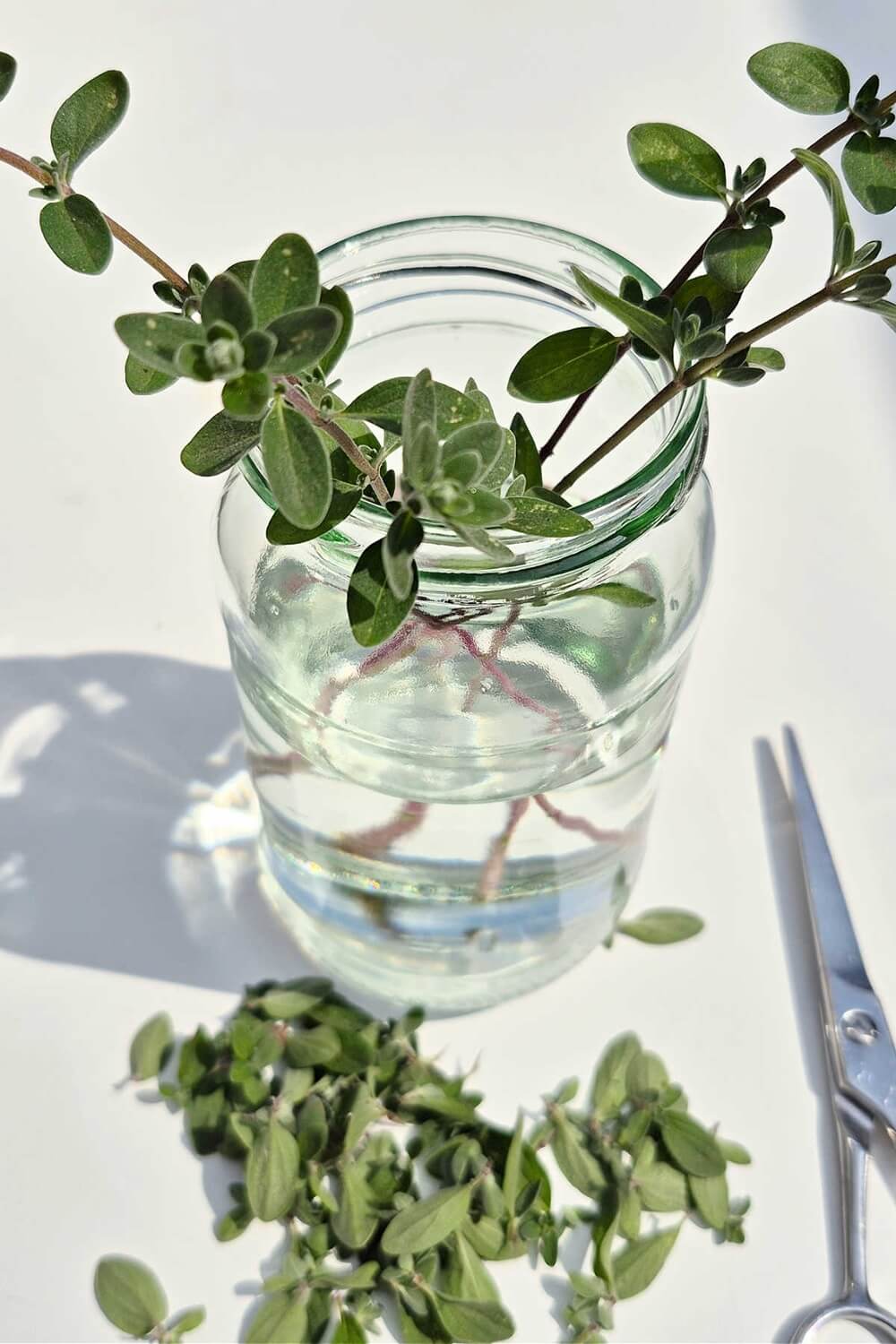
Oregano is a practical choice if your cooking includes tomato sauces, roasted vegetables, pizza, or Mediterranean-inspired dishes. Its robust flavor means you usually need only a few leaves to make a noticeable difference.
Unlike soft-stemmed basil, oregano can develop slightly firmer stems as it matures. For water propagation, look for a healthy green shoot rather than an old, woody section. Trim a cutting just below a leaf node, remove the lower leaves, and place the exposed stem in water.
Oregano prefers a bright position, so a sunny kitchen window is a good starting point. Once the roots develop, you can maintain the plant in a suitable hydroponic setup or transfer it into a pot of well-draining growing medium.
The other consideration is how much you harvest. Oregano produces sufficient foliage when it has enough healthy growth to support repeated picking. Avoid stripping every leaf from a young cutting before it has established itself. Once it’s growing vigorously, pinch or snip the shoot tips to encourage a fuller plant.
4. Lemon Balm (Melissa officinalis)
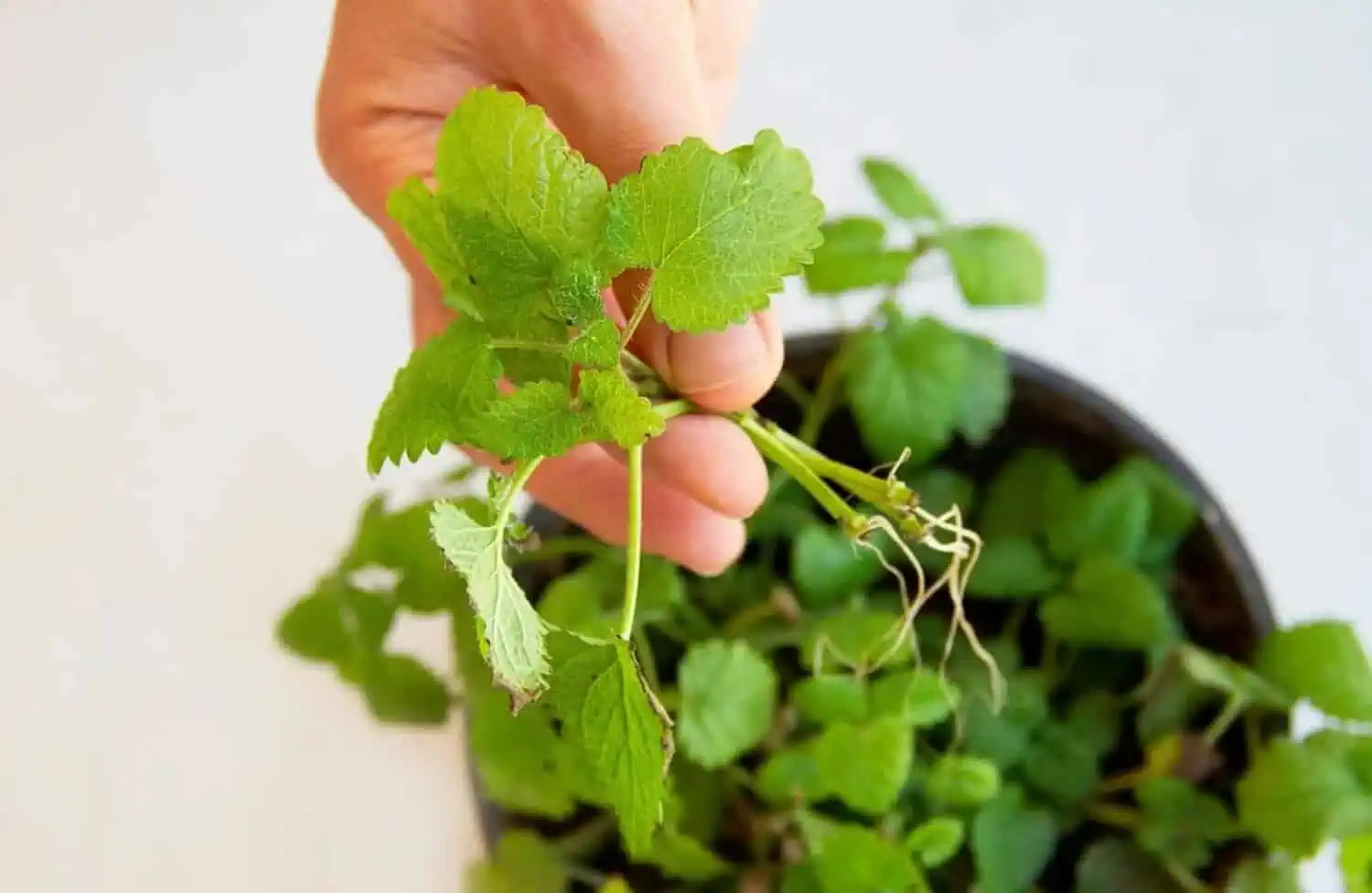
Lemon balm is a lovely addition if you enjoy the fresh, citrus-like fragrance of its foliage. Its leaves can be used in herbal teas, fruit salads, infused water, and desserts.
The flavor is generally gentler than that of mint, with a distinctive lemon scent when you rub a leaf between your fingers.
Like mint, lemon balm belongs to the mint family and can root from healthy stem cuttings. Choose a young, green shoot, strip the leaves from the section that will be submerged, and place the stem in water.
Give it a bright position and replace the water regularly while the roots develop.
Its growth habit is worth considering, especially if you have limited kitchen space. Lemon balm can become bushy, and stems left untrimmed may eventually stretch toward the light.
Once your cutting has established itself, pinch the growing tips to encourage branching and harvest the leaves before the plant becomes too crowded.
You may also find that the fragrance is strongest when the leaves are handled or lightly crushed. That makes lemon balm a useful herb to keep within reach when preparing tea or adding a fresh note to a meal.
5. Rosemary (Salvia rosmarinus)
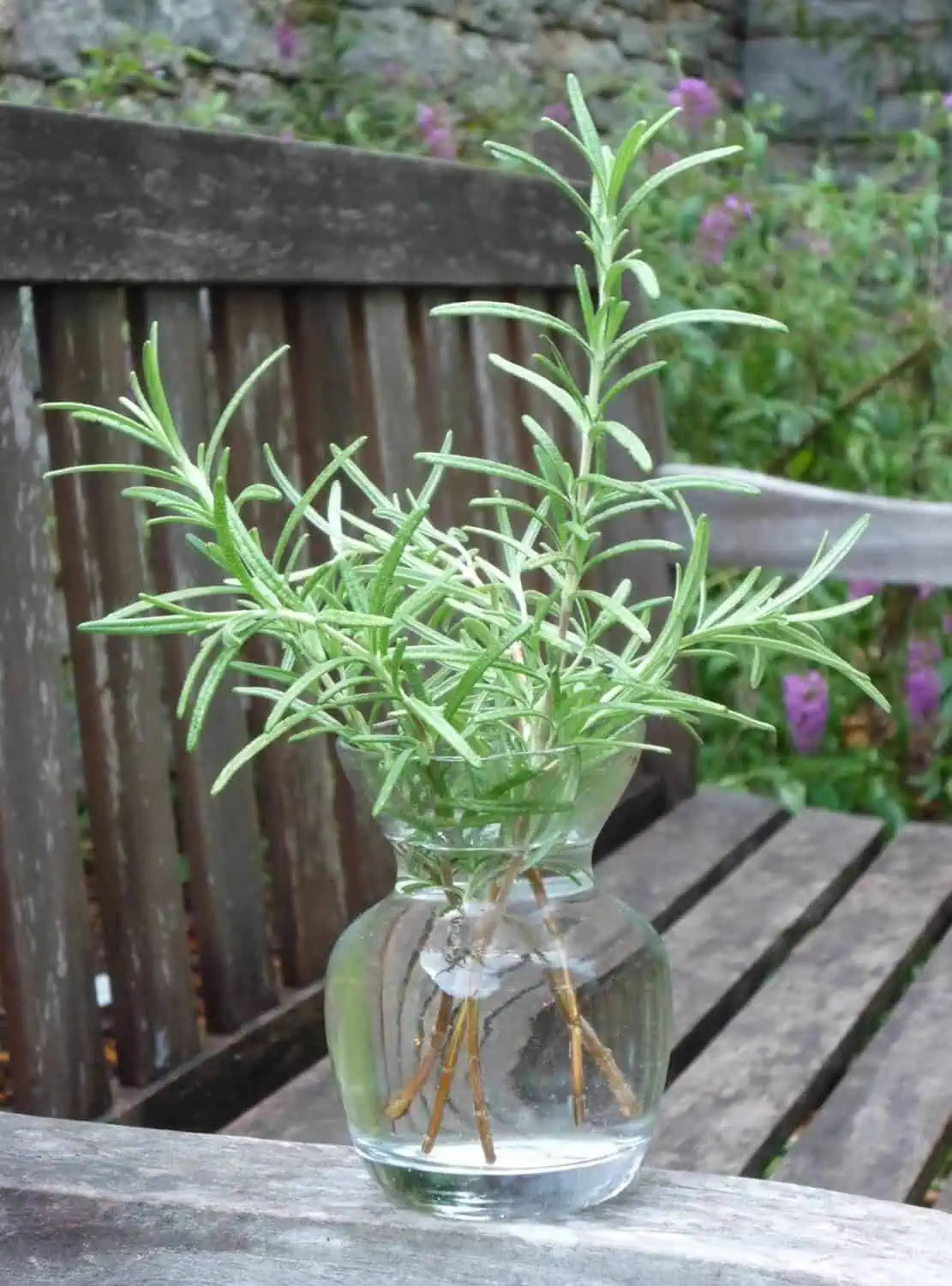
Rosemary brings a different look and growing habit to a kitchen herb collection. Its narrow, needle-like leaves grow along firm stems, and its distinctive pine-like aroma pairs well with roasted potatoes, barbecue, vegetables, breads, and meat dishes.
You can propagate rosemary in water, but it generally requires more patience than basil or mint. Choose a healthy, green, slightly flexible shoot rather than a thick, old woody stem.
Remove the leaves from the bottom portion and place the cutting in a clean glass so that the exposed stem is underwater while the remaining foliage stays dry.
Keep the jar in a bright, warm location. Check the water regularly, and don't be tempted to discard the cutting simply because roots aren't appearing as quickly as they did on your basil.
Rosemary may take several weeks to establish roots, and some cuttings will fail.
Once the roots are established, you can pot the plant in a free-draining mix or maintain it in a properly managed hydroponic system.
Rosemary is particularly sensitive to the combination of poor light and persistently wet, stagnant conditions. Its leaves and stems shouldn't be submerged, and the roots need access to oxygen.
Here’s an easy guide on how to propagate a rosemary plant.
6. Thyme (Thymus vulgaris)
Credit: Epic Gardening
Thyme is a small-leaved herb with a concentrated aroma that works well in soups, stews, roasted vegetables, and slow-cooked dishes.
Because the leaves are small, you can harvest a few sprigs without needing to remove large amounts of foliage.
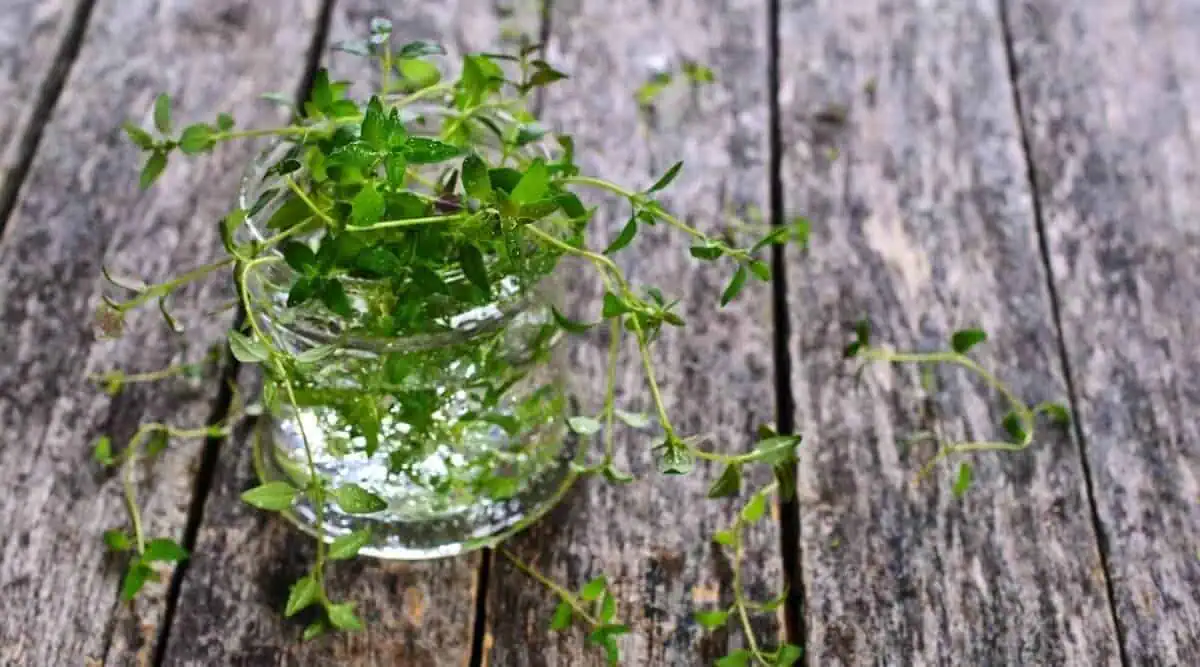
For water propagation, select a healthy green stem with several leaf nodes. Avoid relying on a heavily woody section, as young shoots are generally a better starting point. Remove the leaves from the lower part of the cutting and place the exposed stem in water.
Thyme is a little less forgiving of poor conditions than mint. Its small leaves and delicate shoots can deteriorate when they remain crowded, wet, and poorly ventilated. Use a clean container, keep all foliage above the water, and replace the water regularly.
A bright windowsill is ideal, particularly once the cutting begins producing roots and new growth.
If you plan to keep thyme growing in water rather than transfer it to soil, use an appropriate hydroponic nutrient solution and pay attention to the condition of its roots.
7. Sage (Salvia officinalis)

Sage has soft, slightly textured leaves and a strong, savory flavor.
It’s great for stuffing, butter sauces, bean dishes, and recipes involving roasted vegetables. A small amount can go a long way, which makes it a practical herb to have close to your cooking area.
To grow sage in water, choose a young, healthy shoot. Cut a section from the green growth, remove the leaves near its base, and place the exposed portion of the stem in a jar. Young cuttings are generally preferable to old, woody branches.
Sage can take some time to establish itself, so watch the cutting rather than relying on a rigid timetable.
Keep it in a bright spot and refresh the water regularly. If you notice leaves becoming soft or discolored where they touch the water, remove the affected foliage and adjust the water level.
Its leaves can be relatively broad compared with those of thyme or rosemary, and a crowded container makes it easier for foliage to sit in the water and decay.
8. Marjoram (Origanum majorana)
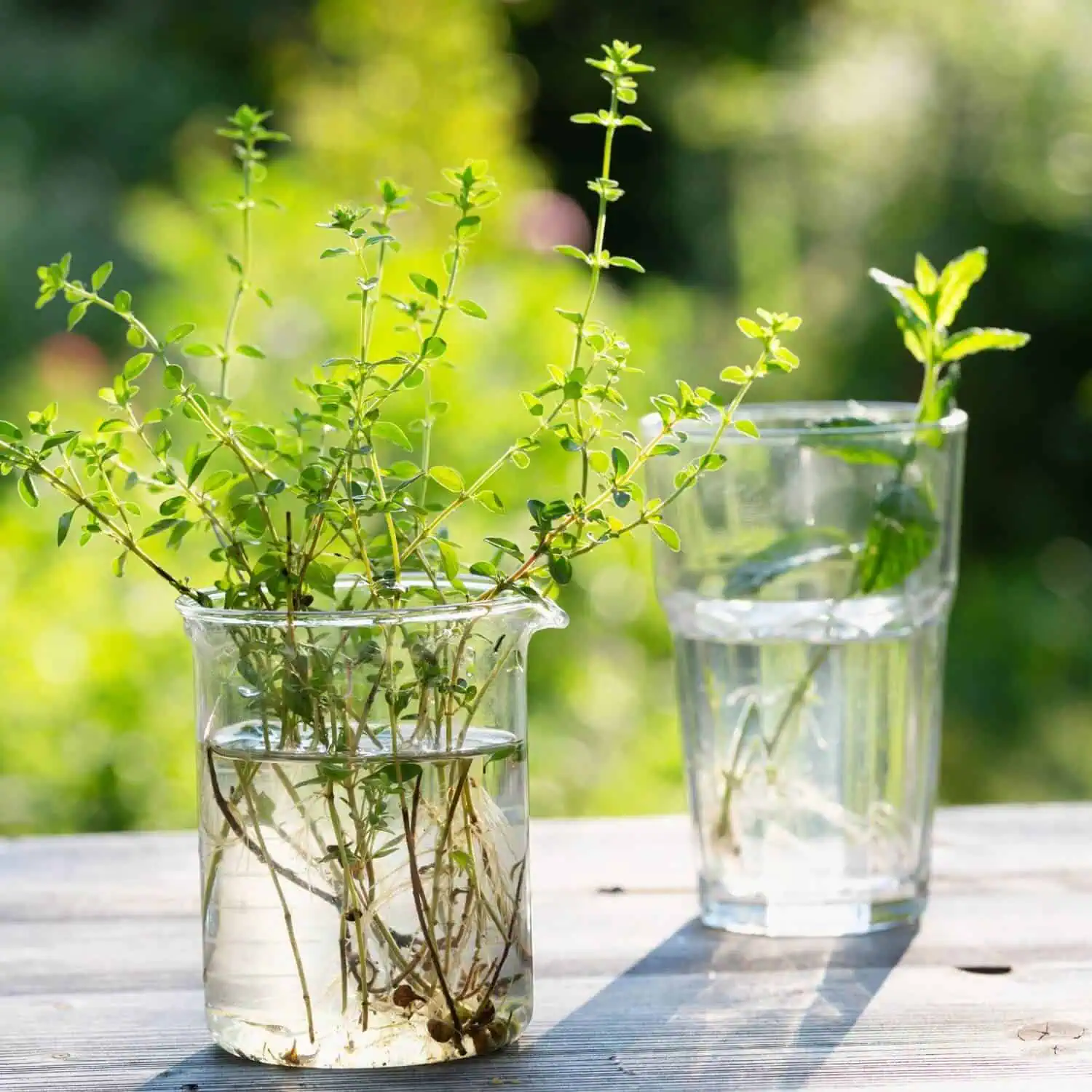
Marjoram is closely related to oregano, but its flavor is generally sweeter and more delicate. It suits egg dishes, soups, vegetables, sauces, and lighter Mediterranean recipes where the stronger taste of oregano might dominate.
The plant's softer shoots make marjoram a good candidate for water propagation. Select a healthy green tip, remove the lower leaves, and place the stem in fresh water. Keep it somewhere bright and warm while the roots develop.
Because marjoram and oregano are closely related, you might wonder whether it’s worth growing both.
The distinction is in the flavor.
Oregano tends to be bold and earthy, while marjoram can add a gentler herbal note. Having both available gives you more flexibility when seasoning food.
Marjoram also benefits from regular pinching once established. This helps keep the plant compact and encourages side shoots, which provide more useful foliage for harvesting.
9. Chives (Allium schoenoprasum)
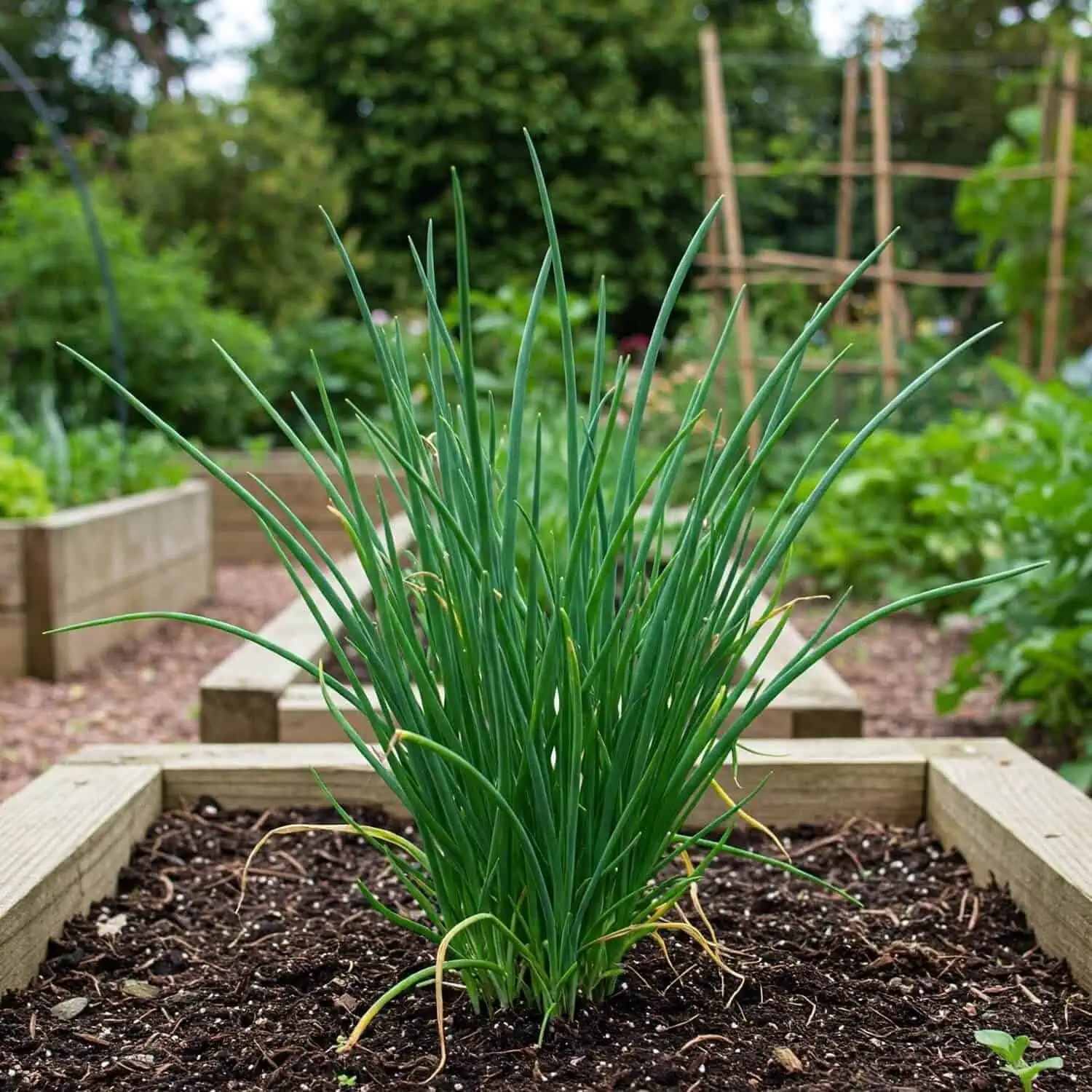
Chives are a little different from the other herbs on this list, and that's precisely why they're worth including. They have slender, grass-like leaves with a mild onion flavor. You can snip them into scrambled eggs, salads, potatoes, soups, and sauces whenever a dish needs a fresh savory finish.
Unlike basil, mint, or oregano, chives are not best started by placing an ordinary cut leaf in water.
You'll have better results with a small rooted division taken from an established plant. Keep the roots in water while making sure the base of the plant is not submerged so deeply that it begins to rot.
A small clump can produce new green shoots when it has sufficient light and the right growing conditions. Harvest the leaves by snipping them near the base, leaving enough foliage for continued growth.
Here’s a detailed guide on growing chives. You may also want to check out the best herbs that grow in shade or those that grow well together in a single container.
Conclusion
If this is your first attempt at growing herbs in water, I'd begin with basil and mint. Both are useful in everyday cooking, and they offer a relatively easier introduction to growing from cuttings.
Once you're comfortable with those, add oregano, lemon balm, or marjoram.
Rosemary and thyme are worth trying too, provided you're willing to wait longer for the roots to develop. Chives offer another option if you can start with a healthy rooted clump.
You don't need nine jars lined up on the windowsill on your first day. Start with the herbs you use most often, pay attention to how they respond to your kitchen's light and temperature, and expand your little collection as you learn what works.
Featured Image: Simple Ecology