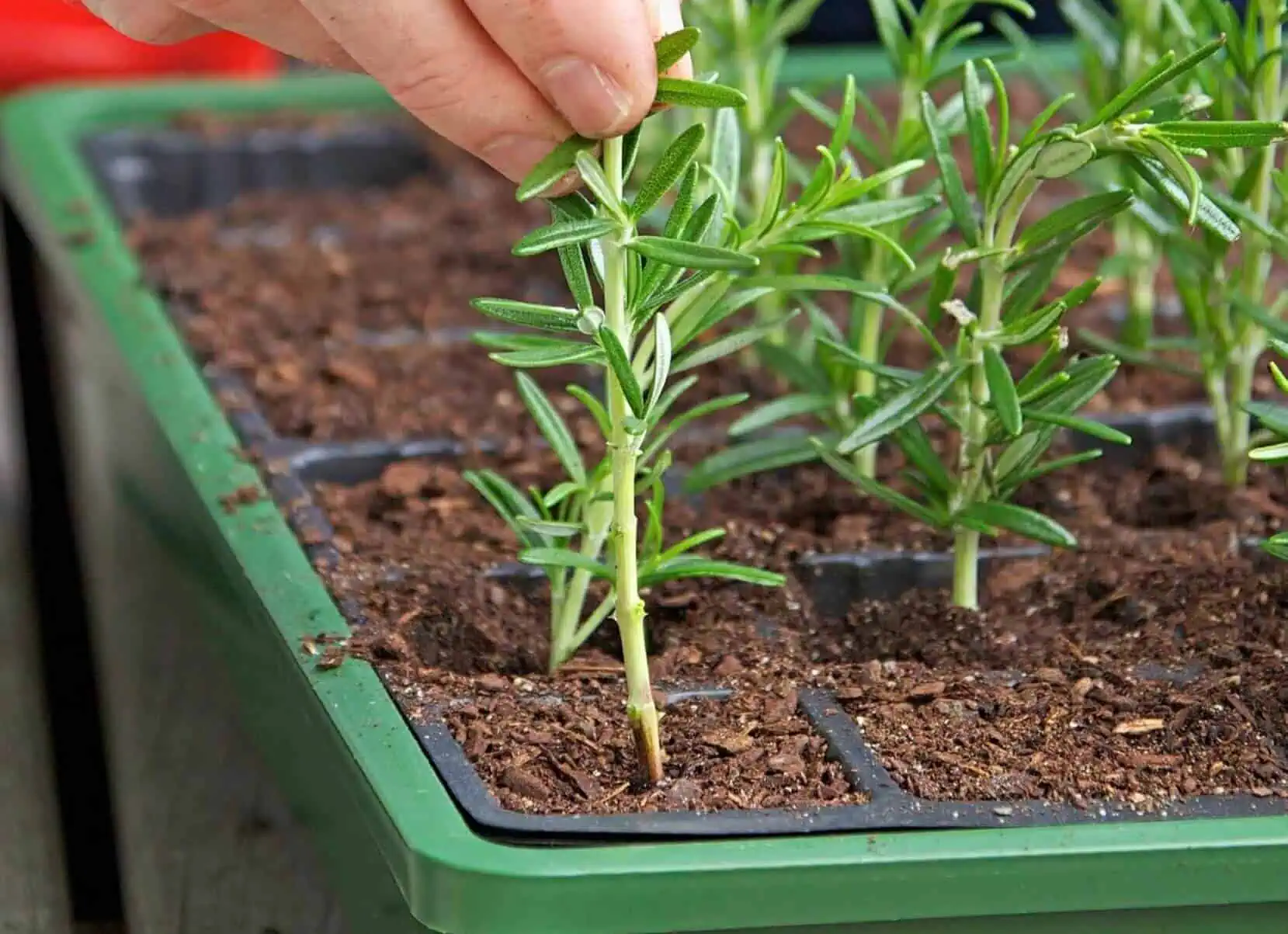
Rosemary is one of those plants that quietly earns its keep. It flavors dinner, smells incredible when you brush past it, and somehow makes a garden or landscape feel inviting.
If you’re anything like me, your barbecue grill isn’t complete without a touch of rosemary.
Let’s just say, it’s one of those must-have herbs to grow in your kitchen garden. While buying ready-made seedlings gives you a head start, it’s not always feasible budget-wise.
Besides, there’s something exciting about nurturing your own young plants.
That’s why learning to propagate rosemary feels like a small gardening superpower. Instead of handing over money for another plant, you use what you already have.
A snip here, a glass of water there, and suddenly you’re set up with more rosemary than you know what to do with. Or at least enough to share, which always feels good.
Let’s get to it.
Why rosemary is perfect for propagation
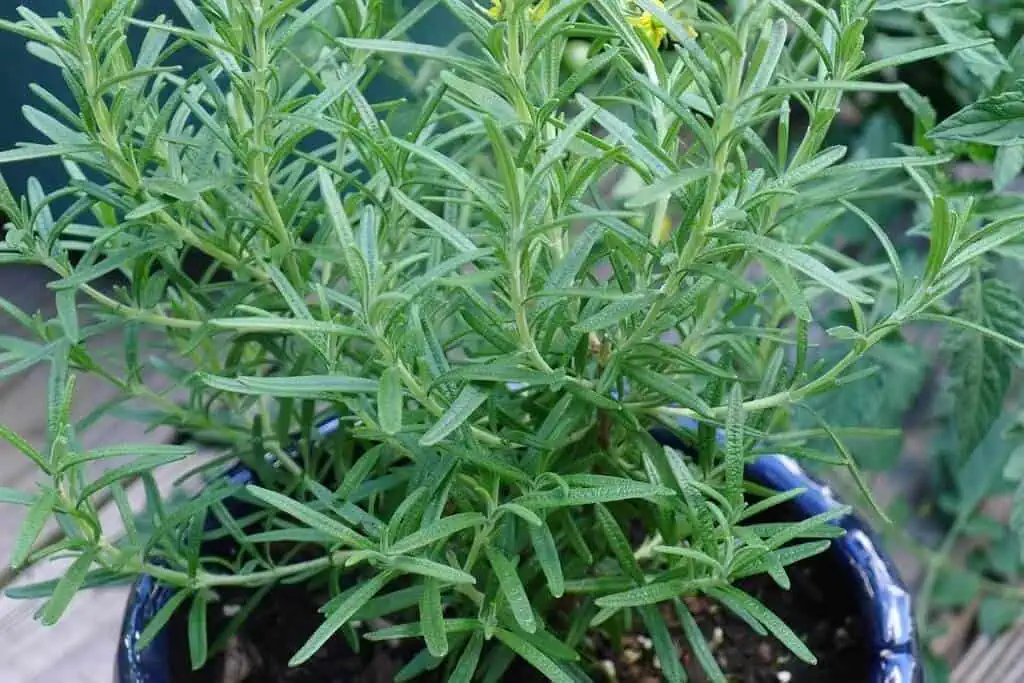
Rosemary is a woody perennial, which means it’s built to survive pruning, weather swings, and the occasional neglect. That toughness also makes it easy to propagate. Gardeners have been doing this for centuries, often by accident.
Interestingly, rosemary roots reliably from semi-hardwood cuttings, especially during active growth periods like spring and early summer.
Besides, propagation is the most practical way to maintain strong, consistent rosemary plants over time – what in botany we call ‘true-to-type.’
When to take rosemary cuttings
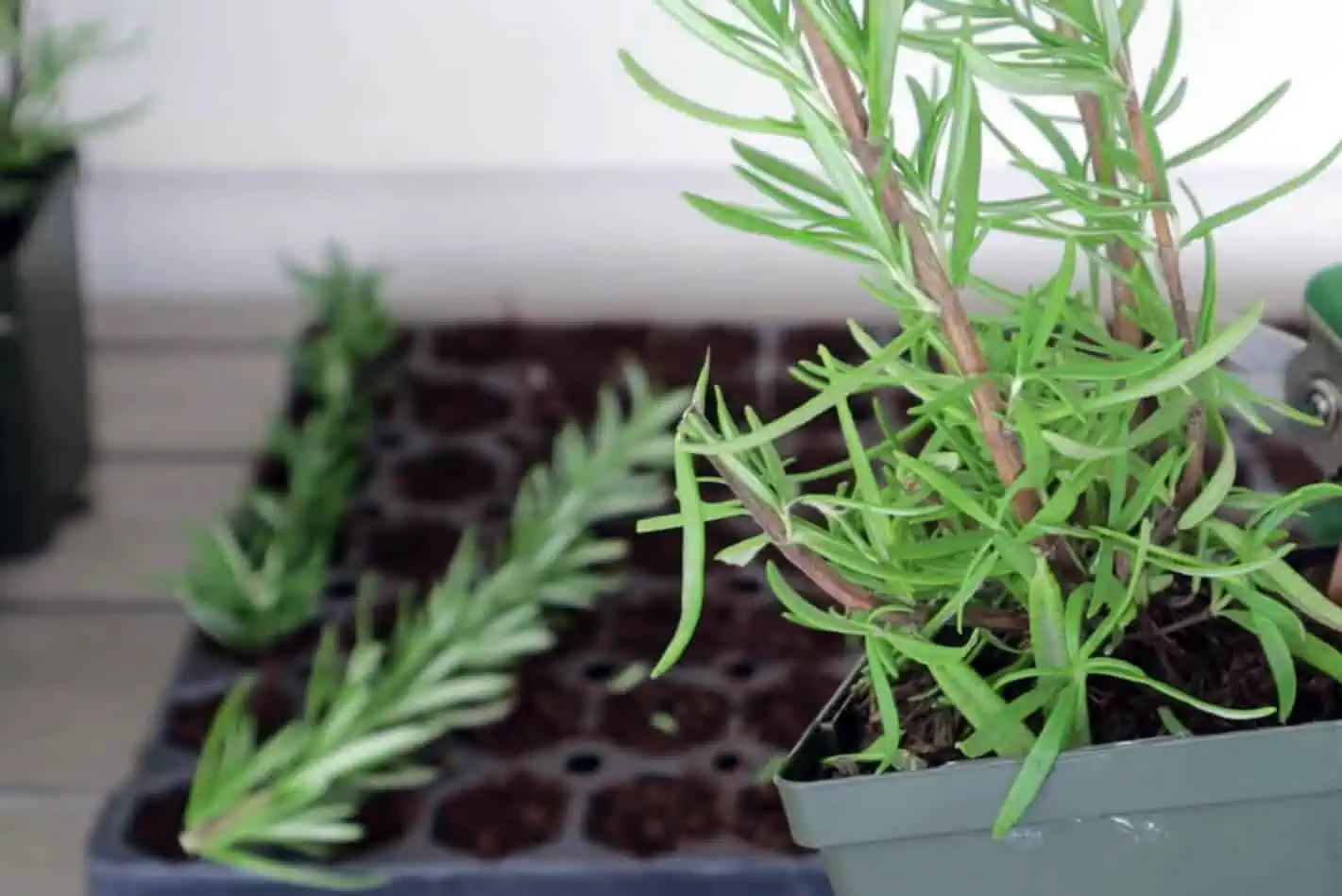
Although it’s not a big deal, knowing when to take the cuttings is quite important.
The sweet spot is when the plant is actively growing. Late spring through early summer is ideal. Early fall can also work if winters are mild where you live.
Doing this will guarantee enough healthy stems to propagate without leaving the mother plant in shock.
Also, try to avoid taking cuttings during extreme heat or cold. The plant is already stressed then.
How to choose the right stem
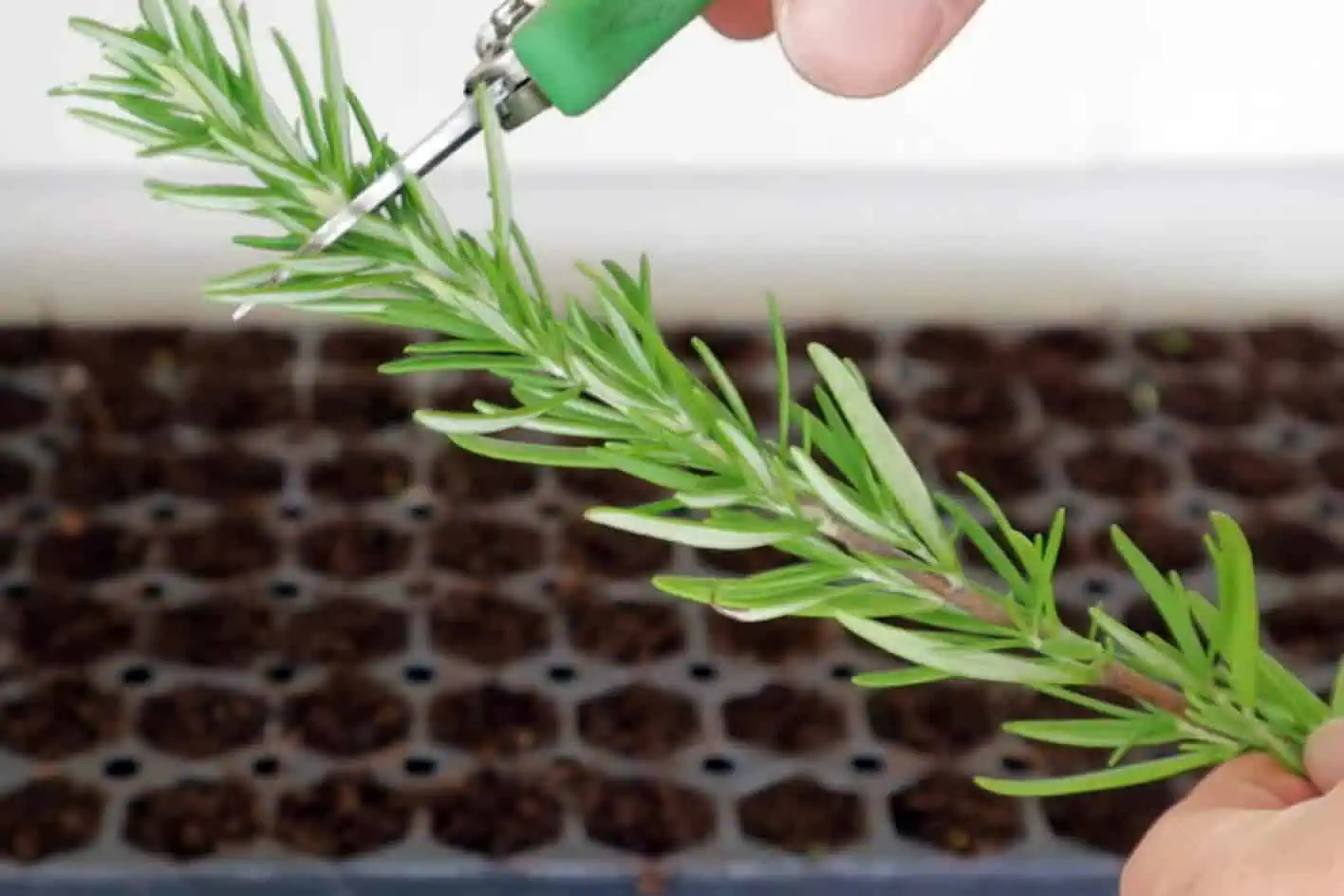
This step does most of the work for you.
Look for healthy stems that feel firm but not woody like a twig. They should bend a little before snapping. That texture tells you the stem is mature enough to root but still flexible enough to grow.
Cut a piece about 4 to 6 inches long. Use clean scissors or pruners. Make sure to use clean, disinfected tools to reduce disease infections since rosemary hates soggy, infected conditions.
Preparing the cutting & rooting hormone
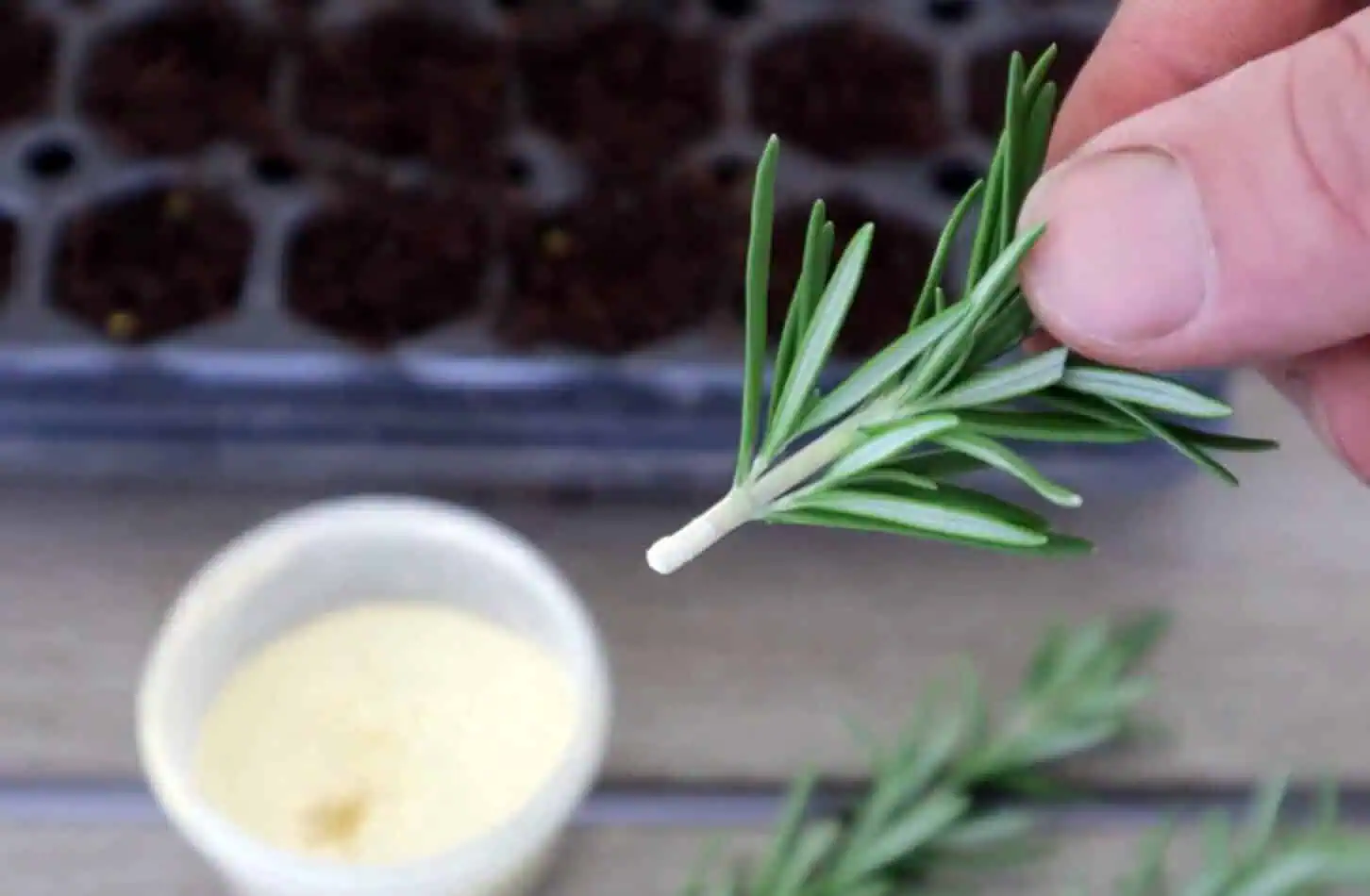
Once you’ve got your stem, strip off the leaves from the bottom half. Those leaves would sit in water or soil and rot, which helps no one.
Then dip the cuttings into a suitable rooting hormone. If you don’t have a hormone, don’t fret. It is beneficial to do, but not really essential.
In fact, rosemary plants often root well without a rooting hormone, just more slowly. If patience isn’t your strong suit, then you should definitely use a hormone.
Also, learn how to propagate pothos without a rooting hormone.
Water vs. soil propagation
This is where opinions get loud, so let’s stay grounded.
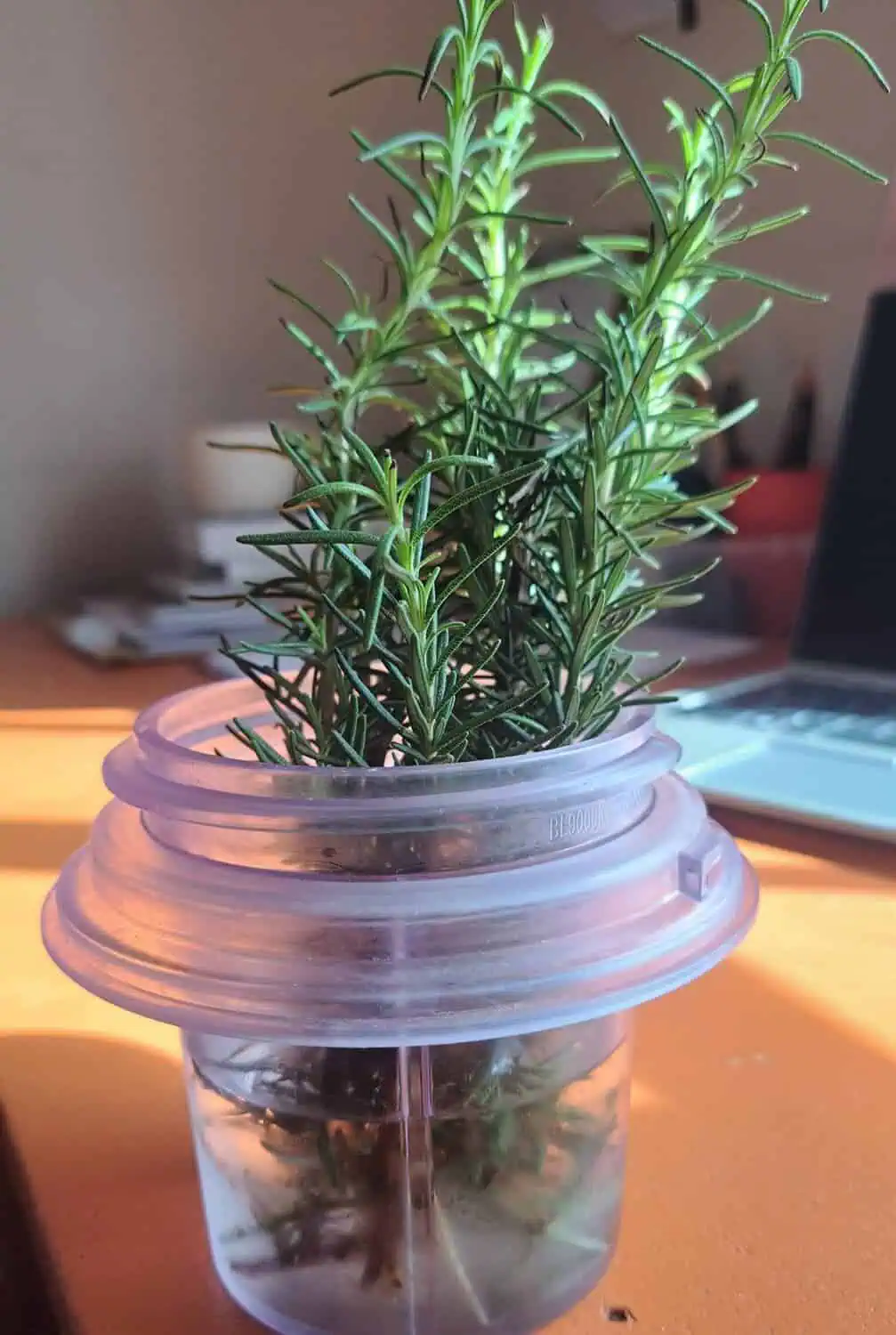
Water propagation is simple and satisfying. You can see roots form, which feels reassuring. Place the cutting in a jar so the bare stem sits in water, and the leaves stay dry. Change the water every few days.
Stale water invites bacteria, and rosemary is not forgiving about that.
Roots usually appear in two to four weeks. Once they’re about an inch long, transfer the cutting to soil. Don’t wait too long. Water roots are fragile and don’t always adapt well to soil if they grow too much.
Soil propagation skips the middle step. Stick the cutting into a light, well-draining mix, something like potting soil mixed with sand or perlite. Keep it lightly moist, not wet. In about three to six weeks, gentle resistance when you tug tells you roots have formed.
Here’s the kicker, though; numerous studies prove that soil-rooted cuttings often adapt better long-term because they develop roots suited for soil from the start. That’s a small edge, but a real one.
You’re free to experiment with both methods or choose one you’re comfortable with.
Light and warmth requirement
Rosemary cuttings want bright indirect light. A sunny windowsill works, as does dappled outdoor shade. Too much direct sun dries them out before roots form.
Warm temperature is also essential, around 65 to 75°F is perfect. If the nights are cold, keep cuttings indoors until they’re established.
Once you’ve done all the above, it’s time to be patient because the truth is some cuttings will root fast, others will sulk for weeks, and then suddenly decide to grow.
Increasing the number of cuttings propagated guarantees that at least you’ll get some plants even if other fails.
3 Common mistakes that most newbies make
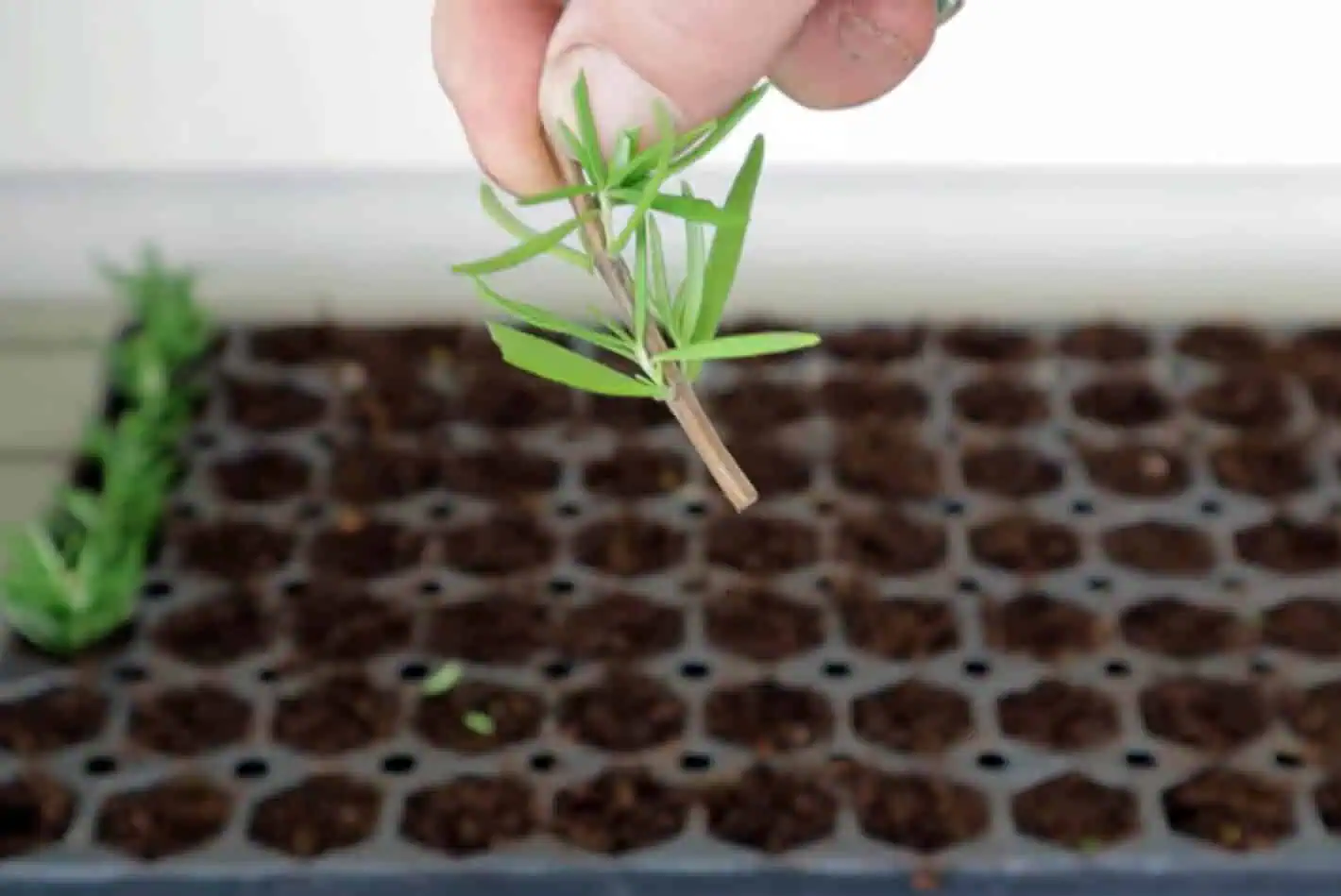
A hard rosemary cutting
- The biggest issue is overwatering your cuttings since Rosemary hates soggy conditions. If the soil feels wet instead of lightly damp, that’s a problem.
- Another common mistake is using a flowering stem or a hard stem cutting. This isn’t too common since rosemary rarely flowers. But when they do, flowers pull energy away from root development. If a cutting starts flowering, pinch the flowers off early.
- Finally, don’t rush transplanting. Whether you start in water or soil, give the roots time to develop strength. Weak roots lead to weak plants.
Transplanting and long-term care
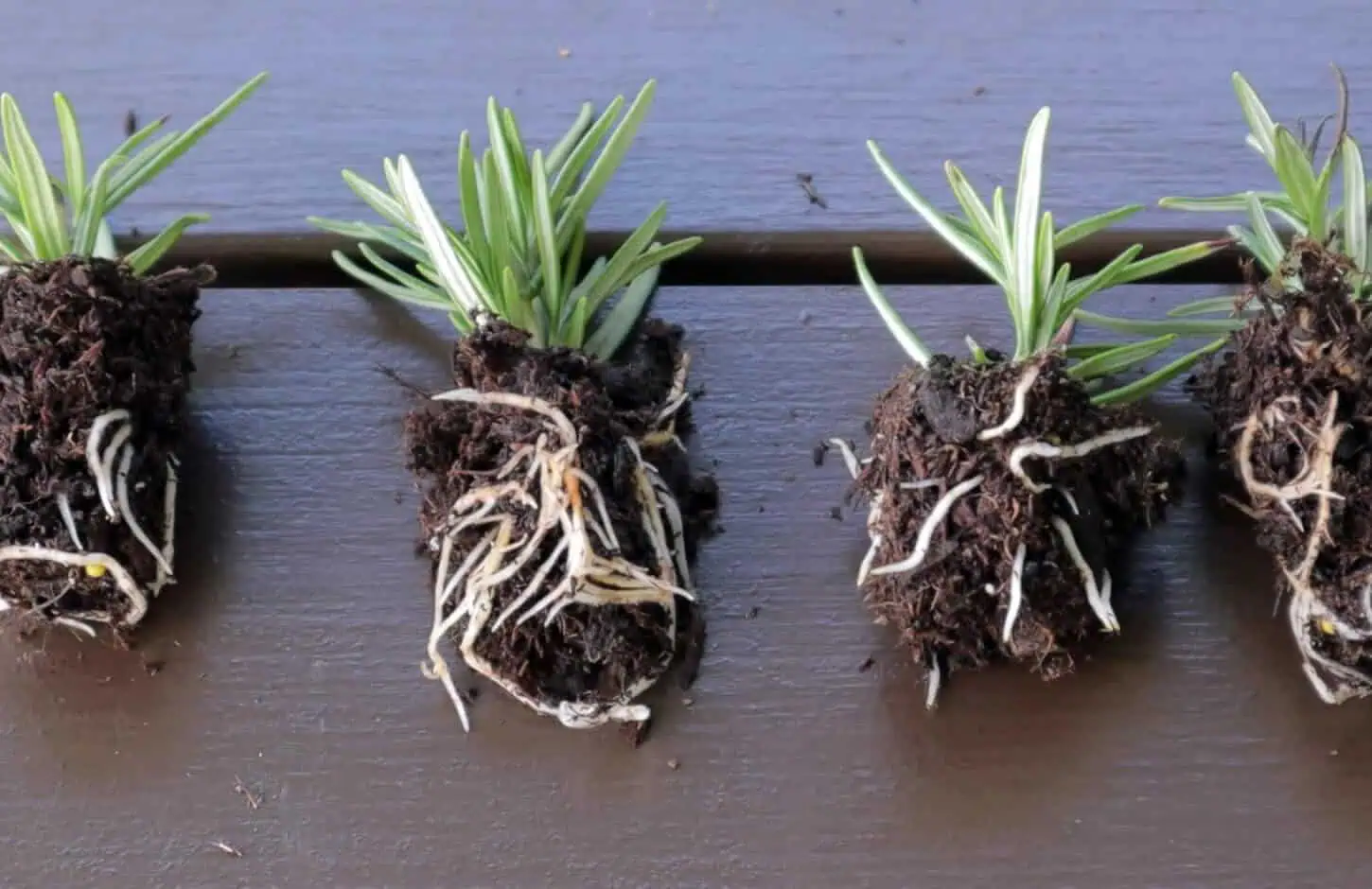
Once rooted, plant your rosemary in a pot or garden bed with excellent drainage.
Water deeply at first until the water drains out of the pot, and subsequently let the soil dry out between waterings. Over time, this encourages deep, resilient roots.
Pruning regularly keeps the plant compact and productive. Conveniently, those prunings become your next round of cuttings. And remember, you can plant rosemary in companionship with other shade-loving herbs such as Thyme, Sage, and Lavender.
Conclusion
When it comes to plant propagation, rosemary makes it especially easy. It just asks for decent light, good drainage, and a bit of attention. In return, it gives you flavor, fragrance, and a steady supply of future plants.
Once you propagate rosemary successfully, it’s hard not to look at every healthy plant and think, I could make more of you.
Featured Image Credit: Graham Ross via BHG