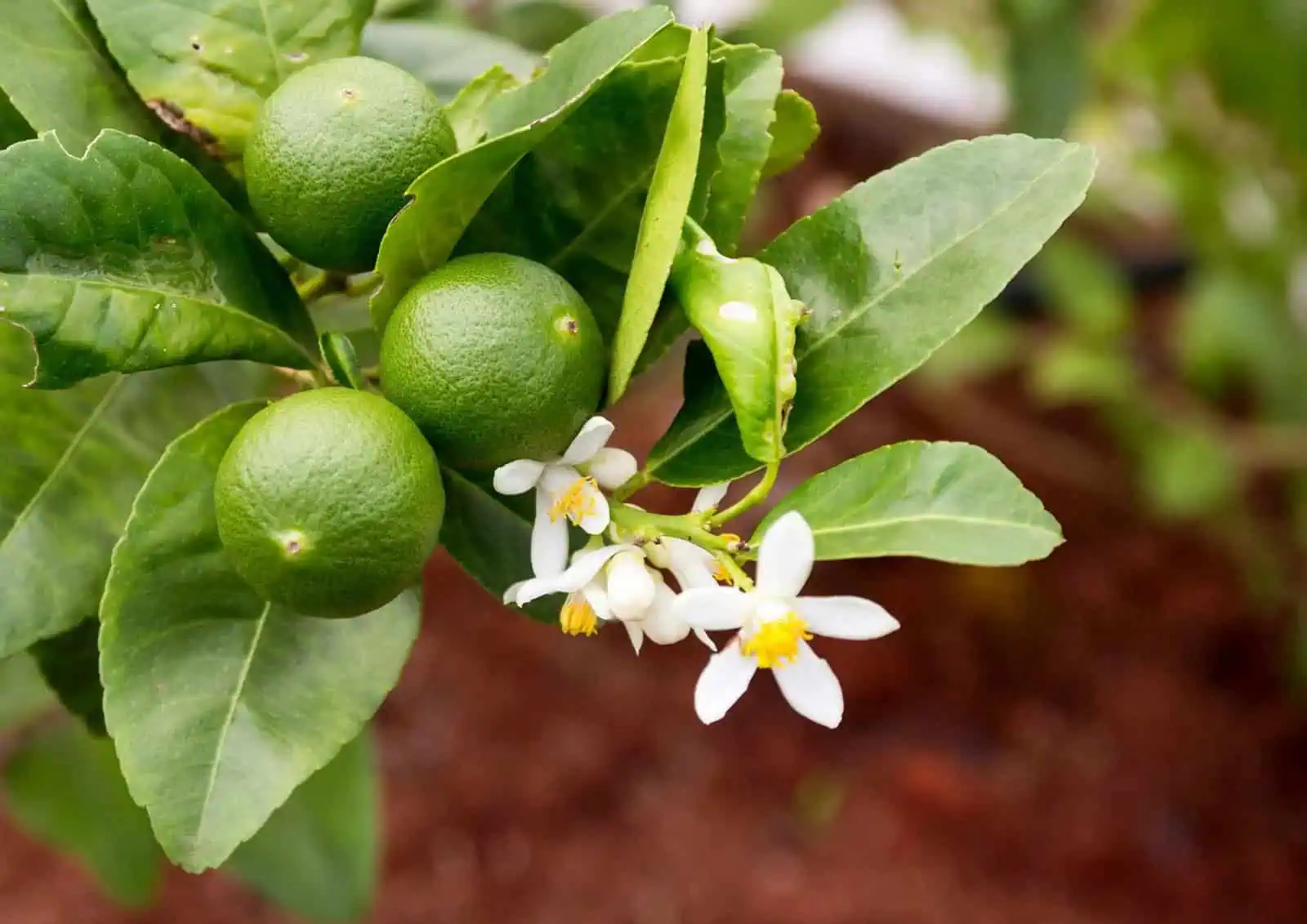
For most of us urban gardeners, containers come in handy when it comes to growing our own kitchen garden in a limited space.
Limes, however, are naturally vigorous trees, and a container gives their roots a much smaller world to explore.
That means everything matters a little more: the potting mix, drainage, watering, nutrition, root space, temperature, and especially light.
The good news is that with a healthy seedling, a thoughtfully selected container, and consistent care, a lime tree can remain productive for years.
This guide explains how to get started, how to repot without setting the tree back, how to feed it, how to deal with iron deficiency, and what to do when the tree looks perfectly healthy but stubbornly refuses to flower.
Let’s begin:
How to Grow Limes in Pots Step by Step
The Choice of Seedlings
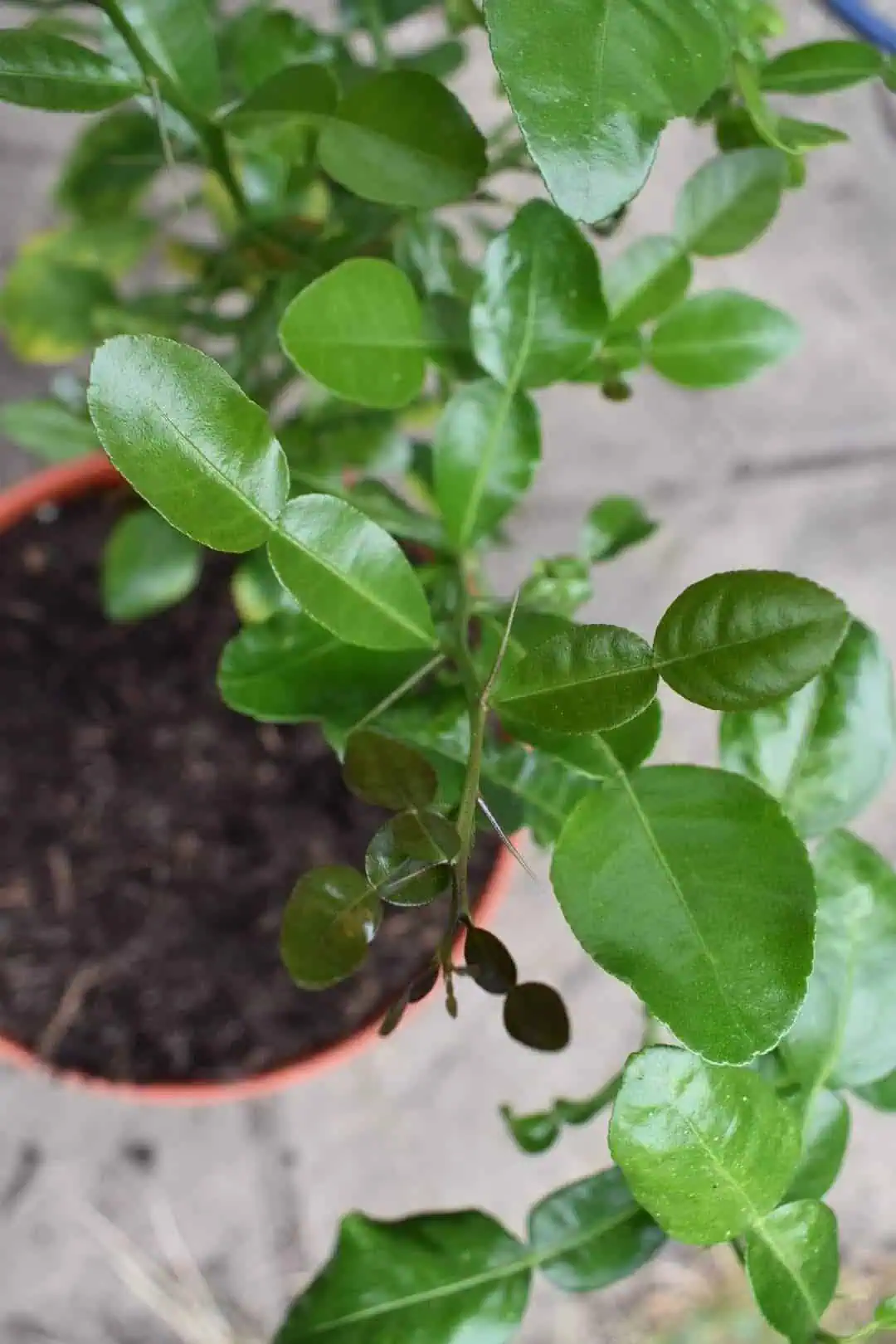
The fastest and easiest route to lime fruits is beginning with nursery-propagated seedlings instead of starting the seeds on your own.
You'll generally encounter two limes in nurseries: Mexican or Key lime and Tahiti, Persian or Bearss lime. Key lime produces smaller, highly acidic fruit and is particularly cold-sensitive. Tahiti lime produces larger fruit and is somewhat more cold-tolerant.
For container growing, look for a naturally compact plant or one grafted onto a suitable dwarfing or size-controlling rootstock. A large, vigorous lime may survive in a pot, but keeping a naturally large tree permanently small is a much bigger job.
There's another reason to be cautious about what a nursery calls a "seedling." A tree grown directly from seed can have characteristics that differ from the parent plant, particularly with hybrid citrus.
A grafted or budded tree gives you a named variety with much greater predictability.
When buying, inspect the trunk, leaves, and root zone. The foliage should be reasonably full and green, the stems should be firm, and there shouldn't be obvious scale insects, mealybugs, severe leaf distortion, or fungal lesions.
Most importantly, look at the base of the trunk. You're looking for a clean transition between the trunk and potting mix.
Where to buy the lime seedlings?
A reputable local nursery, garden center, or specialist citrus nursery is usually the safest starting point. Look for nurseries that can tell you the actual cultivar and rootstock rather than simply selling a plant labelled "lime."
In areas where citrus diseases are a serious concern, buying certified or registered planting material is even more important.
A specialist nursery is worth the extra effort. The cheapest lime tree isn't necessarily the bargain it appears to be if you spend the next three years trying to correct a weak root system, poor graft, or an unidentified variety.
If you’re interested, here’s my top-of-mind recommendation for lime seedlings from Logees.
Choose the right container
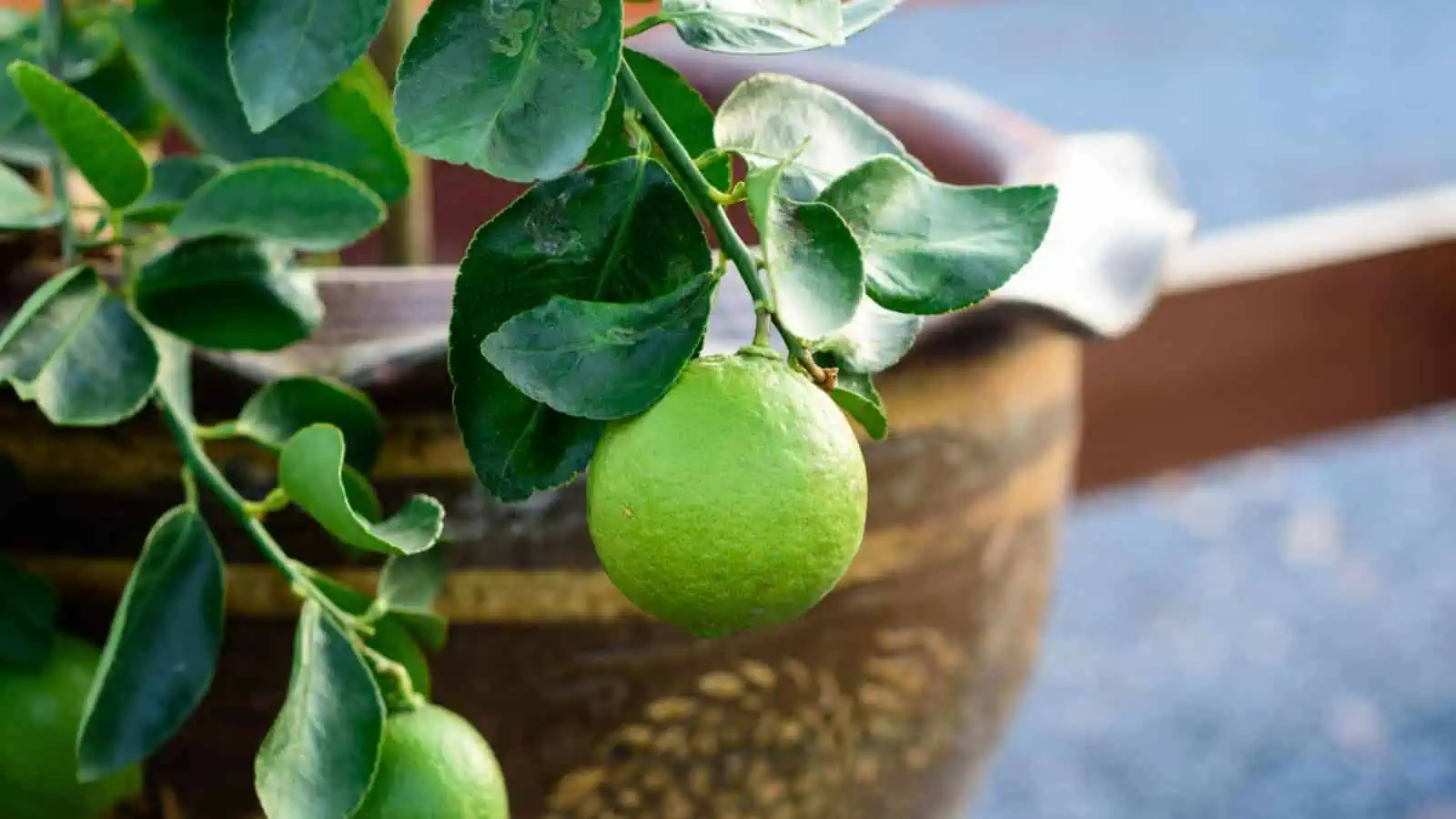
There's a temptation to put a small lime seedling into a huge container so you won't have to repot it for years.
I'd resist that temptation.
An oversized pot holds a large volume of wet growing medium around a relatively small root system. If watering is frequent, the mix can remain wet for too long.
Citrus roots need oxygen as well as water, and persistently saturated conditions can encourage root problems, including Phytophthora root and crown rot.
Start with a container only somewhat larger than the current root ball. The exact size depends on the seedling, but the principle is simple: give the roots room to expand without surrounding them with a swamp.
Drainage holes are essential. Several smaller holes spread across the base are useful because water needs a reliable way out of the container.
Terracotta can work very well because it allows some moisture to escape through the sides, although it also dries more quickly. Plastic containers hold moisture longer and are lighter, which is useful when a tree becomes too heavy to move easily.
And here's a practical trick worth doing from the beginning: put the container on a sturdy plant dolly.
A lime tree that feels perfectly manageable in March can become surprisingly heavy after a season of growth.
Suitable citrus potting mix
Use a quality commercial potting mix designed for citrus fruit trees or other plants that require good drainage. Avoid filling a container with garden soil. It tends to compact drains poorly in pots.
A good container mix should hold enough moisture to keep the tree hydrated while allowing excess water and air to move through the root zone.
This balance becomes particularly important as the tree grows. A large canopy can lose water quickly on a hot day, while a dense, poorly aerated root zone can remain wet below the surface.
Plant the lime seedlings at the correct depth
Remove the lime carefully from its nursery pot and inspect the root ball. If roots are circling heavily around the outside, tease a few loose or make shallow vertical cuts through the outermost roots rather than aggressively destroying the root ball.
Place the tree so the top of its original root ball remains at approximately the same level it was growing before.
Don't bury the trunk to make the tree look more securely planted.
This brings us to one of the most important lime-growing problems to understand: citrus collar rot.
Protect the trunk from citrus collar rot
The area where the trunk meets the roots is sometimes called the crown or collar. Keeping this region dry and well ventilated is one of your simplest forms of disease prevention.
Phytophthora species can cause citrus root rot, crown rot and gummosis. Excess moisture around the lower trunk and poorly drained soil create conditions that make these diseases more likely.
Symptoms can include declining foliage, yellowing leaves, poor growth, bark lesions and, in more advanced cases, oozing or cracking bark around the lower trunk.
Watering
When watering limes, don’t follow a rigid watering calendar.
This is because a plant may need water every few days during hot weather and much less frequently when conditions are cool, cloudy, or humid.
Instead, check the soil itself rather than relying only on a fixed schedule.
The simplest method is to check the growing medium with your finger or use the weight of the container as a clue.
When the upper layer has dried and the tree actually needs water, water thoroughly until some water exits the drainage holes. This wets the full root zone rather than merely dampening the surface.
Then let excess water drain away completely.
Don't allow the pot to sit permanently in a saucer of water. Empty standing water after irrigation.
Exposure to adequate light
Container citrus, especially lime, generally needs at least six hours of strong direct light, and indoor citrus can require six to eight hours of direct sunlight or supplemental lighting to flower and fruit reliably.
A bright-looking room can still be surprisingly dark from a plant's perspective.
Put the lime in the sunniest suitable position you have. A south- or west-facing location can work well in many climates, although local climate and heat exposure matter.
If you're moving the tree from indoors to strong outdoor sun, don't put it straight into full afternoon sun after months under weak indoor light.
An AeroGarden Bounty can be useful as supplemental lighting for a container lime, particularly when natural light is poor. The Bounty model uses a 40-watt full-spectrum LED with adjustable intensity, while the Bounty Basic uses a 30-watt LED.
Pro Tip: While low light may affect growth and flowering, too much light for long periods can also affect flowering. Lime, like most plants, requires some period of rest in the dark
Fertilizer and feeding your lime tree
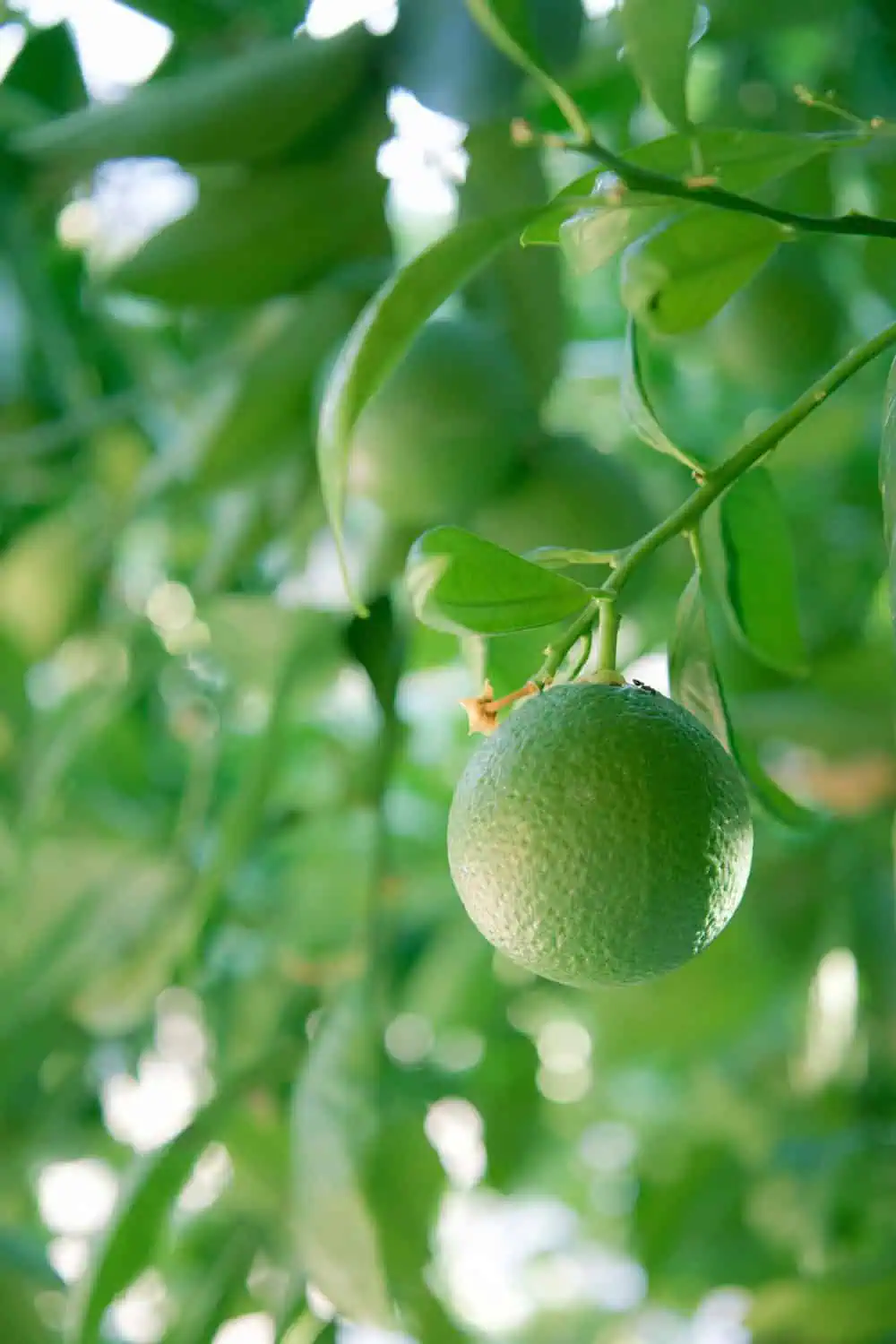
A container lime has limited access to nutrients compared with a tree planted into the ground, so regular feeding is important.
For an organic approach, E.B. Stone Organic Citrus & Fruit Tree Food is a useful option. The manufacturer lists it as a 7-3-3 organic fertilizer formulated for citrus, including limes, and recommends feeding every six to eight weeks during the growing season.
That's a reasonable fertilizer to include in a container citrus routine, provided you follow the product label and adjust for the size and condition of the tree.
However, don't assume that more fertilizer means more fruit.
Excess fertilizer can produce lush vegetative growth and can also injure roots when applied improperly. Also remember that different climates have different growing seasons.
Feed when the plant is actively growing and reduce or stop feeding during periods when growth has naturally slowed.
Iron deficiency
Citrus occasionally develops micronutrient deficiencies, including iron deficiency.
In such cases, chelated liquid micronutrients can be used to correct iron and other micronutrient deficiencies, particularly as new growth emerges.
One product that can be useful for this purpose is Southern Ag Chelated Liquid Iron, which contains 5% iron and is specifically intended to correct and prevent iron-deficiency yellowing.
Its label gives application directions for trees and recommends checking soil pH when yellowing persists or quickly returns.
Repotting your lime tree
A lime in a container eventually exhausts its available root space, and the physical structure of the potting mix begins to deteriorate.
That's when repotting becomes necessary.
You don't necessarily need to repot every year. Instead, watch the plant.
Roots emerging from drainage holes, roots densely circling the container, water racing straight through the pot, unusually rapid drying, and a tree that seems to stall despite reasonable care can all be signs that the root environment needs attention.
The safest approach is usually to move up only one container size at a time.
Take the tree out of the pot and examine the roots. If they're tightly circling, loosen the outer roots gently. Remove obviously dead or rotting material with clean tools, then place the tree into fresh, well-draining citrus potting mix.
Repotting is also a good opportunity to inspect the root collar. If the lower trunk has remained buried or consistently wet, correct that immediately.
Pruning the tree
Limes don't need to be hacked into ornamental shapes.
In a container, pruning is mainly about maintaining a healthy canopy, removing damaged or poorly positioned growth, and keeping the tree at a manageable size.
Remove dead, broken, or diseased branches first. Then deal with shoots that cross, rub, or grow awkwardly through the center of the canopy.
If you have a grafted tree, pay particular attention to shoots emerging from below the graft union. Those are rootstock shoots, not the lime variety you bought, and they can become vigorous enough to dominate the desirable canopy.
Don't prune heavily simply because you want more flowers.
The tree needs leaves to manufacture carbohydrates, and severe pruning can remove a significant portion of the machinery supporting future growth and fruit production.
For a small potted lime, gentle annual shaping is usually much easier than trying to correct an oversized tree after it has escaped the boundaries of the pot.
Pests control
Scale insects, whiteflies, aphids and spider mites can all become troublesome, particularly when a tree is grown indoors where natural predators are scarce.
Inspect the undersides of leaves, tender new growth, and branch junctions regularly.
Early detection makes everything easier.
A few pests are a nuisance.
An unnoticed infestation that spends several months multiplying is a different story.
Pay particular attention after bringing a nursery plant home. Even a healthy-looking citrus can carry a few unwanted passengers.
Overwintering
Limes are warm-climate plants, and they don't have much patience for frost.
Mexican or Key lime is particularly cold-sensitive, while Tahiti lime has somewhat greater cold tolerance.
Containers are useful here because you can move the tree.
That flexibility is one of the biggest advantages of growing citrus in a pot. When temperatures threaten to become damaging, the tree can be moved to a protected location.
Indoor relocation isn't completely effortless, though. A sudden transition from bright outdoor sun to dim indoor light can cause stress and leaf drop, so acclimate the tree whenever practical.
In very cold regions, a lime can become something of a seasonal houseguest, spending warm months outdoors and colder months under protection.
Conclusion
The most useful way to think about a potted lime tree is as a balance between roots, leaves, light, water, and reproduction.
Give it too little light, and the tree may remain alive but refuse to flower. Keep the roots permanently wet, and they can deteriorate. Feed too heavily, and you may encourage a mountain of leaves instead of a useful crop.
Let the tree become root-bound, and even good nutrition can stop producing the results you expect.
When your container lime starts producing healthy new growth and, eventually, those first fragrant flowers, you're well on your way.
Share this guide with another gardener on Facebook, and save it to Pinterest so you have the troubleshooting tips handy when your lime inevitably decides to test your patience.