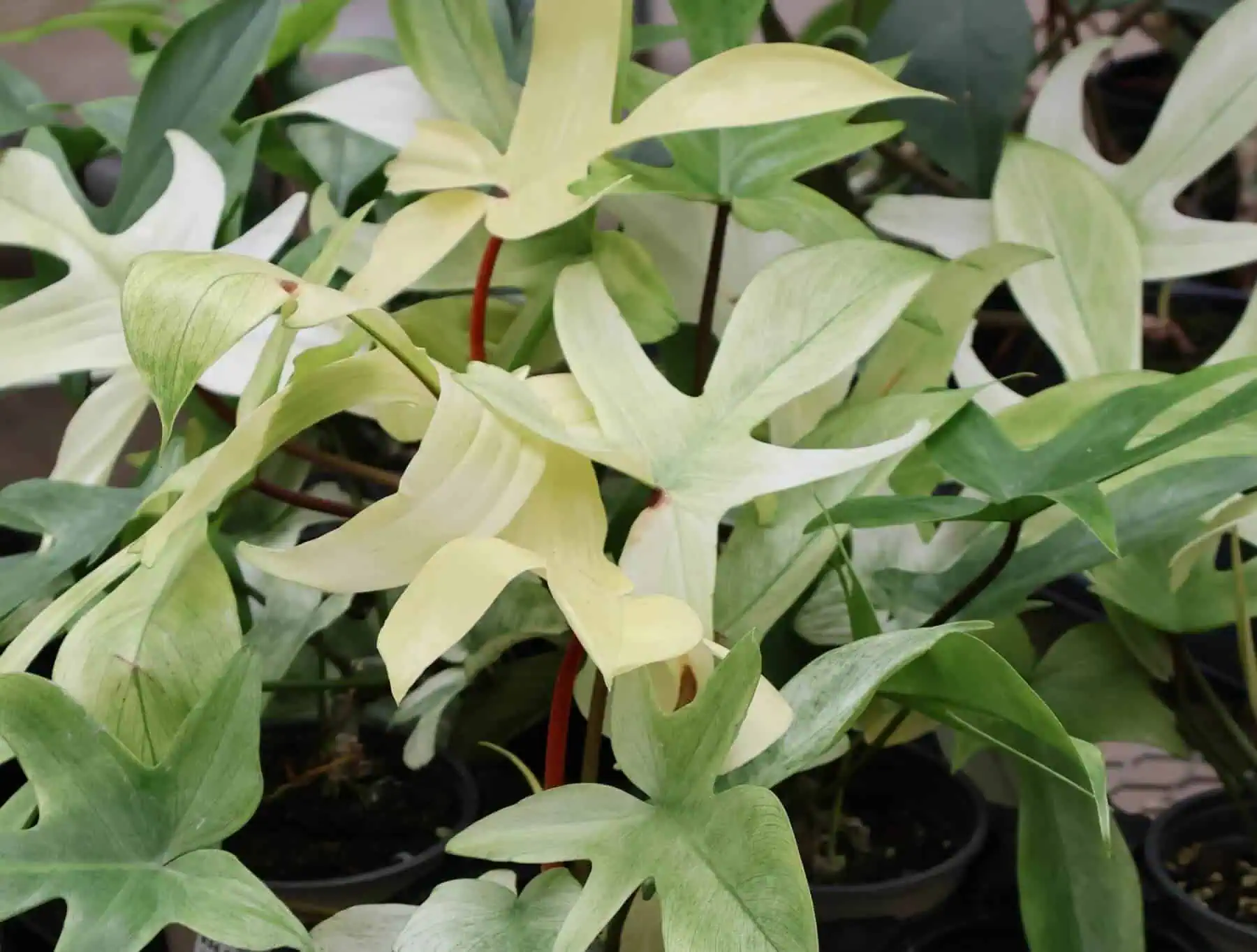
The Florida Ghost Philodendron is not your typical houseplant. Those pale, almost translucent new leaves that slowly turn green are a sight to behold.
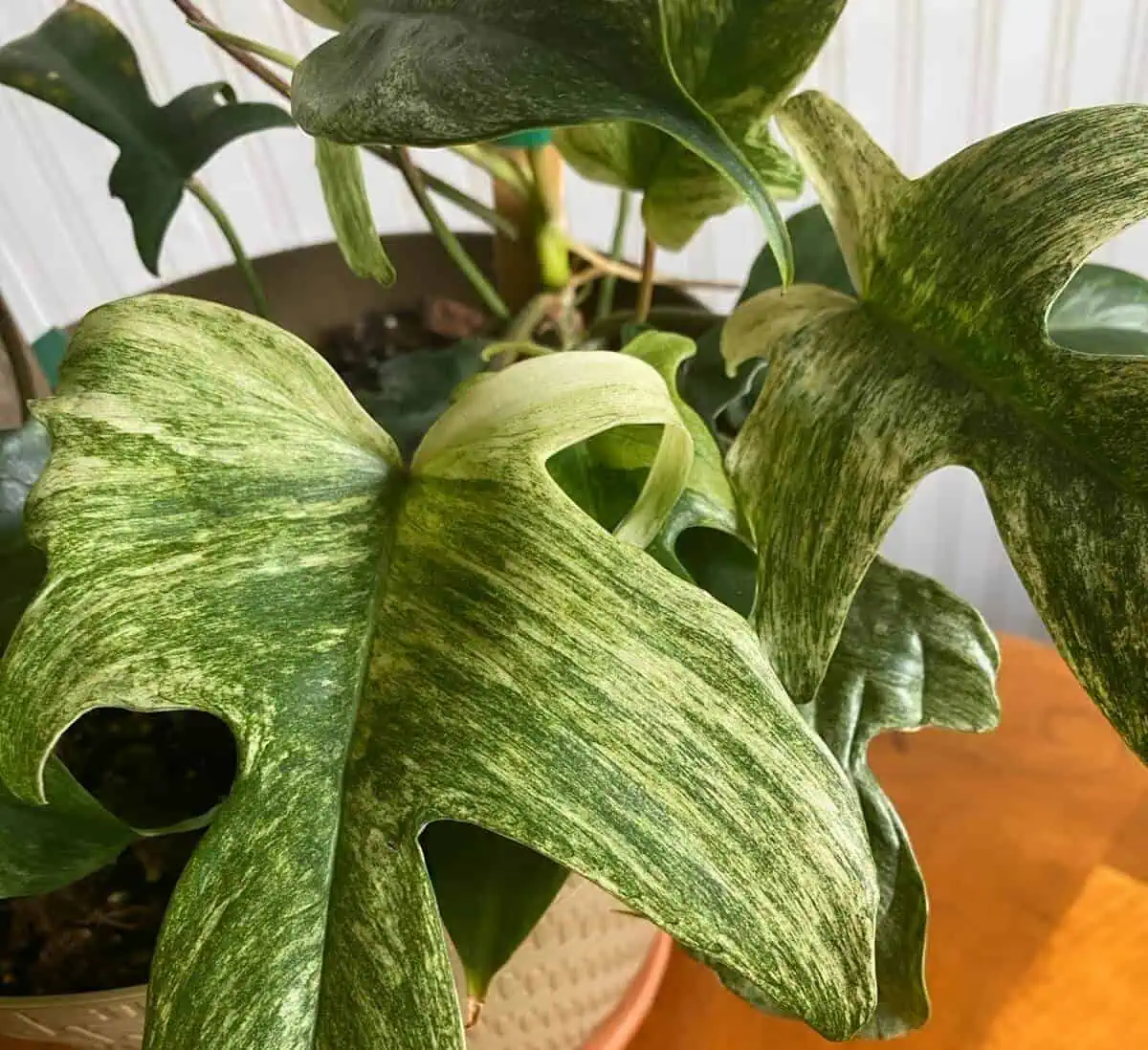
The variegated types happen to be my favorite.
These rare plants were developed by Florida botanist Robert McColley in the 1950s (that’s a long time ago). As such, you’d expect them to be in every household, but you’d be wrong. Florida ghost philodendrons are difficult to come by.
They’ve since become favorites among plant collectors and plant enthusiasts worldwide.
The good news is that they’re easy to propagate, plant, and care for indoors. And in today’s, we’ll discuss all about it.
Let’s start with some background information.
About Florida Ghost Philodendron
The Florida Ghost (Philodendron pedatum ‘Florida Ghost’) is a hybrid that’s believed to have originated from crossing Philodendron squamiferum and Philodendron pedatum.
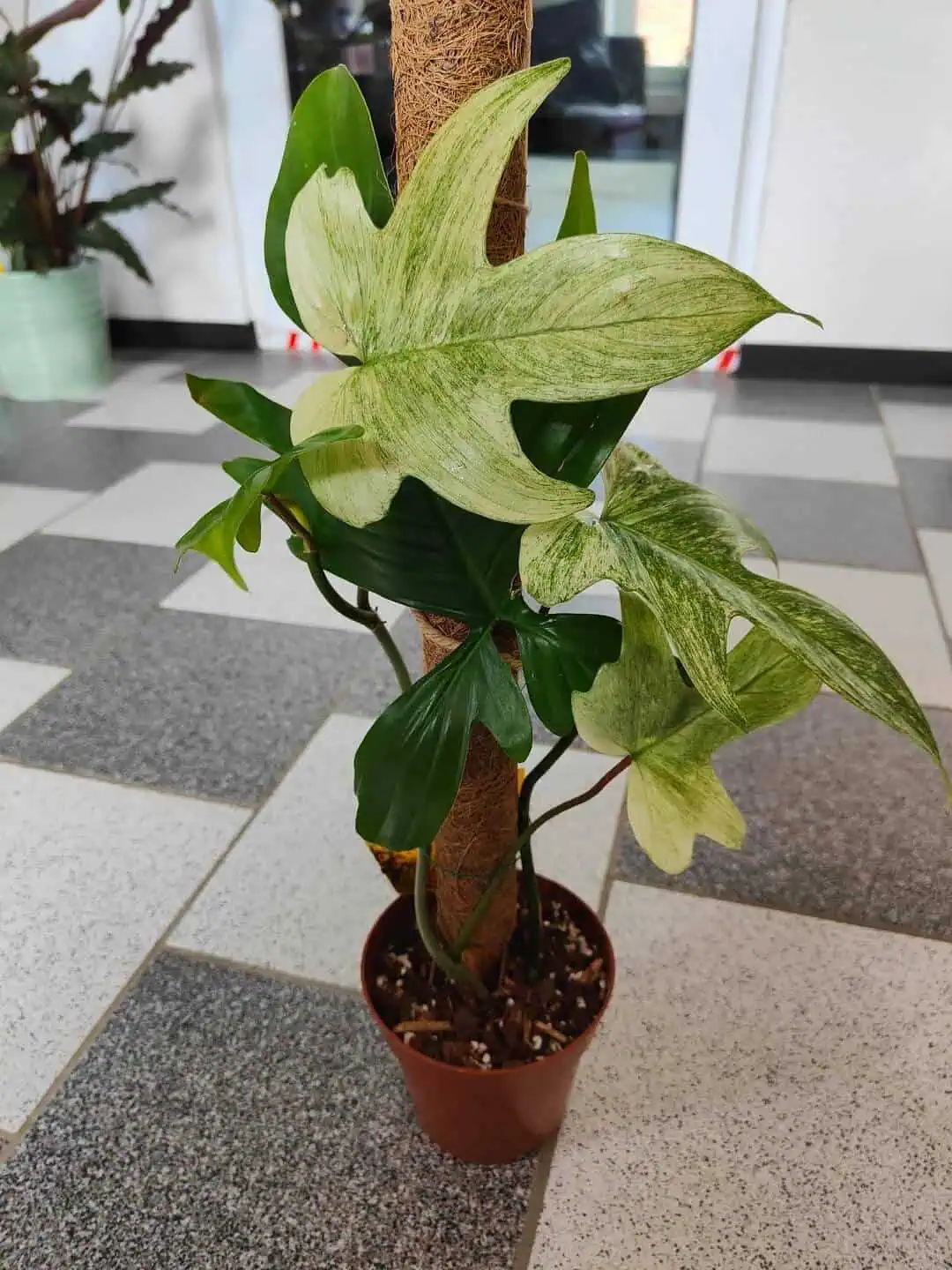
What makes it so special is its ghostly white new leaves, which gradually fade to lime green and eventually turn deep green as they mature.
It’s a climber, meaning it loves to grab onto a moss pole or trellis as it grows. In its natural habitat or in a perfectly humid indoor corner, it can grow quite large, with dramatic, uniquely lobed leaves that look almost sculptural.
Although it may appear exotic and high-maintenance, the Florida Ghost is surprisingly forgiving when grown in containers.
You just need to get a few key things right.
Easy Tips for Growing Florida Ghost in Containers
Source: Reddit
Before we dive into the nitty-gritty, here’s the quick version: this plant loves bright, indirect light, airy soil, and consistent humidity. Keep it warm, water when the top inch of soil feels dry, and feed it occasionally.
That’s the gist. But let’s unpack that a bit.
Requirements
Potting Mix
The Florida Ghost loves a chunky, well-draining mix. Think of what an aroid (which it is) would enjoy in the wild: lots of organic matter and air pockets.
A great potting mix recipe is:
- 1 part orchid bark
- 1 part perlite
- 1 part peat moss or coco coir
- A handful of charcoal (optional, but helps with aeration and odor control)
You can also add some worm castings or compost for slow-release nutrients. The goal is to keep the roots moist but never soggy. This plant hates wet feet.
Containers
Use a pot with drainage holes, non-negotiable. Terracotta pots work well because they let excess moisture evaporate, but plastic or ceramic is fine as long as drainage is good.
Because it’s a climbing plant, give it support early. A moss pole or bamboo stake will help it grow upright and develop those signature mature leaves.
Location (Light, Temperature, Humidity)
Florida Ghosts love bright, indirect light. Too little light, and the leaves turn dark green too quickly. Too much, and you’ll get crispy edges. A spot near an east or north-facing window is perfect.
Temperature-wise, keep it between 65°F and 85°F (18°C–29°C). They hate cold drafts, so keep them away from windows in winter or air conditioners in summer.
Humidity is another big one. These plants thrive in 60%+ humidity. If your home is dry, a humidifier or pebble tray can help. Even grouping plants can raise humidity a bit.
Propagation and Planting
Propagating a Florida Ghost isn’t complicated. Stem cuttings are your best bet. Pick a healthy vine with at least one node and an aerial root. You can purchase a mother plant from Pandy’s Garden Center (featured image) – not paid to recommend them.
- Cut just below the node.
- Let the cutting callous for a few hours.
- Place it in water or directly into moist potting mix.
- Keep it warm and humid, and roots should form in a few weeks.
Once the roots are about two inches long, transfer the cutting to a pot. Keep it lightly moist while it settles in.
Care Tips
Watering
This is where most people go wrong.
The Florida Ghost doesn’t like being too dry or too wet. Check the top inch of soil before watering. If it’s dry, give it a drink until water drains out the bottom.
In winter, water less often since the plant grows more slowly. I’ve found that using filtered or rainwater helps prevent those annoying leaf spots caused by hard tap water.
Fertilizer Application
Feed monthly during spring and summer with a balanced liquid fertilizer diluted to half strength. During fall and winter, slow down or stop feeding altogether.
If you prefer organics, worm castings, or liquid seaweed work great. Just don’t overdo it. Too much fertilizer can burn the roots and dull those gorgeous leaf colors.
Pests and Diseases Management (IPM)
Spider mites and mealybugs occasionally show up, especially in dry air. Wiping the leaves with a damp cloth and spraying neem oil every few weeks helps keep them away.
Good airflow is key.
Stagnant air and overwatering are recipes for fungal issues like root rot. If your leaves start yellowing or drooping, check the roots and let the soil dry out.
Mulching
In pots, mulching might seem odd, but it helps retain moisture and keeps the topsoil from drying out too fast.
Use fine bark chips or sphagnum moss; it also looks neat and decorative.
Overwintering
If you live somewhere cold, bring your Florida Ghost indoors before temperatures drop below 55°F (13°C).
Keep it away from heating vents, which can dry the air. You can also mist the plant occasionally to counteract low humidity.
Repotting
Repot every 1–2 years, or when you see roots circling the bottom.
Move up just one pot size at a time. Repotting is also the perfect opportunity to refresh the soil mix and give the plant a new moss pole if needed.
Pruning
Trim any leggy or damaged growth to encourage new shoots. Don’t be scared to cut back. Florida ghost responds well to pruning.
Plus, you can use the cuttings for propagation to get more plants to share as gifts.
If you’re interested in learning about other rare and exotic philodendrons, here are my top recommendations:
- Pink Princess Philodendron
- White Princess Philodendron
- Prince of Orange Philodendron
- Black Cardinal Philodendron
Conclusion
The Florida Ghost Philodendron may look problematic and demanding, but it’s not once you understand what it needs.
To recap, just give it good light, humidity, and the right potting mix, and it’ll reward you with stunning, ever-changing foliage that brightens any space.
Besides, growing it in a pot makes it easy to manage, and watching those ghostly leaves turn green never gets old. I hope you’ve enjoyed this article.
Thanks for dropping by.