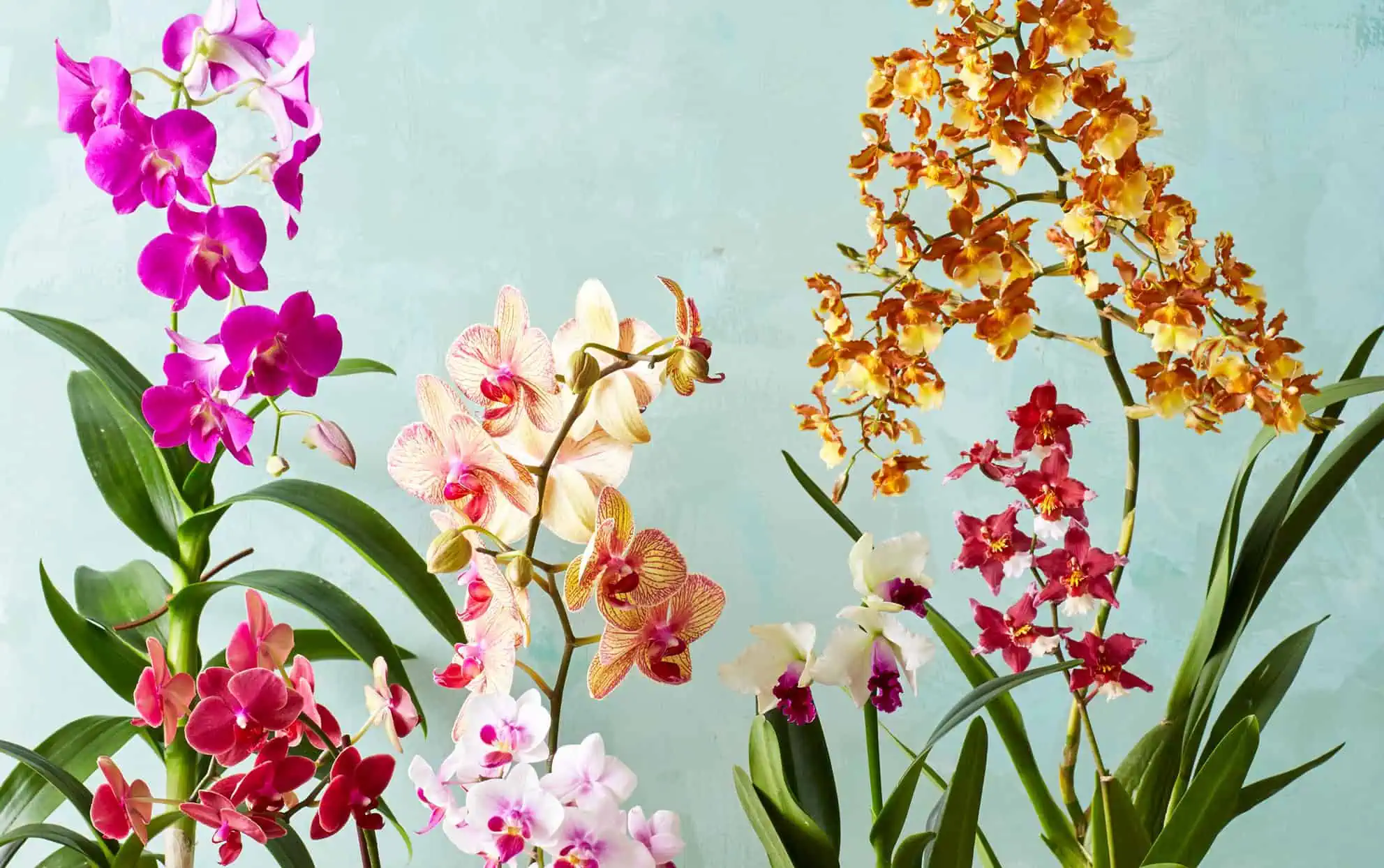
While orchid care is quite general, there are specific activities tailored to specific orchid types. The importance of proper identification can therefore not be overstated. Misidentification often explains why orchids decline under well-meaning care.
To help you identify which orchid you may have or want to shop intelligently, we have an identification chart below to help you explore an expanded list of orchid genera beyond the familiar few, so that your knowledge extends beyond a single category.
The Orchid Care Zone generously compiled the chart, which includes members of the subfamilies of Orchidaceae.
While this chart alone is sufficient in identifying different types of orchid varieties, it’s supplemental to the Orchid Gardener’s Bible – a book that gives context beyond observing the flowers as a diagnostic tool.
If you’ve come across this chart, ensure to check out the book as well.
Detailed Orchid Identification Chart

Conclusion
According to several plant distribution studies, orchids inhabit nearly every ecosystem except extreme deserts and polar regions.
Their diversity reflects adaptation to varied environments ranging from tropical rainforests to cool mountain slopes.
And because orchids evolved in such distinct ecological niches, they do not share identical cultural requirements.
A Phalaenopsis adapted to warm, shaded forest understories will respond differently to light and temperature than a Cymbidium that evolved in cooler, brighter climates.
Thus, correct plant identification determines how to properly care for each cultivar. The difference between success and failure often lies in recognizing which evolutionary story your plant embodies.
I desire to make this resource as conclusive as possible. I’ll therefore keep updating with new information to help you identify any orchid you come across.