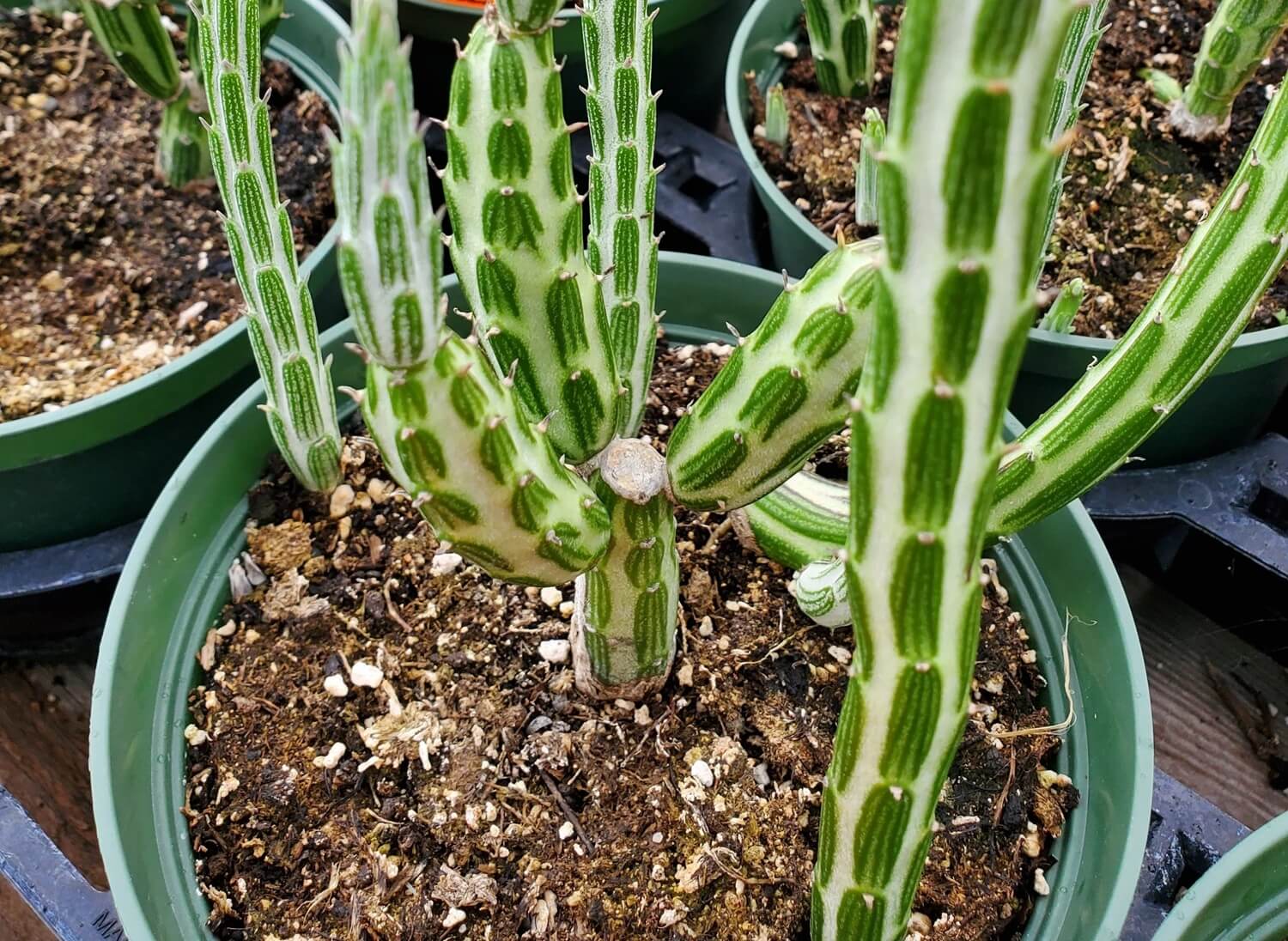
If you’re looking for an indoor houseplant that will always attract your eye and those of your guests, the Pickle Plant is the one. It serves as a great focal point when grown with other flowering plants.
While several other plants are known by the same name, Kleinia is unmistakable. The cylindrical and cucumber-like appearance is breathtaking.
But the best part, they’re quite hardy and easy-going in most homes. The only challenge is getting a hold of one since it’s a challenge to come by in most plant nurseries.
Therefore, with a few tips and tricks, you should have them thriving for years.
Let’s look at the basics that make this plant thrive. Most people mess up only one thing, watering, so once you get a feel for that, it becomes smooth sailing.
Background Information about Pickle Plants
The pickle plant, also known as Kleinia stapeliiformis or formerly Senecio stapeliiformis, comes from the dry, rocky regions of South Africa. This indicates that it’s a relatively drought-resistant champ.
These plants are generally green, cylindrical, and covered with small tubercles or bumps that appear like a cucumber, hence giving them their distinctive pickle-like appearance.
The coolest thing about pickle plants is their creamy patterns on their stems. And while they rarely bloom indoors, the flowers are a treat. They look like tiny red fireworks at the tips of the stems.
7 Easy Tips for Growing Pickle Plants in Pots
Propagating Pickle Plants
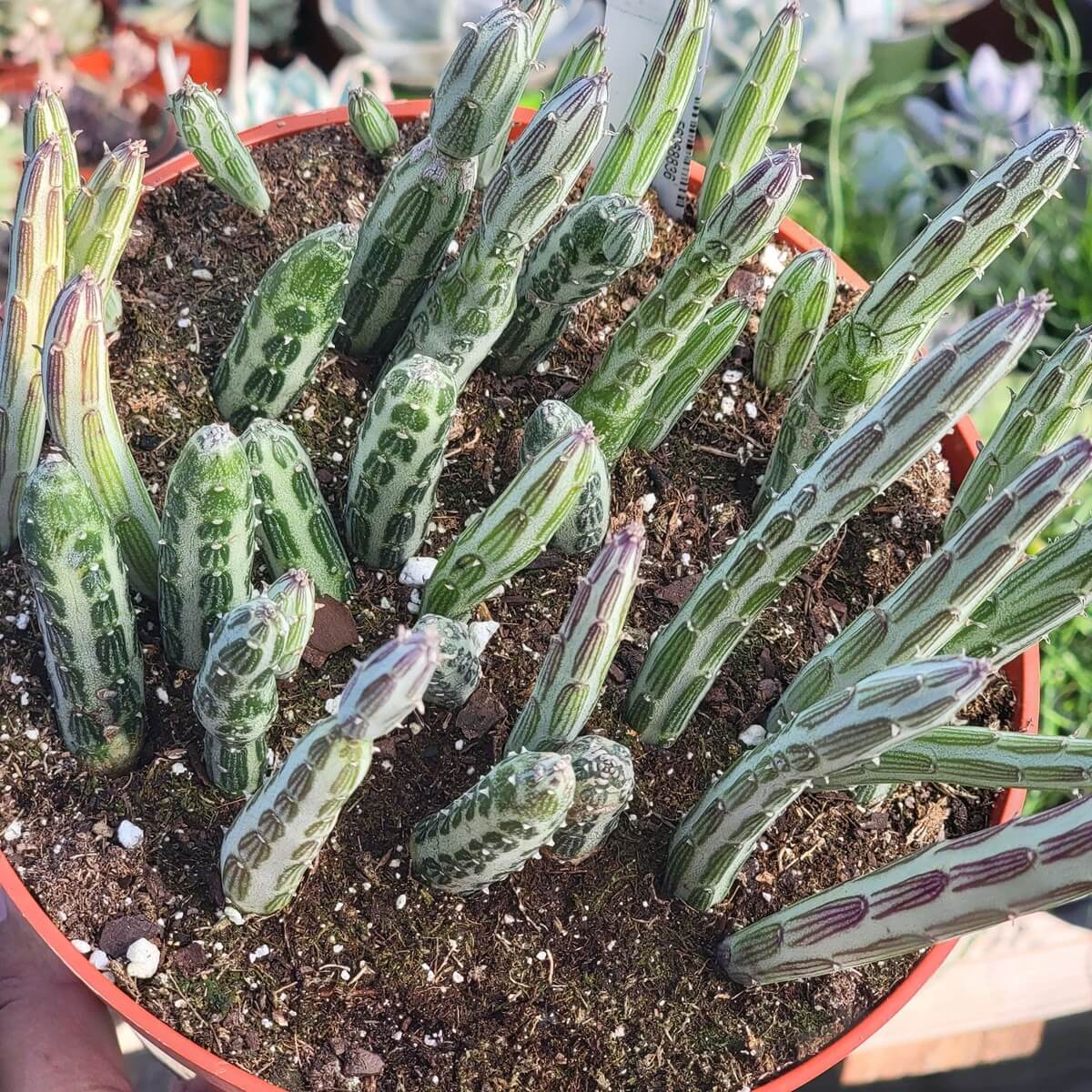
Photo: Desert Scape Succulent
Propagating a pickle plant is surprisingly easy.
Most people prefer stem cuttings because they root fast and rarely fail. The trick is to cut a healthy stem, let the cut end dry out for a day or two, and then stick it in fast-draining soil.
The drying time prevents rot, which is the one thing these plants truly dislike.
If you want an extra boost, you can dip the cut end in rooting hormone. This is strictly up to you. From experience, one cylindrical stem is enough to give around five new plants.
Potting Soil
A cactus or succulent mix works really well.
If all you have is regular potting soil, mix in coarse sand or perlite until it feels gritty and loose. You want soil that drains quickly, not the dense type that stays wet for days.
Some growers even use a 50 percent succulent mix and 50 percent pumice. It sounds extreme, but it shows you just how much this plant appreciates airflow at the roots.
Light Requirements
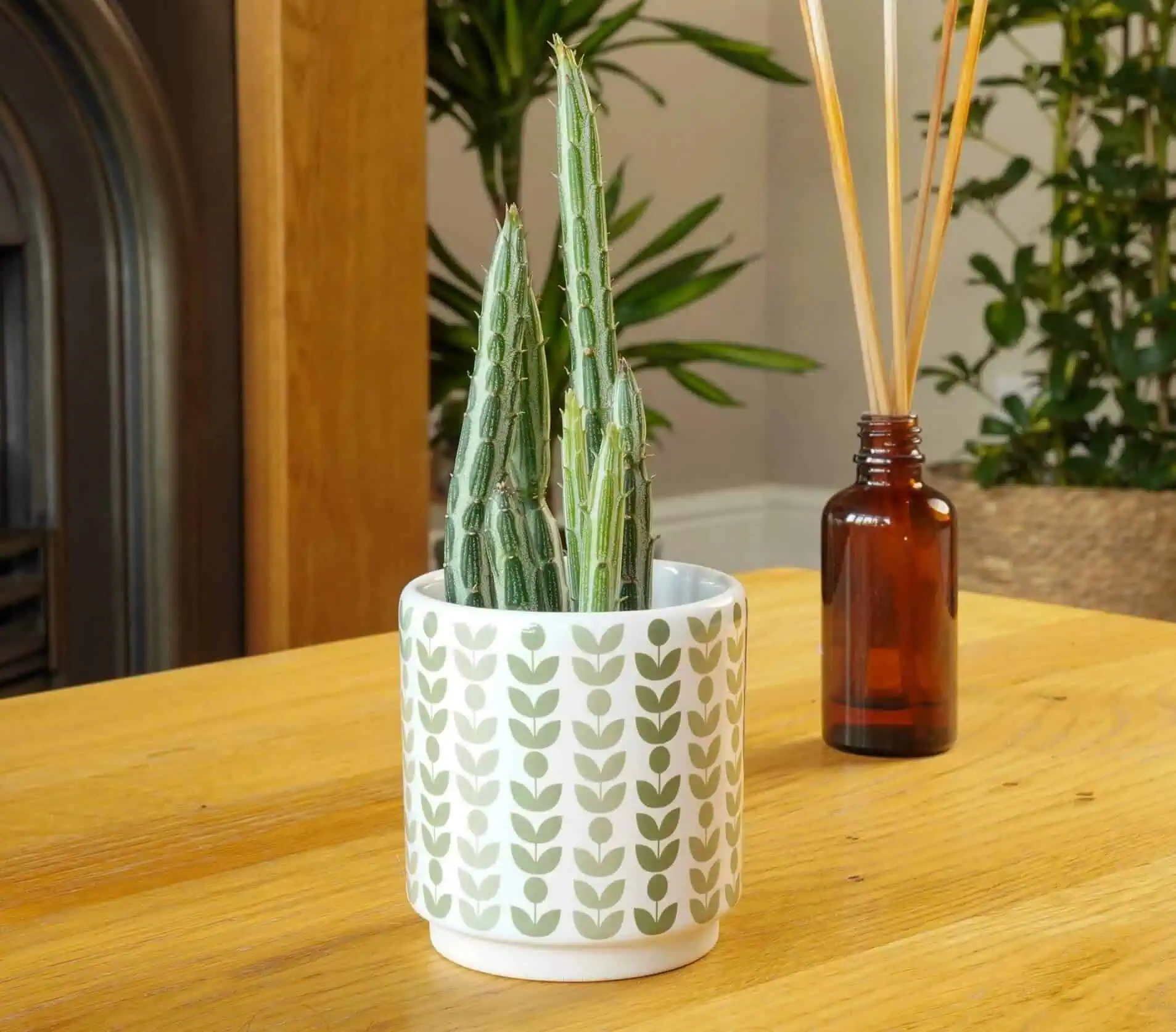
Photo: Houseplant UK
Pickle plants love bright light. A sunny windowsill near the kitchen or living room is perfect. Outdoors, they do well with morning sun and afternoon shade.
Too much harsh sun can scorch the stems, and you’ll notice them turning reddish or shriveled at the tips.
If yours starts stretching, it’s begging for more light. Succulents stretch when they’re chasing the sun, which is usually the first sign that something needs adjusting.
Pro Tip: Keep rotating them after a while to make sure the light exposure to the plant is even. Otherwise, they’ll start to bend towards the source of light.
Watering
This is where most people get nervous. The good news is, you don’t need a complicated schedule. Water deeply, then let the soil dry out completely.
And I mean completely. Stick your finger into the soil or lift the pot. If it feels light, it’s ready.
In summer, you might water once every one or two weeks. In winter, it might be once a month. Studies show that succulents grown in drier conditions develop stronger, more resilient root systems. So, less water can actually help the plant in the long run.
Here’s a guide on watering succulent plants, especially if you’re worried about the watering frequency.
Temperature and Humidity
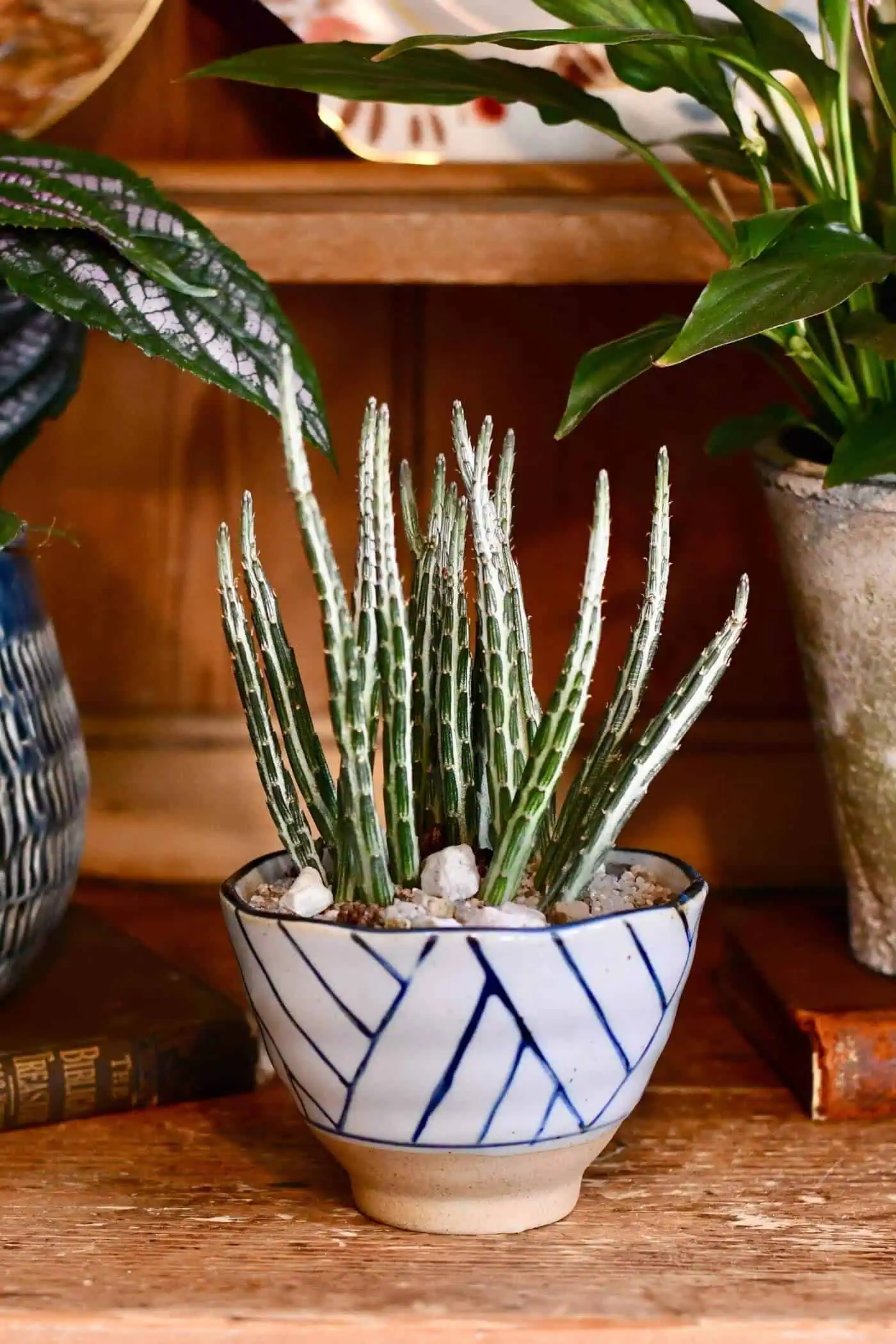
Just like in their native settings, pickle plants enjoy warm temperatures. Anything between 18 and 26°C feels just right. They can handle slightly cooler nights, but frost is a big no.
They’re not built for cold, and freezing temps can turn the stems mushy overnight.
Therefore, you’ve placed them on the patio or balcony, bring them indoors if the temperature drops drastically.
Humidity usually isn’t a problem, especially when grouped with other plants. These plants do fine in average indoor humidity. They don’t demand misting or plant humidifiers.
Fertilizer Application
These plants are not heavy feeders. Therefore, a simple diluted cactus fertilizer once in spring and again in midsummer is usually enough.
Slow-release granules also work, especially if you forget liquid feeds. Just be sure to use them sparingly.
Where possible, incorporating organic manure when preparing the soil will eliminate the need for constant fertilizer applications. You can also add it as a mulch on top of the soil surface.
Repotting
A bit of root bound is alright since pickle plants don’t mind being a bit snug in their pots. As a general rule of thumb, repot every two years or so, or when you notice the stems looking crowded.
You just need to go one pot size up. Not too big, because oversized pots hold more moisture and increase the risk of root rot.
This is also a great time to refresh the soil. You’ll usually notice the plant responding with new growth soon after.
Conclusion
To summarize, you need good light, gritty soil, the courage to water less, a bit of patience, and the plant will handle much of the work.
If you’re after a low-maintenance plant that looks wild and sculptural, give the pickle plant a spot on your shelf or patio.
I hope you’ve enjoyed this guide with seven easy tips for growing pickle plants in containers successfully. Don’t forget to share, repin, or save on Pinterest.
Featured Photo: Lone Star Nursery