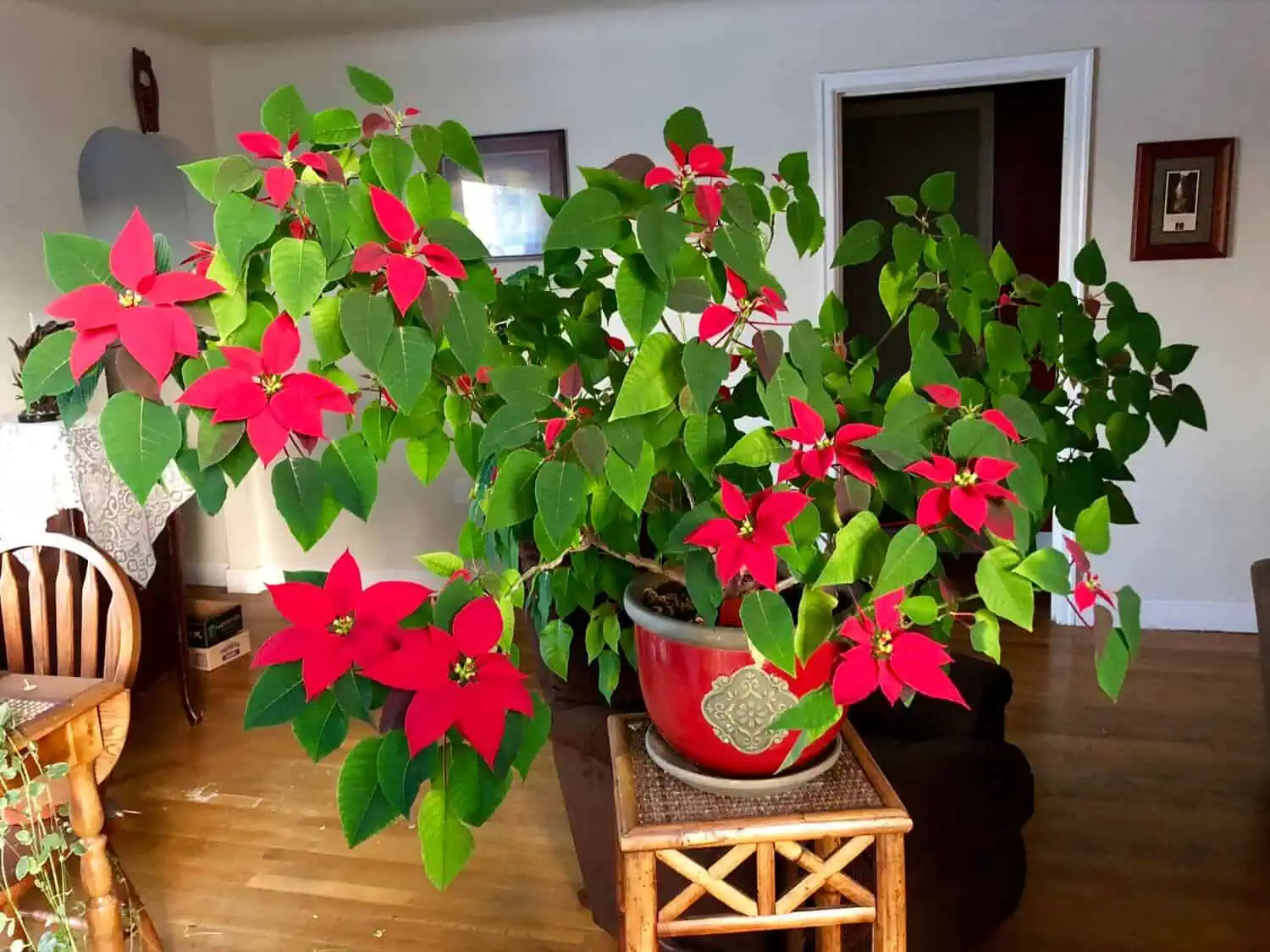
There’s one thing that poinsettias and pothos have in common.
And that’s their popularity as sought-after houseplants. But one of them is a darling when it comes to decorating your interiors during the festivities, especially the Christmas holiday.
No wonder Poinsettias are often referred to as the Christmas flowers.
Besides, while insufficient sunlight will fade the color variegation on your pothos, it does the exact opposite on poinsettias, as we shall discuss later.
This slight difference is what you can manipulate to ensure that your Christmas flower keeps reblooming way after the holidays. In today’s post, we’ll discuss how to grow and care for poinsettia plants to thrive beyond a single season.
Let’s begin:
Understanding the poinsettia’s “flowers.”
The first thing to know is that the bright red (or pink or white) parts aren’t actually flowers. They’re bracts, which are modified leaves. The real flowers are the tiny yellow beads in the center.
Most people never notice them until someone points them out.
This little detail matters because it helps you understand why a poinsettia might fade or drop leaves. When those yellow flowers age, the whole plant starts winding down.
So, if you’re shopping for one, look for poinsettias with tight, not-yet-open yellow flowers. They last much longer.
Besides, these plants can actually last months with proper care, which is good news if you don’t want to toss yours out before New Year’s.
But are poinsettia plants really poisonous?
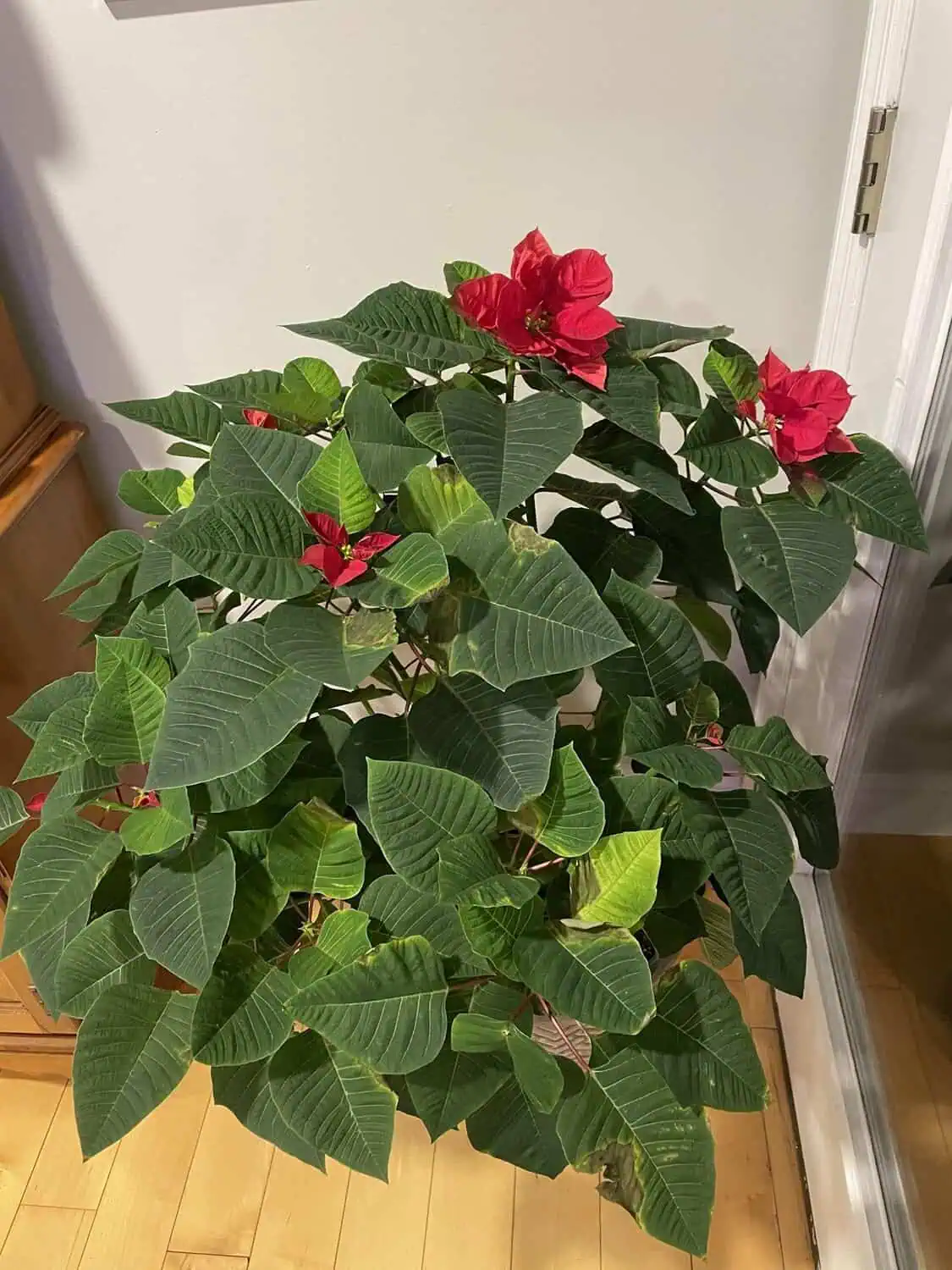
Photo: Reddit
This rumor has been around forever, and it’s not actually accurate. According to multiple studies, including one from Ohio State University, poinsettias are only mildly irritating if eaten, not deadly.
Pets would need to eat a ridiculous amount to get sick.
Still, I’d keep mine out of reach. Not because it’s dangerous, but because cats love to chew anything red and leafy.
Poinsettia Care Guide
Exposure to Light
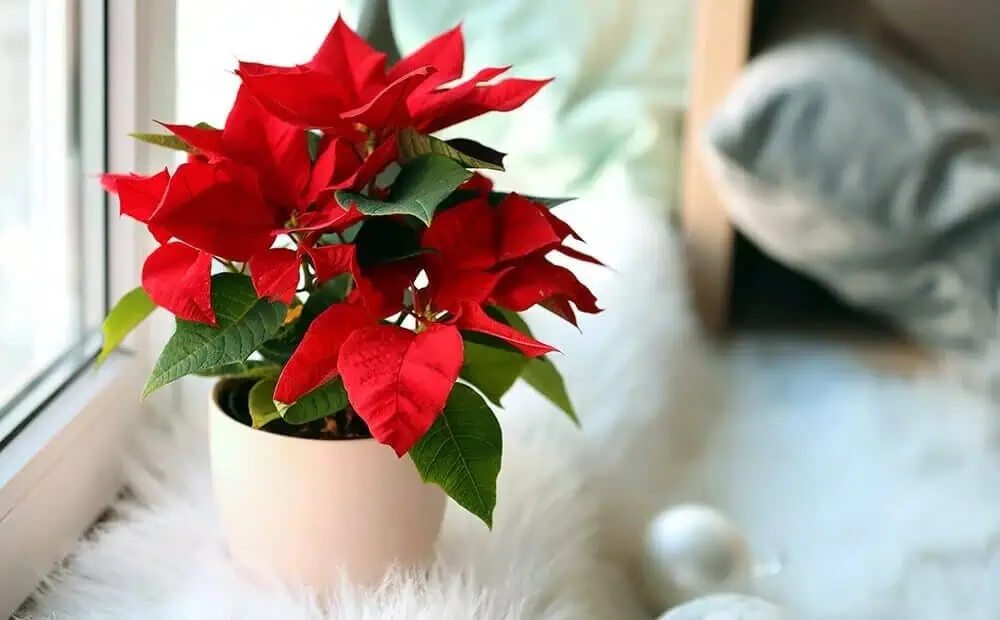
Poinsettias love bright, indirect light. They don’t enjoy sitting directly in the sun for hours. Think “sunny room, but not pressed against the window.”
I once put a poinsettia on a windowsill that got intense afternoon light, and the bracts faded so fast it looked like someone had washed them with bleach.
A few hours of soft light will keep the plant vibrant and stop it from stretching out. If it sits in a dark corner, it’ll let you know by dropping leaves one by one.
Watering your poinsettia plants
Overwatering is probably the number one poinsettia killer. They really don’t like wet feet.
When you water, do it thoroughly, then let the excess drain out completely. If yours came in one of those shiny decorative pots without holes, take it out before watering.
On the flip side, letting the soil dry out so much that the leaves wilt is just as bad. Once they wilt, they often fall, and the plant never looks as full again.
I use the simple finger test. Stick your finger into the soil about an inch. If it feels dry, water. If it’s even slightly moist, wait.
By the way, here’s a great guide on how to water potted plants properly.
Temperature requirement
Poinsettias are like that friend who’s always “a little chilly.” They prefer warm rooms. Temperatures between 18 °C and 24°C work beautifully.
Cold drafts from windows or doors can make them drop leaves overnight. Heat vents blowing directly on them can also dry them out
A stable, warm spot is perfect.
Humidity
Poinsettias are native to Mexico’s tropical climates, so dry indoor winter air isn’t exactly their happy place.
You don’t need a humidifier, although it helps. Even placing a tray of water nearby can soften the air enough to help them stay perky.
You’ll especially see the difference in the leaves. Dry air often leads to crispy edges or leaf drop.
Subsequent fertilizer applications
If you’re planning to keep your poinsettia past Christmas, it will appreciate a little fertilizer. Use any balanced houseplant fertilizer, diluted according to the instructions. Feed once a month starting in late January.
During the holidays, skip the fertilizer. The plant is already at its peak and doesn’t need extra encouragement.
Pruning and shaping in spring
Once spring arrives, your poinsettia may appear a bit stretched out. This is normal. Around March or April, prune the stems back to about 10 to 15 cm. It feels drastic, but this encourages new, fuller growth.
New shoots will start appearing in a few weeks. By early summer, you’ll have a lush green plant that looks nothing like the store-bought version. In a good way.
Common poinsettia problems (pests and diseases)
Leaf drop - Usually caused by cold drafts, low light, or overwatering. Fix the environment, and the plant often bounces back.
Yellowing leaves - This is often a watering issue or poor drainage.
Pests - Whiteflies love poinsettias. If you spot tiny white specks flying around when you touch the plant, gently rinse the foliage and use insecticidal soap if needed.
Wilting - Check for root rot. If the pot has no drainage, repot immediately.
Bonus: Can you get your poinsettia to turn red again?
Yes, but I’ll be honest, this part takes commitment.
Poinsettias need long nights to change color. This means total darkness for about 14 hours a day starting in early fall. And when I say total darkness, I mean it. The tiniest light leak can reset the whole process.
Some people put the plant in a closet from evening until morning. Others use blackout boxes. It sounds dramatic, and honestly, it kind of is, but it works.
Studies show that poinsettias need at least 8 to 10 weeks of this routine to develop their colored bracts.
Conclusion
There’s something magical about poinsettias.
Maybe it’s the bold red “flowers” that pop against the darkest days of winter. Maybe it’s how they show up everywhere right when you’re craving color.
Or maybe it’s the simple fact that they make a room instantly feel festive, even if you haven’t put up a single strand of lights.
Whatever it is, poinsettias have a way of grabbing your attention.
You’ve just read how to keep your poinsettia happy, beautiful, and thriving. You can even carry them into the next season with proper care and dedication.
Let me know your thoughts.
Featured Photo: Reddit