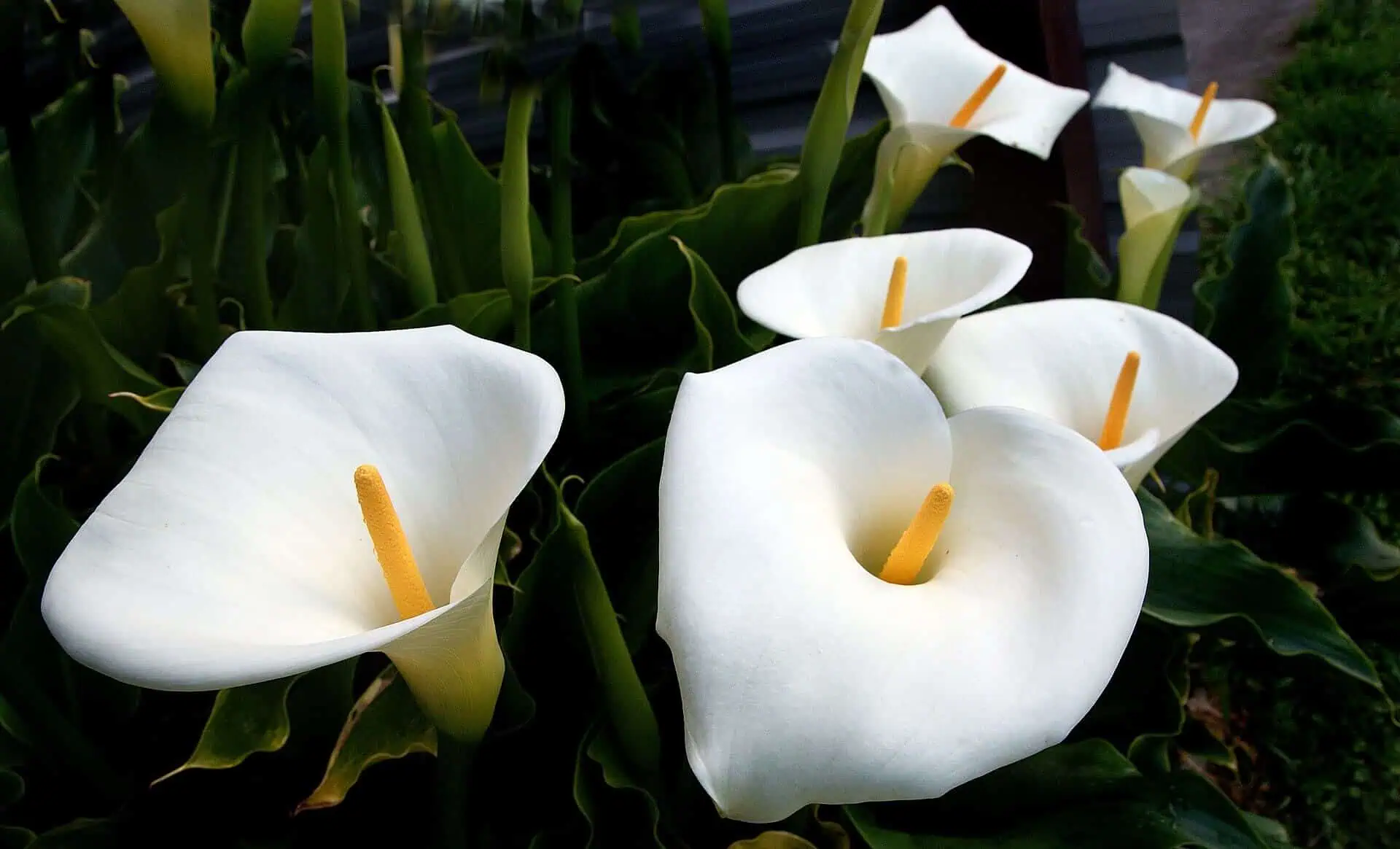
Calla lilies are some of those flowers that you’re likely to encounter almost everywhere. From perennial gardens to patio containers, and cutting gardens in the summer, their blooms last for weeks, attracting butterflies and hummingbirds.
Their elegant flower shape and amazing variety of colors make them a top choice for weddings, decorating exotic living rooms, and dinner tables.
In today’s guide, you’re going to learn how to plant, grow, and care for calla lily flower bulbs both indoors and outdoors.
Plant Description
Interestingly, calla lilies aren't true lilies. Instead, they belong to the genus Zantedeschia, a group of flowering plants in the Aroid family. In their natural habitat, they often grow near streams, wetlands, and seasonally moist areas.
Calla lilies grow from underground storage structures commonly called rhizomes. These fleshy organs act like energy banks, storing nutrients that fuel new growth and flowers.
In temperate regions, the rhizomes should be protected from frost and planted in spring to flower in summer.
Besides, the iconic "flower" isn't technically a flower either. The showy trumpet-shaped structure is called a spathe. Inside it sits a spike known as a spadix, which contains the plant's actual flowers.
Calla Lily Plant Profile
Common Name: Calla Lily, Arum Lily, or Calla.
Scientific Name: Zantedeschia aethiopica or Zantedeschia spp.
Family: Araceae (True lilies belong to the Liliaceae family).
Growth Habit: Upright and considered invasive in most warm regions.
Growing Conditions: Well-draining soil, part shade to full sun.
Toxicity
Calla lilies are toxic to pets and children because they contain insoluble calcium oxalate crystals, which can irritate the digestive system if ingested.
Pets and children who chew on leaves or flowers may experience mouth irritation, drooling, and discomfort. Therefore, for households with curious pets or young children, placing plants out of reach is a wise precaution.
If you want a complete list of 51+ toxic plants to pets, you can check it here. Also, it’s always a good idea to arm yourself with a pet first aid kit to assist your pets until you can consult a veterinarian.
Growing Calla Lily: Requirements
Light Requirements
These plants can grow and survive in partial sun, but for vigorous blooms, they require adequate sunlight. But sometimes too much of a good thing isn’t always the best. That’s why the growing region plays a role in how much of the light is required.
For instance, in cooler regions, full sun often produces the strongest flowering. Six to eight hours of sunlight daily encourages vigorous growth and abundant blooms.
While in hotter climates, especially areas with intense afternoon sun, partial shade can be beneficial. Morning sunlight combined with afternoon protection often creates the perfect balance.
Indoor calla lilies thrive near bright windows where they receive strong indirect light. A few hours of gentle morning sun can also help boost flowering.
Temperature
Calla lilies prefer moderate temperatures. Daytime temperatures between 60°F and 80°F (15°C to 27°C) generally produce the best results.
Prolonged heat above 90°F (32°C) can stress plants and reduce flowering. Likewise, freezing temperatures can damage or kill rhizomes if they're left unprotected.
This is why gardeners in colder regions often lift and store rhizomes during winter.
Humidity and Air Circulation
These plants appreciate moderate humidity, especially when grown indoors. However, humidity should always be paired with good airflow.
Stagnant humid conditions encourage fungal diseases and leaf problems.
Ideal Soil (Potting Mix)
If you’re planning to plant in the ground, you should consider testing your soil for nutrients, known pathogens, pH, and amend accordingly.
Aside from that, Calla lilies prefer rich, fertile soil that retains moisture while still draining well. That balance sounds contradictory at first. How can the soil stay moist without becoming soggy?
The answer lies in organic matter.
Compost improves both water retention and drainage simultaneously. It acts like a sponge, holding moisture while creating air pockets that keep roots healthy.
For garden beds, mixing generous amounts of compost into the planting area usually produces excellent results. For containers, a high-quality potting mix amended with compost and a little perlite creates an ideal environment.
Choosing the Right Calla Lily Variety
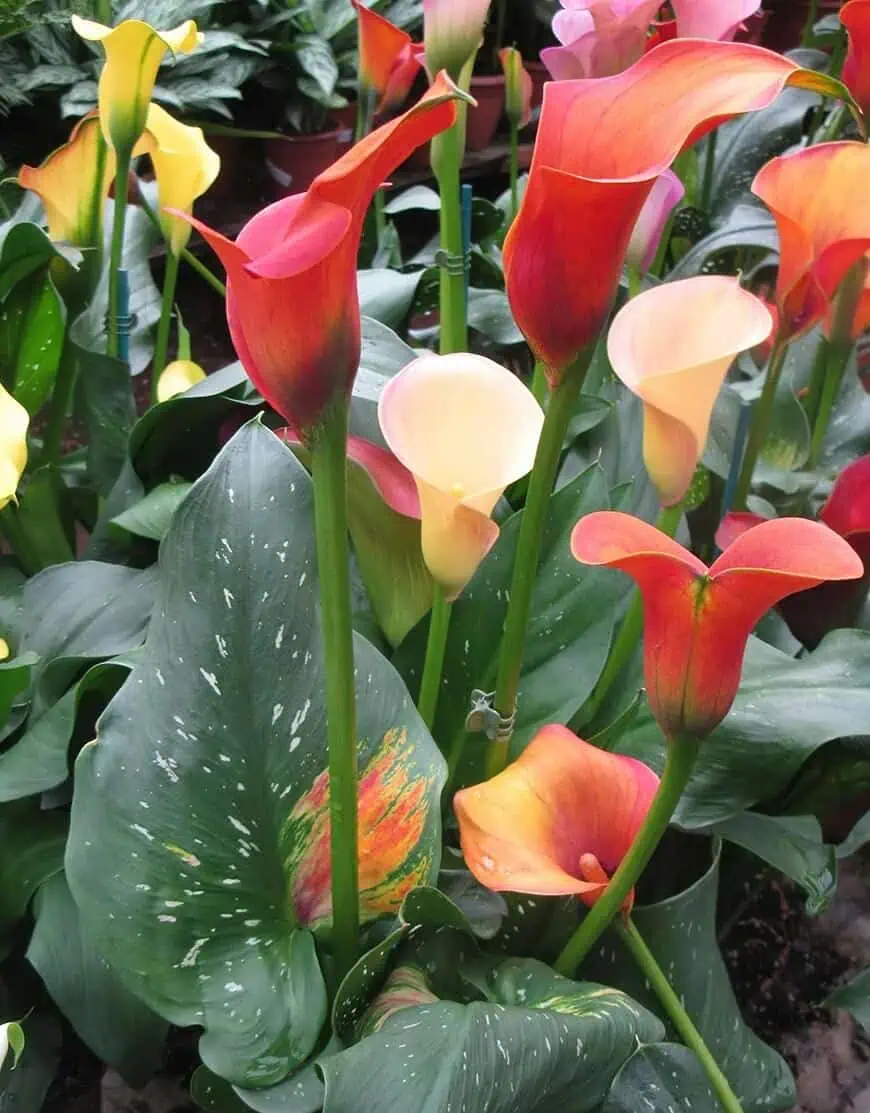
If you’re like most people I know, you’re familiar with the classic white calla lily. But there are many varieties in existence to suit any planting scheme and region.
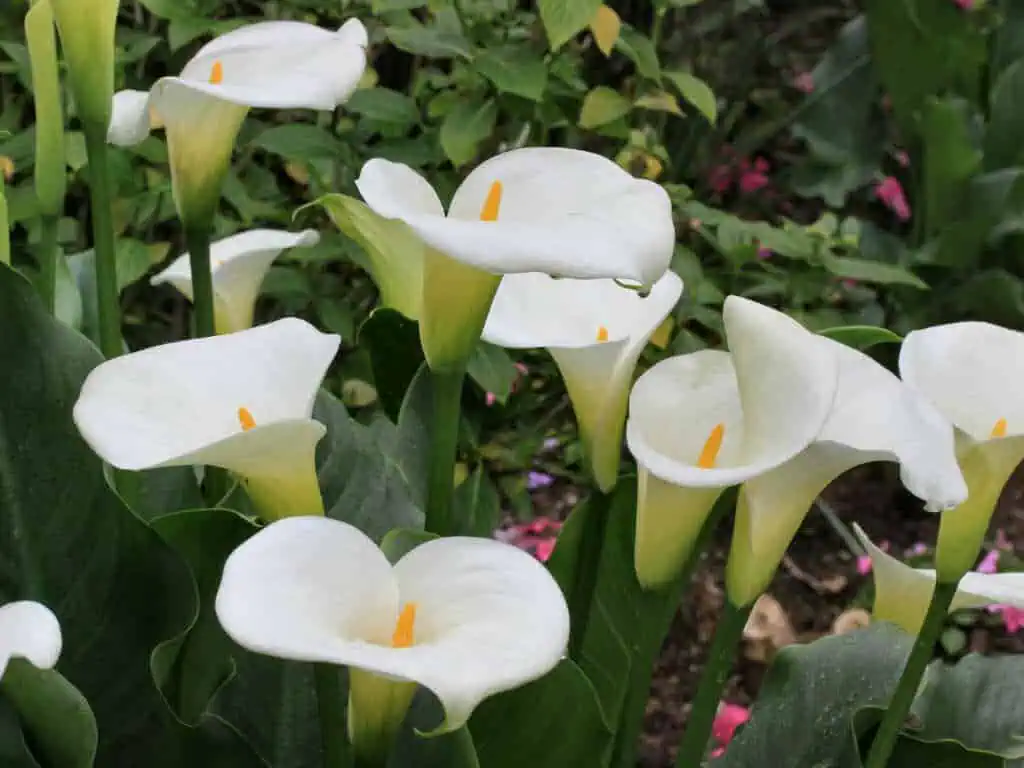
White calla lilies (Zantedeschia aethiopica) tend to be larger and more tolerant of moisture. They can grow several feet tall and often behave as long-lived perennials in warm climates.
Colored calla lilies come in shades of yellow, orange, pink, burgundy, purple, and nearly black. These hybrids are typically more compact and produce dazzling blooms that seem almost painted by hand.
When choosing a variety, think about where you'll grow it.
Large white varieties make striking landscape specimens and pond-side plants. Compact colored types often excel in containers, patio displays, and mixed flower beds.
The good news is that their basic care requirements are exactly the same.
How to Plant Calla Lily Rhizomes
To plant calla lilies correctly, begin by selecting firm, healthy rhizomes. Avoid any that feel soft, shriveled, or show signs of mold. Plant rhizomes about 3 to 4 inches deep with the growing points facing upward.
Space larger varieties roughly 12 to 18 inches apart. Compact varieties can be planted somewhat closer. After planting, water thoroughly to settle the soil around the rhizomes.
If all goes well, Calla lilies can take several weeks to emerge because the rhizomes are developing roots and preparing for rapid growth.
Growing Calla Lilies in Containers
For those with limited space, you can still grow calla lilies in pots. Their upright growth habit, dramatic flowers, and manageable size make them excellent patio plants.
You just have to choose a container with drainage holes and enough room for root development. Larger pots tend to maintain moisture more consistently and reduce watering stress.
Container-grown callas also give gardeners greater control over sunlight exposure. When summer heat intensifies, it's much easier to move a pot than an entire flower bed.
But most importantly, containers allow you to showcase blooms exactly where they're most visible during peak flowering season.
How to Care for Calla Lilies
Watering
When the top inch of soil begins to feel slightly dry, it's usually time to water.
But you have to remember that container-grown plants typically require more frequent watering than garden-grown specimens because pots dry out faster.
During flowering, water needs often increase. Producing large blooms requires significant energy and moisture.
Once the blooming period ends and dormancy approaches, gradually reduce watering. This change signals the plant to begin resting. Trying to keep a dormant calla lily constantly wet often leads to rot.
Fertilizing Application
Calla lilies are fairly heavy feeders compared to many ornamental plants. Therefore, during active growth, regular fertilization supports healthy foliage and abundant flowers.
A balanced fertilizer applied every few weeks usually works well. Once flower buds begin forming, switch to a fertilizer slightly higher in phosphorus to encourage blooming.
Overfertilizing, however, can backfire.
Excess nitrogen often produces lush leaves at the expense of flowers. The plant becomes a leafy giant with surprisingly few blooms. Feeding timing is therefore as important as the fertilizer itself.
Dormancy and Resting Period
Dormancy is perhaps the most misunderstood aspect of calla lily care. Most plant parents often panic when leaves begin yellowing and dying back.
In reality, this process is quite normal.
Because here’s the thing, after flowering, calla lilies naturally enter a resting period. During this time, foliage wilts as the plant redirects energy back into the rhizome in preparation for the next growing season.
Therefore, allow the foliage to yellow naturally before removing it. Cutting green leaves too early can reduce the energy stored for next year's growth.
If you’re in a warm climate, leave the rhizomes in the ground year-round. If in colder regions, lifting and storing rhizomes is recommended.
Overwintering Your Calla Lilies
If winter temperatures regularly drop below freezing, protecting rhizomes is essential. After frost damages the foliage, carefully dig up the rhizomes.
Brush away excess soil and allow them to dry for several days in a cool, sheltered location. Then store them in a box filled with dry peat moss, sawdust, or vermiculite.
The ideal storage temperatures generally range between 50°F and 60°F (10°C to 15°C).
Check occasionally throughout winter. Remove any rhizomes that become soft or diseased to prevent problems from spreading. Plant when spring arrives, and the cycle begins again.
Pests and Diseases Management
If there’s anything you can be sure of when growing any plant, whether indoors or outdoors is that you’re going to deal with pests and disease challenges at some point. Luckily, though, calla lilies are somewhat resistant to most common pests.
However, aphids, spider mites, thrips, and mealybugs may occasionally appear in small, negligible numbers before increasing. A few insects today can become hundreds in a matter of weeks.
Regular inspection of leaves, stems, and flower buds helps catch problems early. In such cases, strong water sprays, insecticidal soap, or neem oil treatments often provide effective control without resorting to harsher chemicals.
But the surest way to prevent reinfestation is to keep your plants as healthy as possible by following the best practices discussed above. Healthy plants tend to resist pest pressure more effectively than stressed plants.
In terms of diseases, look out for crown rots, rhizome soft rot, and pythium rot. You can learn more about these diseases here.
Conclusion
When it comes to calla lilies, there are two categories of people. Those who only buy calla lily cut flowers to decorate their homes or offices, and those who purchase them as potted plants around Easter and discard them thereafter.
A third category is those of us who prefer to keep them around for a bit longer, forever if possible. And with this guide, you can almost achieve it.
So, which category do you belong to?
All the same, if you found this guide helpful, share it on Facebook and Pinterest so more gardeners can enjoy healthier, more beautiful calla lilies in their homes and gardens.